
Carbon fiber, the very words evoke beauty, strength, agility, and lightness. The very thought of installing a CF component causes the gearhead in us to mentally salivate thinking of the benefits. Owing to its unique properties and advantages, carbon fiber has become the norm for exotic cars as well as race cars.
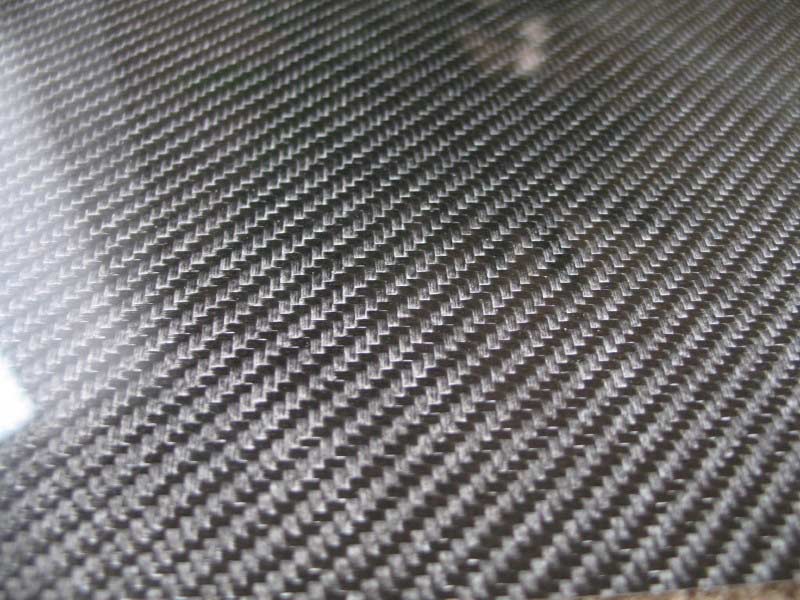
Seeing how the car we drive is not too far removed from a race car or exotic (said totally with tongue in cheek!), carbon fiber appears to be the most popular choice when trimming curb weight is foremost in our minds.
A variety of CF parts are available ranging from doors to fenders, trunk lids, hoods, spoilers, hardtops, and many more being churned out by boutique tuners to satiate the wide demand. Several of them have rather high standards of manufacturing and ensure quality is maintained. Quality though comes at a steep price and, if you are on a budget, you can always by a replica of a part made by a boutique shop. No matter your budget, you can always find a part to suit your liking.
The question that arises though (in our esteemed editorial minds) is why people go all out on a carbon fiber binge? Is it because of the cleansing effects it can have on one’s wallet? There is no question that CF parts are the way to go when building your car for the track. Every millisecond counts in racing and weight saved lends very well to setting a fast lap, but if your primary intent is to install CF only for the looks and prestige and the daily commute is where you set your fast lap, is this a wise choice at all?
Carbon fiber components are essentially racing components and, as such, may not have been crash-tested and approved by regulatory bodies in your country. Will they keep you safe and protect you if you happen to get in a crash on public roads? How strong are these components in terms of crash safety when compared to the OEM parts that were engineered with safety from the outset?
The above also seems to be the questions asked by our member phonedrn8 in the Modifications and Parts forum. Do you have an answer for him? Are carbon fiber components designed to keep you safe on public streets?
S2000 Forums-> Carbon Fiber Crash Test
NOTE: S2KI welcomes the opinions of its members on the S2000 and on all topics related to the S. Should you feel the creative urge to pen a few words then by all means do so and PM Energetic, Aashish2, Onehots2k or GavinSSAP1, OR send us links to what you would like us to write about and we will feature you (or your community) on the S2KI Home Page.
Related posts:
- Got Downforce? There are several ways to enhance the looks and performance...
- Don’t Hate, Appreciate! On my leisurely drive home for lunch (yes, home page...
- No Parts Available. What Would You Do? When Honda announced that S2000 production was coming to an...

on Mar 8th, 2011 at 6:22 pm
No
on Mar 8th, 2011 at 7:53 pm
These parts are not crash tested the way manufacturers must crash test their cars so there is no way to know how they affect safety.
on Mar 8th, 2011 at 8:03 pm
Carbon Fiber FTW. Hood going on tomorrow. Did you really buy the S2000 because it was a “safe vehicle”?
I rest my case. If I like the way it looks, and have the extra cash to buy them, who is to say it is a waste of money.
on Mar 8th, 2011 at 11:20 pm
Well, Matts (above) you sir, is a total id!0t. This article is not about whether you have the money, and you can spend it however you like. It’s about safety, an issue that most, if not all of us, should take seriously. Very seriously. Carbon fiber is cool, exotic, expensive, no doubt at all. But are they strong enough and have they been proven to meet all federal crash standards? I think there’s no easy answer to this one. I, for one, don’t know for sure, so I’m not even going to attempt to answer this question.
I think there should be some type of regulations by the auto industry to set standards (perhaps SEMA is the authority on this matter) to ensure that the parts are safe and legal. Don’t forget the fact that there are other motorists on the road and if you happen to have some carbon fiber parts on your car and got involved in a crash, you might compromise the other party and jeopardise other motorists.
on Mar 9th, 2011 at 12:05 am
^^
nobody said it is a waste of money……………………………….. reading fail.
on Mar 9th, 2011 at 7:08 am
If you’re honestly not concerned about safety, then remove your roll bars altogether.
on Mar 9th, 2011 at 8:07 am
have you ever seen an F1 accident?? CF is used for it’s weight to stiffness ratio meaning that or the weight it displaces it is outstanding in collisions. any metal or whatever OEM material will fracture and dissolve 10 times before a good piece of carbonfiber even cracks
on Mar 9th, 2011 at 8:26 am
I love the typical carbon fiber hood that weighs more than the stock aluminum hood. Strictly bling.
on Mar 9th, 2011 at 8:28 am
Did I consider safety when buying this car? Absolutely! Crash worthiness and rollover protections were definitely factors considered. The car’s good record in this area is a definite selling point.
on Mar 9th, 2011 at 9:17 am
All “carbon fiber” is not alike.
Components are basically made of the CF and a binder which is cured to hold it all together.
The strength of a component comes not only from the CF but how it is oriented in relation the the expected loads.
For F1 these designs are computer analyzed and extensively tested . The parts are partially handmade out of the best CF available.
Commercial aircraft is the biggest volume user of the fiber and gets first pick of the available supply which in many cases is capacity constrained depending on the business cycles of the aircraft industry.
Reinforced plastics ( my old business) uses the trimmings and slighgtly off spec CF for use in reinforcement and conductive applications at very short fiber lenght ( < .001).
The aftermarket auto jewelry buisness likely uses the same "floor sweepings" type material in their products.
You're paying for that cool looking braided look just below the surface not any sort of technical superiority.
Year s ago the tennis racket ( and other sporting goods) manufactures would by plastic compounds with 2-3 % CF by weight so they could advertise Carbon fiber reinforced. The effect of 3% CF on performance is insignificant if that.
Save your money for premium gas.
on Mar 9th, 2011 at 4:26 pm
I find this topic very interesting, especially considering the fact that i far too much money inverted in carbon fiber to see it go to waste in a wreck. my list of cf parts is as so: front bumper, fenders, hood, doors, mirrors, inner door panel top, trunk, spoiler, rear bumper, and spark plug cover.
The weight savings from CF products varies on the part. the Hood weighs more then the oem hood, spoiler and trunk combo weigh more then oem, but when combined with the other components my weight savings is looking at 250-300 lbs.! Which if it was a track car it is significant, but mine is a daily driver, so it goes unnoticed except for its looks.
As for actual statistics of CF i have done much research and the safety behind our CF parts for the S2000 have not been safety tested nor is there a need to do so because it is not a stock part which means it is at your own risk. The manufactures of aftermarket rims that cost far more that of a CF part dont test the rims in strength test but there is no question they weigh nothing and look sweet. Companies that do use CF on their production cars do put it through crash test and part test which means out of a certain number of hand maid parts, a few will be tested. That is why you can speed anywhere from $200,000 for a Lamborghini to $2.5 million for a Koenigsegg.
I think if you get a CF part for the s2000 it is for the look or the weight savings, not the safety because there is non.
on Mar 9th, 2011 at 7:55 pm
Who cares if it is safe. I have a just a hood i think when people max out on cf parts it starts looking ….. well i can’t say rice but expensive rice. By the way i think my cf hood actually weighs a bit more if not the same then the stock but it could just be me, but it looks hella sexy and the chicks dig it
lol
on Mar 10th, 2011 at 12:19 pm
We are not the first group or forum to have raised this concern. Many others have discussed it. And I see how it is easy to stray from the real question at hand here, but, try to stay on topic. This isn’t about the reasons we buy it, but, rather, it is actually safe for every day use?
There really is no need to elaborate on the topic either. I’ll leave you with an excerpt from the Terms & Conditions from Seibon; a manufacturer that I’m sure many people have bought CF products from on this site. If you still believe these aftermarket CF products are SAFE for every day street use after reading this, then you are only fooling yourself.
“Warranty and Disclaimer
Items sold by Seibon International, Inc. may not be legal for street use in all states. It is the buyer’s responsibility to comply with applicable state laws. Buyer understands that due to strict U.S. Federal and State safety crash guidelines, Seibon is not responsible or liable for any damages or possible injuries incurred upon possible accidents due to driver error, incorrect installations, bad judgment, or act of nature/God, Allah, Jehovah, etc. All products are intended for off-highway uses only, and should be used for their intended purposes only. Seibon does not take responsibility over buyer installation, modification, and unusual stress of the products. The buyer assumes all responsibilities for determining the suitability of the products. Seibon is not responsible for any damages incurred either directly or indirectly on the vehicles or operators/passengers within the vehicles.”
on Mar 10th, 2011 at 12:59 pm
Everyone has their opinion but replica Carbon Fiber parts being safe is like having opinions that the world is not round its flat. Trying to compare the carbon fiber bought from replica shops that offer cheaper alternatives to the real thing is laugh out loud funny. As far as the aftermarket goes it has nothing on the durability of OEM Honda parts i specifically say Honda because as manufacturer it holds true to that. OEM parts have crumble points on them take the hood for example if you open your hood you’ll obviously notice the webbing and certain slopes those are called crumble points and the fold at the point of impact to absorb the collision and protect the passengers of the car. With a “carbon fiber” aftermarket hood it doesn’t have the same crumble/impact properties of the OEM hood. So if you want to be decapitated by your replica carbon fiber hood after it rips off of the hinges and through your windshield go right ahead you’ll look cool doing it. It boggles my mind why someone would even get a CF Hood for the S2000 when the OEM hood is already ridiculously light.
on Mar 10th, 2011 at 1:06 pm
BTW F1 standard carbon fiber and OEM carbon fiber is carefully manufactured and cost millions in research and development. These seibon and mom and pop shop garbage “carbon fiber” is no where close to the quality. Real carbon fiber is stronger than steel. Im sure alot of these replica parts will crumble like cookies.
on Mar 11th, 2011 at 12:13 am
Certain grades of Carbon may have greater strength than steel but it lacks stiffness for the same thickness. A door skin strong enough in axial compression or tension would probably waver like a sheet of paper.
Manufacturers like Jaguar/Bently use a carbon sandwich with a special foam core and carbon spaceframe to the inner surface but still paint the panels at the end.
Secondly the matrix is often bonded with an epoxy which will generally burn at temperatures over 110c although specific epoxies can reach 200c and fireproof additives may be used. Often carbon parts are used in conjunction with foam or even glass fibres to build up bulk.
In an impact carbon will fragment and splinter leaving razor sharp edges. Even getting carbon dust on your skin will itch like crazy and embed itself for weeks.
A properly constructed carbon piece will cost the earth but it is more suited to do its job,perhaps even with the inclusion of Armaid fibres for prevent splintering in an accident.
However why bother- a carbon twill looks great from about 300mm away any further and it just looks like a black painted panel and rather tacky on the average car…..j.ust my two cents…
1999 s2000 red.standard..
on Mar 16th, 2011 at 5:21 am
The best modification for the S2000 or any car for that matter is Home in your skills by taking a few courses in Racing school. Nuff said
on Mar 16th, 2011 at 1:56 pm
………………Who cares, those of you concerned with the safety, probably won’t be installing carbong fiber on your vehicle. Thouse of us who do instal carbon fiber parts on our vehicles are either satified enough with the safety, or if your like me your realize if your rear end a truck your car is screwed carbon fiber or not. Have a nice day!
on Mar 18th, 2011 at 12:43 pm
Wanted to clear up some stuff.
As alluded to by Andre with the hood crumple points, all cars (even race cars) are designed with crumple zones that absorb and redirect collision energy away or around the passenger cell. Your bumper, hood, fender, substructure and even engine mounts are designed to yield and fail in specific ways to maintain passenger cell integrity AND control the RATE of deceleration. And you want these structures to fail…that is how the energy is absorbed.
CFRP (carbon fiber reinforced plastics) can absorb an enormous amount of energy. It can actually make a really good crush structure, but only if it is designed to do so with a deep understanding of how composites fail…..which common replica body parts are not. And composite failure is totally unlike metallic structures. Its very stiff, loading up with lots of energy then shattering/exploding carbon shards everywhere. CFRP crash structures use layers of aramid/kevlar interspersed with the carbon to help control this.
F1 cars: Safety cell is immensely strong (and lined with kevlar to protect from ‘intrusions’), but the driver cell is only one part of the safety system. The nose, side pods, and tail/light structure are designed to dissipate a huge amount of energy in a crash. The cell might possible hold up to a kiss with a wall, but without a crush structure to control the rate of deceleration the driver would be in bad shape.