


S2000 Penske off the shelf valving


Thread Starter
Joined: Sep 2006
Posts: 10,465
Likes: 52
From: ATL

As far as springs go I was going to start at 700/600 or 750/650 . If the compression is on the soft side are the shocks going to handle more or less spring better? Looks like these generate quite a bit of force on the rebound side.
Thread Starter
Joined: Sep 2006
Posts: 10,465
Likes: 52
From: ATL
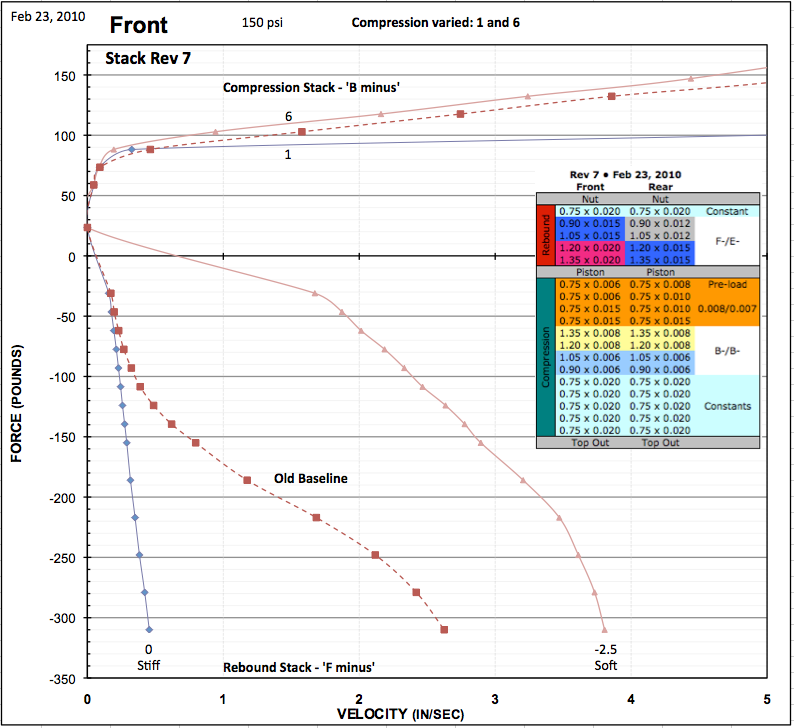
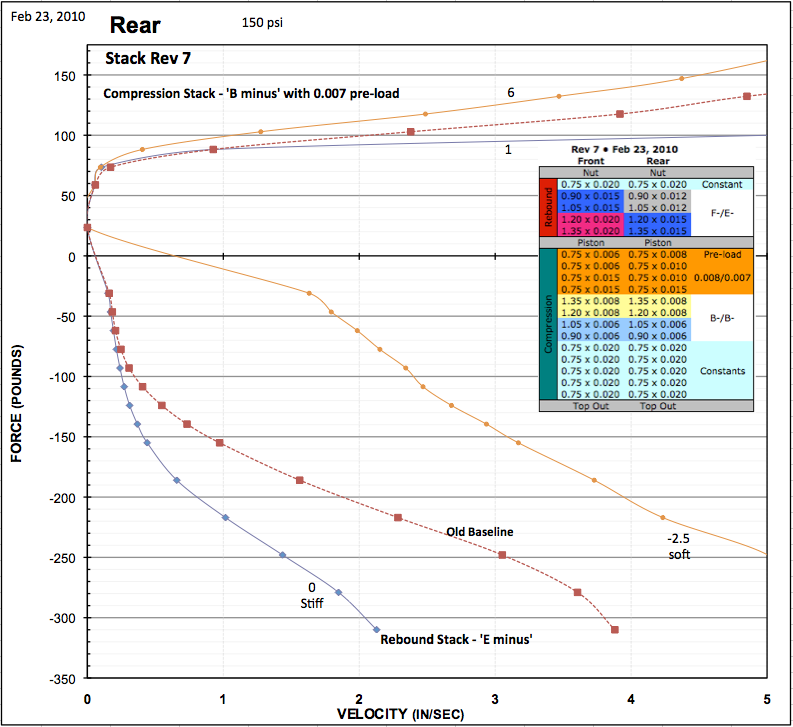
Also, looking at the plots that Random1 posted in the STR shock discussion for his Penskes it doesn't look like he has a ton of compression either. More than these but still not as much as some of the other shocks I've seen.
Thread Starter
Joined: Sep 2006
Posts: 10,465
Likes: 52
From: ATL
And if anyone thinks I'm way in over my head for someone relatively new to shock tuning please say so. I'm more of a casual racer than a hardcore out at every event person but I'm in a position to buy nice shocks and I'm definitely not trying to cut corners with crappy suspension. The biggest issue with many of the single adjustable shocks that probably fit my bill better is that the rears just aren't short enough and there is no way to get them short enough.
Of the singles I've looked at the new MCS singles seem to be the shortest but the price of those is fairly high for a single adjustable shock. I'd save $6-700 going that route and maybe that's the answer but right now I'm in a position to buy something nice.
Of the singles I've looked at the new MCS singles seem to be the shortest but the price of those is fairly high for a single adjustable shock. I'd save $6-700 going that route and maybe that's the answer but right now I'm in a position to buy something nice.

Joined: May 2004
Posts: 1,531
Likes: 3
From: Tucson
Go for the 8300s Steve. You will not regret it.
My valving is OFS Penske valving meaning it's right out of their book. I also used digressive valving from their table on the linear side of the piston (rebound). The table is below. I just selected a stiffness that worked. The plot above for my shocks is with 8100 canisters and they did work (springs 850 - 950 front, 750 rear), but the adjustment rangw was not very good. I now have 8300 canisters which are much better, but I have not dyno'd them yet. Will be doing that when I rebuild them in a month or so.
The rebound adjustment range on the Penske plot above looks narrow, so they must have softer valving.
OTS Penske Valving

My valving is OFS Penske valving meaning it's right out of their book. I also used digressive valving from their table on the linear side of the piston (rebound). The table is below. I just selected a stiffness that worked. The plot above for my shocks is with 8100 canisters and they did work (springs 850 - 950 front, 750 rear), but the adjustment rangw was not very good. I now have 8300 canisters which are much better, but I have not dyno'd them yet. Will be doing that when I rebuild them in a month or so.
The rebound adjustment range on the Penske plot above looks narrow, so they must have softer valving.
OTS Penske Valving



Joined: Jun 2010
Posts: 1,881
Likes: 6
From: Near Philadelphia
It's actually only one setting, not front and rear. The two lines you're seeing are the shock hysteresis (google it) for one setting. I'm guessing front and rear are similar which is why they only sent one plot but thats worth asking about too.
Thread Starter
Joined: Sep 2006
Posts: 10,465
Likes: 52
From: ATL
So one thing I realized that's not shown in the image is what settings they are at. I missed that went I cropped it to make a separate image from the PDF I was sent.
These are 12 off full stuff on compression and 1.5 turns off full stiff on rebound. How much adjustment do these have on them for compression and rebound? I thought for some reason one of them was limited to 6 settings?
So possibly these are showing the really low end of compression and they actually would have a good bit more when cranked stiffer?
These are 12 off full stuff on compression and 1.5 turns off full stiff on rebound. How much adjustment do these have on them for compression and rebound? I thought for some reason one of them was limited to 6 settings?
So possibly these are showing the really low end of compression and they actually would have a good bit more when cranked stiffer?
Joined: Jun 2010
Posts: 1,881
Likes: 6
From: Near Philadelphia
Here's a little bit on it. http://farnorthracing.com/autocross_secrets20.html
Basically shock hysteresis is the fact that the shock produces different forces if it's accelerating than if it's decelerating, so you plot both lines on a force/velocity graph like this one. It sounds like you're used to seeing the average force/velocity graph (which is the bottom one in the link). Basically you just average the two lines to get the average graph.
Basically shock hysteresis is the fact that the shock produces different forces if it's accelerating than if it's decelerating, so you plot both lines on a force/velocity graph like this one. It sounds like you're used to seeing the average force/velocity graph (which is the bottom one in the link). Basically you just average the two lines to get the average graph.