When you click on links to various merchants on this site and make a purchase, this can result in this site earning a commission. Affiliate programs and affiliations include, but are not limited to, the eBay Partner Network.
It’s been about a year and 4,000 miles since I installed the Gen 2 GReddy turbo kit on my S2000, and I think I’ve put enough driving/wrenching time and into this build to give a smallish assessment/review. This is the go-to site for learning about everything and anything on this car, so I guess it wouldn’t hurt to share here. This post will be based on the CARB legal version (supplied w/ Flashpro, Hondata CARB tune file, and DW 550cc injectors) since I’m in California. I want to share mainly because there has been virtually no discussion on this gen 2 kit. The lack of info was why I was kind of hesitant at first to purchase it, so hopefully this review will give some good insight for anyone else looking for a nice, conservative performance boost for their S.
I was looking for something that was both legal in my state and can buy brand new. I was initially trying to contact Comptech about their supercharger kit, but they never answered (are they even still in business?). So then I looked into this GReddy kit and I found a YouTube video series by Throtl with this kit being installed in an 06’ S2000 for a giveaway. I thought it was cool enough to give it a shot.
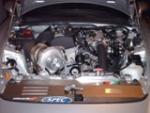
out-of-the-box kit (without the supplied air diversion plate installed)
Installation of the Kit, Difficulty & Fitment
Difficulty: 7/10.
I am in no way shape or form an expert mechanic. I only started learning how to work on cars a few years ago, almost entirely on this S2000. I spent a week in a tiny 1-car garage putting this kit into my then-daily (perks of being only a few miles away from work). This turbo install was probably 2 times easier than the DIY clutch job on this car. Though it only took a day for the clutch job. This turbo install is not very difficult; there are just a lot of steps involved.
Fitment: 9.5/10.
There are just a few fitment/design issues that made the install a little more complicated. Full disclaimer: I don’t want this small section to rub you the wrong way about this kit. It’s an amazing kit; I just want to be transparent about the minor things.
1. Turbo oil return line: Not sure if this was due to an installation error, but the return line would kink when trying to install. My guess is it was too sharp a turn radius to bolt up to the oil drain port. So I made a temporary return line using an Evil Energy PTFE hose and fittings kit from Amazon (~$70). Then I later got a premade pressure-tested oil return line made by Improved Racing.
Kinked GReddy return oil line. The one I made was only about 5-6” long, a little shorter than this one.
My DIY PTFE return line. Made with a 60-degree angle at the bottom and a straight at the top. I later switched this out for a premade custom return line made by Improved Racing.
2. Air diversion plate: The air diversion plate didn’t fit well. The driver’s side of the plate rubbed against the intercooler pipe’s silicone coupler. It also did not fit very square. And (now this was my dumb mistake) I placed the CARB stickers right where they would be covered by the diversion plate. My quick “fix” was to cut part of the plate to uncover the stickers. Regardless, I was just not satisfied with the plate. I decided to modify the OEM airbox instead, which I’ll dive into later in this post. But for the first couple months, I just drove without the diversion plate.
Photo with the air diversion plate, cut to prevent rubbing on the silicon coupler and to show the CARB stickers.
Besides those two parts, fitment is great, if not perfect. Charge pipes have minimal but good enough clearance around the under-headlight sections. The intercooler is large and requires trimming of the OEM black grille per the instructions. I decided to just remove the black grille instead (I was getting a different bumper anyway). All the fluid and air lines were good, and everything tied up together nicely with the engine. The kit reuses the OEM black heat shield next to the battery, which has very tight clearance with the log manifold but fits perfectly.
The turbo itself sits at the lowest point possible, with less than an inch of clearance above the passenger motor mount bracket. The turbo hugs close to the engine block, so access to the internal wastegate actuator rod is impossible without unbolting the manifold log. Not a big deal unless you forgot to tighten the locking nuts.
The 3” downpipe hugs close to the transmission bell housing and has tight but good clearance otherwise. The downpipe outlet mates to a supplied coupler/reducer adapter that uses the OEM donut gasket. This bolts up perfectly to the OE cat location, or to whatever testpipe + catback setup you want.
Difference in Performance & Feel
Performance: 9.5/10
The difference is night & day. The increase in torque is especially noticeable on the lower gears. Dropping one or two gears to pass/overtake is pretty much no longer necessary. No need to floor it all the time anymore for good acceleration. It did take some time to get used to the power increase and not be so heavy on the throttle. The turbo spools at RPMs as soon as 2-3k and pulls through the whole RPM band. Spooling is surprisingly very loud, and it has that classic “Stu-Stu” flutter noise on throttle lift due to having no BOV (again, California). The turbo is also a good exhaust muffler. I previously had a 2.5” Berk test pipe paired with my OEM cat-back with a 2.25” UK mod. When I was N/A, this setup alone was pretty loud (IMO). But then it became almost as silent as a stock exhaust when paired with this turbo kit. It was like a trade-off between loud exhaust noise and loud spooling noise. I later switched to an aftermarket exhaust.
Overall, I think the Garrett GTX2867R Gen 2 was a great choice by GReddy. It delivers the power when you expect it to and has no trouble with the S2000’s high RPM range. Paired with a small log manifold, the turbo’s throttle response is very quick. At lower RPMs and normal light-throttle driving, the original “S2000 feel” is preserved and almost feels unchanged. This kit provides the perfect amount of power for a legal street build.
Supporting Modifications
Additional Mod Capability: 9/10
What's a turbo build without some additional supporting mods? The following mods were added over the past year and are listed in no particular order.
1. ACT PP + AP1 Flywheel
2. Evil Energy PTFE Return line (DIY replacement)Improved Racing / Raceflux Return line: Along with other oil lines that I purchased for a different mod, I purchased a 9" long Raceflux custom 10AN line to use as my return line. 60-Degree-end to Straight-end just as before.
3. AEM Wideband sensor: The Hondata CARB tune file is locked, but it still allows pin inputs to be disabled for an aftermarket wideband. So I connected an AEM Wideband sensor to the ELD input on the ECU (aka pin E15. My ECU is one of the ones that cannot support the EGRL input aka pin B12, which is why I had to use ELD).
4. Berk Technology 3” Single-exit Headerback exhaust: I know you’re already thinking “but wait, aren’t you in California?” It’s way easier to reinstall a cat than it is to uninstall an illegal boost kit… every 2 years, lol. Anyways, I got this exhaust for a nice, noticeable tone and rumble (amazing exhaust, btw). And more importantly, to allow the turbo to breathe. I did notice a more responsive throttle and a quicker spool with this freer-flowing exhaust.
5. AUT style cooling plate: Mostly for aesthetics, but I personally think this helps ram cooler air towards the intake.
6. OEM airbox (Gutted and Modified): You might have seen me sharing this airbox project on the inter-webs elsewhere. I think this mod really brings this whole build together nicely. All inspired by LHT’s video of doing the same Airbox mod with their in-house kit.
Coincidentally, the turbo inlet filter sits in the same location of the OEM intake filter, so this airbox mod was somewhat straightforward. The OEM airbox is arguable the best at getting cool air to the intake, at least when comparing it to aftermarket N/A intakes. I think it’s safe to say its cooling properties translate well to a turbo application. The GReddy kit has the inlet filter sitting right in front of the engine, soaking in all that warm engine bay heat. This isn’t really a concern since the intercooler is oversized and provided lots of cooling (to counteract the intake sucking in the warm engine bay heat? idk I’m not an engineer). But I think the OEM airbox is a great substitute for the air diversion plate GReddy provides.
Airbox with new opening. OEM opening is closed off with re-used trimmed plastic and high-temp weatherstripping foam.
Airbox with the lid on, paired with the AUT-style cooling plate. The airbox resonator section was blocked off and removed entirely. The adjacent charge pipe was powder-coated matte black.
I also did a simple test with a digital thermostat sitting inside the airbox. This was done on the highway at constant speed with ambient air temp at around 80-81F. Results showed that air at the inlet filter dropped from an average of 120F down to 85F. Almost a 40-degree difference.
The chart shows about 120F with the airbox lid off (equivalent of air diversion plate). Small spike is me parking to reinstall the airbox lid back on. Temps drop almost immediately and settle to around 85F when driving back on the highway.
Because of this Airbox mod, the turbo spooling and fluttering have been quieted down considerably. But I can still do the old "airbox lid hat trick" to get those juicy induction noises.
7. Zero Thermal Turbo blanket: The engine bay would get extremely hot after longer drives, so I installed this new turbo blanket last weekend. This did make a huge difference in engine bay temps and protects the passenger-side motor mount from the insane heat.
Zero Thermal turbo blanket, 3” downpipe. Note that the blanket is actually snug against the passenger motor mount bracket.
8. Ballade Sports 90-degree oil filter adapter (TEMPORARY): The OEM oil filter cannot fit with this turbo kit. It instead requires a standard GReddy oil filter that is much shorter in height. I wanted to keep using the superior OEM Honda oil filter, so I got this 90-degree adapter from Ballade (yes, I know Ballade bad), which is a temporary solution.
9. GReddy S2000 oil filter relocation w/ oil cooler kit + Improved Racing oil filter relocation adapter and Raceflux oil lines: This oil cooler kit is the long-term solution for both running an OEM Honda filter and, more importantly, to protect and control the engine oil and its temps. This is a kit that is directly referenced and recommended by GReddy in the turbo installation instructions. Though, in my case, there is a catch:
“This kit may NOT work with some intake kits, especially those that retain the OEM intake box.”
Per the GReddy instructions. This is due to the filter relocation adapter overlapping into the airbox location.
Photo from their installation instructions. Greddy oil filter relocation adapter, installed at the location of the engine bay car horn.
However, I do have an idea to get this to work without affecting the oil cooler kit or the OEM airbox. I’ll follow up on this once I have this installed.
6/6/26 Update: So I successfully installed this GReddy oil cooler + relocation kit, with several modifications to accommodate the OEM airbox. The main items that I used from the GReddy kit were the oil cooler, the oil cooler lines that connect to the relocation adapter, the engine block adapter, and all the specialized mounting brackets.
From Improved Racing, I sourced their standard oil filter relocation adapter, as well as two custom Raceflux AN oil lines that connect from the engine block adapter to the relocation adapter.
After several days of mock-fitting with Home Depot vinyl tubing, drilling some new holes in the relocation mounting bracket, and gutting my airbox even further. I finally got it all together.
Future Mods
A custom tune is definitely on the table. I’m basically prepping myself to be ready for a good tune. However, the supplied Hondata FlashPro is the CARB unit, which is not tuneable. So this mod will definitely be on the back burner until I can source a second, non-CARB FlashPro unit. Any other mods that you guys recommend?
Power Numbers
GReddy does list the base CARB kit numbers as +60whp and +60ftlb. By using the Hondata phone App to connect to the FlashPro, I found the psi to peak around 7 psi. Which is expected according to GReddy and also the previous turbo kit. However, after installing the above supporting mods, I did see an increase in about 0.2-0.5 peak psi (7.5 peak). I’m assuming the 3” catless turbo-back setup is the main culprit. Also, the CARB flash tune is very rich on open-loop/WOT. The AEM wideband found the AFRs to be 10.7-11.1 on WOT. AFRs were completely normal otherwise. This falls in line with their Gen 1 carb turbo kit being just as rich.
Summary
It has been a great experience with this turbo kit, both in driving and wrenching. Is it worth it? I think so, as long as you’re willing to save on labor costs. Why spend on labor when you can spend on more mods? Not only do I think it’s worth it out-of-the-box, but I apparently think it’s a great starting point for a nice (and legal-ish) turbo street build. It’s definitely a fun kit, and it “modernizes” the S2000 with modern levels of power and function.
TLDR:
Installation Difficulty (for a DIY noobie mechanic): 7/10.
Fitment: 9.5/10.
Performance: 9.5/10
Additional Mod Capability: 9/10
Brings the car to modern performance standards. Turbo spools very quickly. Trades exhaust notes for induction sound. Great template for a street-legal turbo build or for a nicer-performing daily.
Last edited by agr-; Jun 6, 2026 at 08:43 PM.
Reason: Providing updates to build, proofreading
You should put it on a dyno and do some runs with and without the airbox cover. I'm curious if that smallish inlet may be restricting air intake some.
Thanks man.
Yeah that'll be interesting to see if the airbox will show some restriction or not. I did leave a comment on LHT's YT video on their airbox turbo build and they said they didn't see air restriction until around 450whp.
They decided to cut a hole on the passenger side of the airbox to resolve the air restriction.
And I think in a different build they didnt even close off the old hole for the oem intake elbow.
Great Write up. Good idea to use the turbo blanket. The SoS kits pretty much have the turbo in the same spot and they come with a heat shield for the motor mount, so it definitely gets too hot to do nothing.
that oil return line issue is concerning. It looked like it fits fine in the Throtl install video:
That looks to be the same length as the one they provided me with. Though, mine was collapsing right at or below this bend, circled red.
The one I made curves in the same fashion, but not at all as exaggerated. I'll attach a photo of mine and update the thread with the photo when I get a chance.
Wow no smoking or anything with the oil drain line going to lowest point in pan? It does make install much easier than what I’ve done in past.
Yeah its pretty accessible. It's like the comptech supercharger kit which also uses the oil drain port for the return line. No issues with smoking or burning.



 GReddy Gen 2 Turbo Kit | 1-Year Review