When you click on links to various merchants on this site and make a purchase, this can result in this site earning a commission. Affiliate programs and affiliations include, but are not limited to, the eBay Partner Network.
Keith, if you were to compare the number of passes in Champ (lots of street courses where it's damn hard) and F1 (technology limits competition passing) and you'll have your reason.
Mike, I agree. It's not the wheels themselves but aero designs caught in the wind.
It does'nt matter if they flipped, crashed into another car or into a barrier...........May they all rest in peace.
Motor racing is a dangerous sport. It always has been and despite advances in safety over the years drivers are constantly aware they are only a heartbeat away from disaster. Since the World Championship began in 1950 accidents, spins and shunts have been commonplace. Most have resulted in little more than some bent bodywork and a bruised ego, while others have cost much, much more.
Off track driving related deaths are not included.
History of Formula 1 Racing Deaths
1950 Raymond Sommer Haute Garonne Formula 3 Grand Prix, Cadours, France
Joe Fry Hill-climb, Blandford Camp, Dorset, England
1952 Luigi Fagioli Sportscar Grand Prix, Monte Carlo, Monaco
1953 Charles de Tornaco Formula 2 Grand Prix, Modena, Italy
Felice Bonetto Carrera Panamericana race, Silao, Mexico
1954 Onofre Marimon German Grand Prix, N
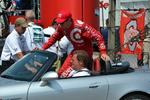
Dario Franchitti has seen the video replays of his crash during the Firestone Indy 400 and the Indianapolis 500 winner is appreciative for the safety features built into his race car.
F1 cars don't come into contact often because they are hindered by retarded rules that render even the fastest cars ineffective in the wake of any other car. Flat stepped bottoms + high front wings + too much wing (# elements and plan area) = you can catch but you can't pass unless you're *at least* 2 seconds a lap faster in free air.
F1 aero rules => piss-poor "racing"
Oh yeah, the "grooved tires" are also immensely retarded.
"Equal cars and open-wheels mean a recipe for disaster on a super speedway, and once again the IRL dodged a bullet when Dario Franchitti emerged unhurt from his trip through the air. It was just pure luck that no one was seriously hurt in the multi-car incident. Restrictor-plate racing in NASCAR is stupid enough, and the only thing that prevents the "big one" from happening more often is that full-bodied racing cars are involved. But formation "flying" in open-wheel Indy cars? It's just a matter of time before disaster strikes. Tony Kanaan could barely celebrate last Sunday after his win because he knew what they were doing during the race was flat-out crazy, and the fact that his good friend escaped serious injury left him shaken afterwards.
Yes, I know, racers ultimately will get in their cars and race. That's what they do. But racing Indy cars on super speedways? With the current package that the IRL is using? With no speed differentiatial among the top cars whatsoever? It's nuts. Cooler heads have to prevail here, folks. The IRL has got to find a better way to do it, or they shouldn't go back (to MIS)."