


Days til WTD9 2011



Joined: Aug 2005
Posts: 3,614
Likes: 11
From: Northern VA

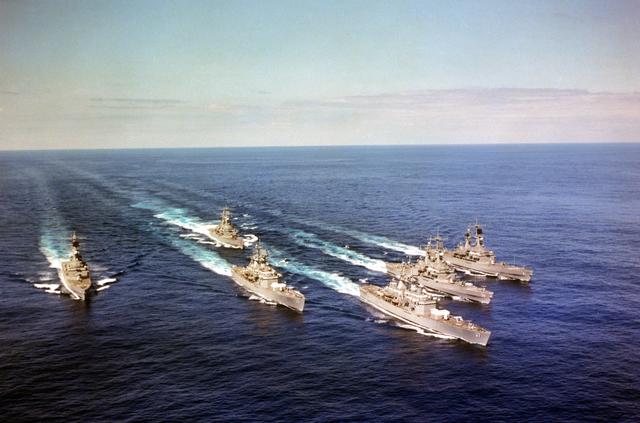
An aerial starboard bow view of six nuclear-powered guided missile cruisers underway in formation during exercise READEX 1-81. The ships are, from left to right: USS TEXAS (CGN 39), USS MISSISSIPPI (CGN 40), USS CALIFORNIA (CGN 36), USS SOUTH CAROLINA (CGN 37), USS VIRGINIA (CGN 38) and USS ARKANSAS (CGN 41).
Joined: Aug 2005
Posts: 3,614
Likes: 11
From: Northern VA

USS Pennsylvania (BB-38, originally Battleship # 38), 1916-1948
USS Pennsylvania, lead ship of a class of two 31,400-ton battleships, was built at Newport News, Virginia. Commissioned in June 1916, she served as the Atlantic Fleet's flagship into the early "Twenties". Though her operations during this time were primarily off the U.S. east coast and in the Caribbean area, Pennsylvania briefly cruised to France in December 1918. Transiting the Panama Canal to the Pacific early in 1921, she became flagship of the newly-organized Battle Fleet. During the next eight years, she led the Navy's battleships in maneuvers in the Atlantic, Caribbean and in the Pacific, including a cruise to Australia and New Zealand in mid-1925.
From June 1929 to May 1931, Pennsylvania received an extensive modernization at the Philadelphia Navy Yard, Pennsylvania. She emerged with new "tripod" masts, improved combat systems, and an enlarged armored conning tower to better support her mission as fleet flagship. Through the following decade, Pennsylvania continued her pattern of drills, at-sea exercises and periodic major "Fleet Problems" conducted to refine the Navy's war plans.
When Japan attacked on 7 December 1941, Pennsylvania, flagship of the United States Fleet, was in drydock at the Pearl Harbor Navy Yard. Her relatively light damage was repaired over the next few months, and she operated along the U.S. west coast and off Hawaii until October 1942. Following an overhaul that significantly updated her secondary battery of 5" guns and added many anti-aircraft machine guns, Pennsylvania went to Alaskan waters, where she participated in the recapture of Attu in May 1943 and Kiska in August.
In November 1943, Pennsylvania bombarded Makin during the amphibious assault on the Gilbert Islands. She repeated this role a few months later at Kwajalein and Eniwetok, and in June and July 1944 at Saipan, Tinian and Guam. Her guns supported landings in the Palaus in September 1944 and at Leyte in October. When the Japanese Navy responded vigorously to the latter operation, Pennsylvania helped to destroy part of the enemy fleet in the Battle of Surigao Strait.
In January 1945, Pennsylvania took part in the Lingayen Gulf invasion. Freshly returned to the combat zone after another overhaul, she was seriously damaged by a Japanese aerial torpedo off Okinawa on 12 August 1945, the last major Navy ship to be hit during the Second World War. Too old for retention in the post-war fleet, Pennsylvania was repaired only enough to fit her for target duty. She served in that capacity during the July 1946 Bikini atomic bomb tests. Subsequently moored at Kwajalein for studies of residual radioactivity, USS Pennsylvania was scuttled at sea on 19 February 1948.
Joined: Aug 2005
Posts: 3,614
Likes: 11
From: Northern VA

USS San Francisco (CA-38), 1934-1959
USS San Francisco, a 9950-ton New Orleans class heavy cruiser, was built at Mare Island, California. She was commissioned in February 1934 and made a shakedown cruise from Hawaii to Canada to Panama before joining the U.S. Fleet in early 1935. For the next four years, she operated in the eastern Pacific and in early 1939 went to the Caribbean to participate in Fleet Problem XX. After the completion of that exercise, she led Cruiser Division Seven on a long voyage around South America, returning to the U.S. east coast via the Panama Canal. With the outbreak of the European war in September 1939, San Francisco made Neutrality Patrols in the Western Atlantic and Caribbean.
Returning to the Pacific in early 1940, San Francisco began operations out of Pearl Harbor, where she was undergoing overhaul on 7 December 1941, when Japan attacked the Pacific Fleet there. Though their ship was largely dismantled, the cruiser's crew actively participated in anti-aircraft gunfire against enemy aircraft. San Francisco was back at sea in mid-month, when she joined in the abortive expedition to relieve the American outpost on Wake Island. During the first months of 1942, she took part in the reinforcement of Allied positions in the southern Pacific, an attempted carrier raid on Rabaul and a successful raid on Japanese forces off northern New Guinea. In the August 1942 invasion of Guadalcanal and Tulagi, San Francisco operated with the U.S. aircraft carriers that supported the landings. She remained active in the Guadalcanal Campaign for three months, serving as task force flagship in the Battle of Cape Esperance on 11-12 October and in the first parts of the Naval Battle of Guadalcanal on 12-13 November 1942. During the latter action she was severely damaged by a crashing Japanese plane and by gunfire.
Following extensive repairs San Francisco escorted a convoy to the south Pacific, then went to the Aleutians, where she took part in the recovery of Attu and Kiska in mid-1943. In October, she participated in a raid on Japanese-held Wake Island and during the next two months was part of the forces that captured the Gilbert Islands and raided the Marshalls. She stayed busy in 1944, participating in the January-February Marshall Islands invasion, raids on Japanese central and south Pacific bases in February-April, and the vast Marianas campaign in June and July. Late in the year and early in 1945, following a west coast overhaul, she escorted the carrier task forces that raided throughout the western Pacific as U.S. amphibious operations seized the northern Philippines and Iwo Jima. From late March 1945 into June she participated in the Ryukyus campaign.
After the fighting ended in mid-August, San Francisco operated off China and Korea. She arrived back in the U.S. in December 1945 and was decommissioned at the Philadelphia Navy Yard in February 1946. Following more than a decade in the Reserve Fleet, USS San Francisco was sold for scrapping in September 1959.
Joined: Aug 2005
Posts: 3,614
Likes: 11
From: Northern VA
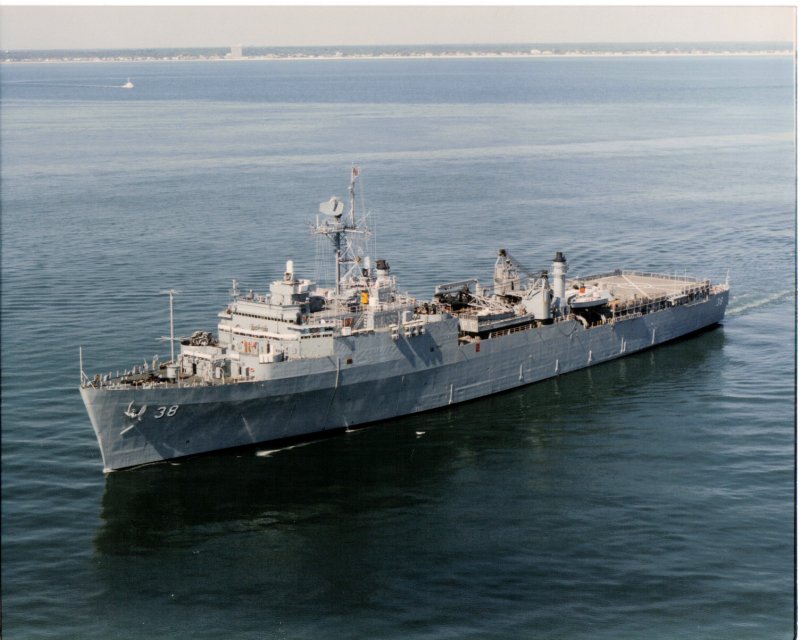
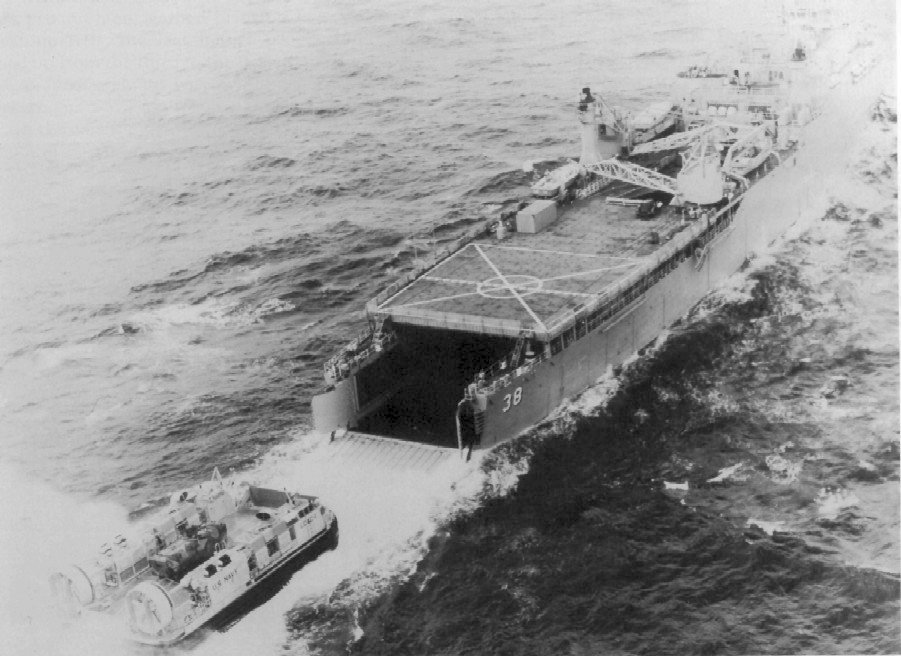
USS Pensacola (LSD-38) was a Anchorage-class dock landing ship of the United States Navy. She was the fourth Navy ship to be named for the naval town of Pensacola, Florida. She was built at General Dynamics Quincy Shipbuilding Division in Quincy, Massachusetts and commissioned in 1971.
In early 1995, the Commanding Officer of USS Pensacola was relieved because in November 1994 the ship had run aground off the east coast. In 1995, while cruising in the Mediterranean, the ship suffered a major fuel leak, causing the ship to go to General Quarters. The fuel leak was repaired, and no one was injured. In 1996, USS Pensacola ran aground once again while en route to Newport, Rhode Island. Pensacola was finally decommissioned in 1999, transferred to Taiwan and redesignated ROCS Hsu Hai (LSD-193).
Joined: Aug 2005
Posts: 3,614
Likes: 11
From: Northern VA

USS Puget Sound (AD-38) was a Samuel Gompers-class destroyer tender, the second ship of the United States Navy to bear the name Puget Sound.
The building contract was awarded December 29, 1964 to Puget Sound Naval Shipyard in Bremerton, Washington. The keel was laid February 15, 1965, and she was launched September 16, 1966. Commissioned April 27, 1968, she served almost 29 years until decommissioned on January 27, 1996. She was berthed at Naval Inactive Ship Maintenance Facility (NISMF) Philadelphia, Pennsylvania until April 2008 at which time she was sold to ESCO Marine, Brownsville, Texas for recycling and transferred under tow to that facility. The scrapping project was completed in February, 2009.




Joined: Aug 2005
Posts: 3,614
Likes: 11
From: Northern VA


Thread Starter


Joined: Feb 2001
Posts: 35,982
Likes: 211
From: 262 miles N of the Dragon

 going forward set at 50!