


WTDX Poker Run


Registered User
Joined: Mar 2009
Posts: 8,561
Likes: 0
From: Miami



Thread Starter


Joined: Aug 2005
Posts: 3,614
Likes: 11
From: Northern VA

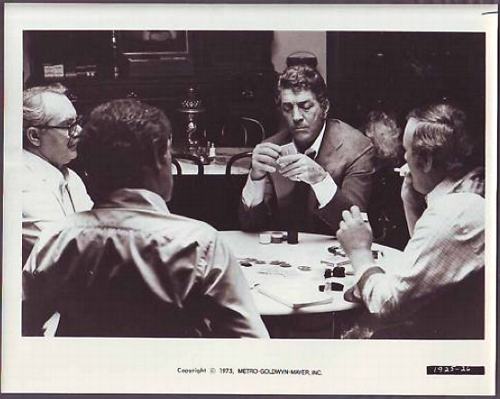
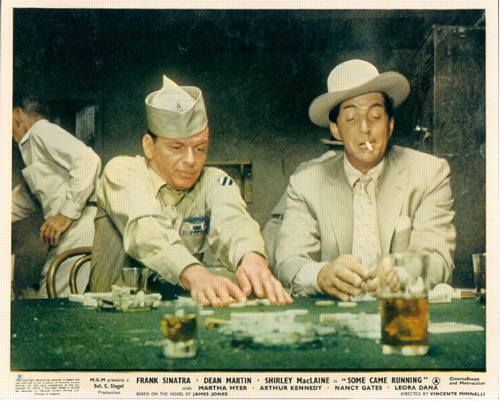
I'm NOT a fan of the TV show Desperate Housewives, but came across this photo (and comments ) at the web site: Desperate Housewives play Poker ON and OFF the set
Thread Starter
Joined: Aug 2005
Posts: 3,614
Likes: 11
From: Northern VA
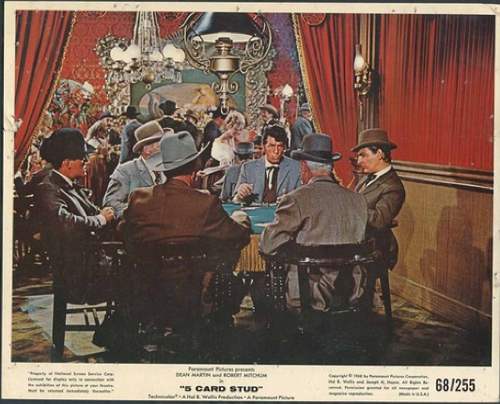
Dean Martin (player with no hat) in "5 Card Stud" (1968).
"After a card shark is caught cheating, he is taken out and lynched by the drunkards he was playing against. Soon afterwards, the men who were in the lynch mob start being murdered, one after another; all by hanging. Who will be killed next and who is responsible? Is it one of the original party seeking to cover their accursed deed, or perhaps the mysterious Rev. Jonathan Rudd, who has recently arrived in town?
Thread Starter
Joined: Aug 2005
Posts: 3,614
Likes: 11
From: Northern VA
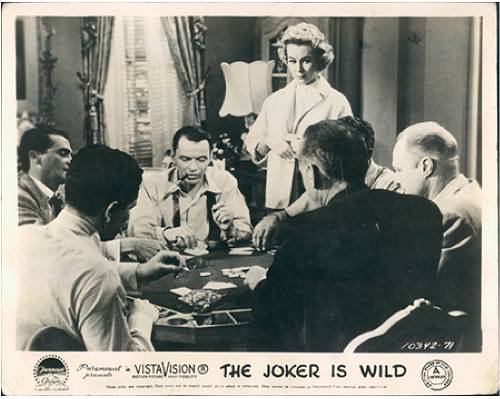
Frank Sinatra, next to Mitzi Gaynor, playing poker in "The Joker is Wild" (1957),
"Frank Sinatra plays Joe E. Lewis, a famous comedian of the 1930s-50s. When the movie opens, Lewis is a young, talented singer who performs in speakeasies. When he bolts one job for another, the mob boss who owns the first speakeasy has his thugs try to kill Lewis. Lewis survives, but his vocal cords are cut and he cannot sing. ... The assault that nearly cost him his life also helped turn him into an alcoholic and an inveterate gambler. These two character defects become the basis for his act [as a comedian] and help to make him a smash success. Unfortunately, they also work to wreak havoc in his personal life,"

Thread Starter
Joined: Aug 2005
Posts: 3,614
Likes: 11
From: Northern VA
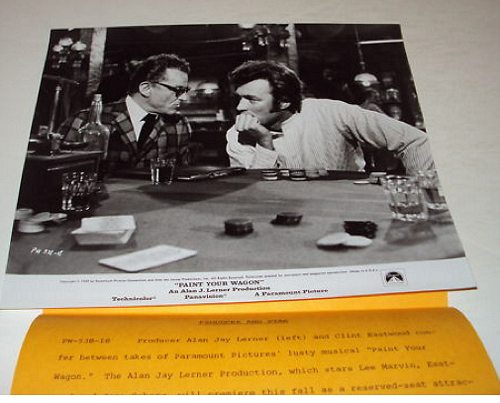
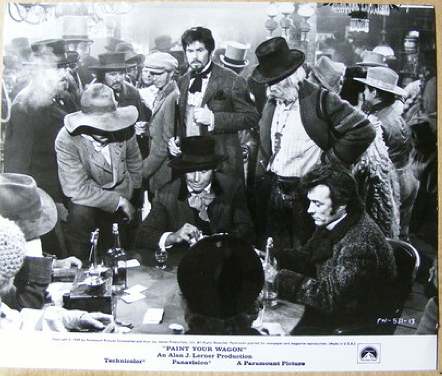
Clint Eastwood (right) and producer-playright Alan Jay Lerner conversing at gambling table prop between takes at their musical "Paint Your Wagon" (1969). Part of the press information sheet is at the bottom of the picture.
"A Michigan farmer and a prospector form a partnership in the California gold country. Their adventures include buying and sharing a wife, hijacking a stage, kidnaping six prostitutes, and turning their mining camp into a boomtown. Along the way there is plenty of drinking, gambling, and singing. They even find time to do some creative gold mining."
Thread Starter
Joined: Aug 2005
Posts: 3,614
Likes: 11
From: Northern VA
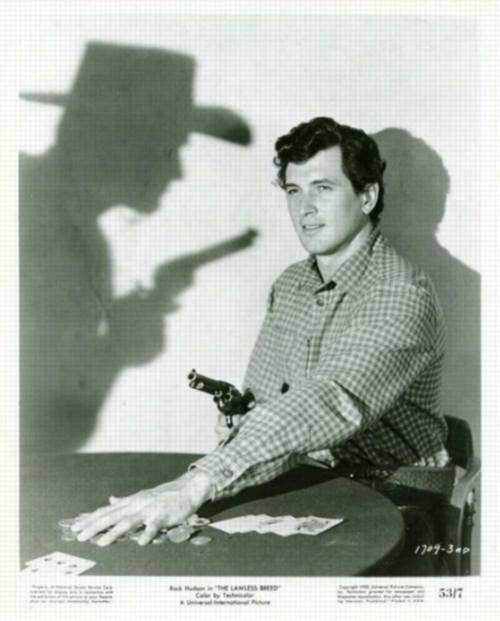
Young Rock Hudson in "The Lawless Breed" (1953).
"Released from jail, John Wesley Hardin (Hudson) leaves an account of his life with the local newspaper. It tells of his overly religious father, his resulting life of cards and guns, and his love for his step-sister replaced on her death during a gun fight with that for dance-hall girl Rosie.,"