


Any investment guru's in the house?


Thread Starter

Joined: Dec 2000
Posts: 4,404
Likes: 2
From: Cape Girardeau
 Any investment guru's in the house?
If you know the exact differences between stocks, bonds, mutual funds, IRA's, 401K's, etc., and know the best way to invest low, medium, and high amounts of capital for specific income levels, please post here or shoot me a PM.
I have lots of stupid questions, and will probably nag you to death in PM's, so be forewarned .
.
Thanks.
I have lots of stupid questions, and will probably nag you to death in PM's, so be forewarned
.Thanks
.


Registered User

Joined: May 2006
Posts: 4,087
Likes: 0
From: 297 Miles E of the Dragon
There are formulas, but they all depend on your risk tolerance/age/size of portfolio/needs in retirement.
I manage my own stock portfolio, since my parents died in 2003 and I inherited enough money to worry about these things. I've run the money they invested for their grandchildren since 2000. On average, I've done 22% per year return. It's do-able, just takes some research time.
Dave
I manage my own stock portfolio, since my parents died in 2003 and I inherited enough money to worry about these things. I've run the money they invested for their grandchildren since 2000. On average, I've done 22% per year return. It's do-able, just takes some research time.
Dave
Registered User
Joined: Jul 2001
Posts: 6,592
Likes: 0
From: Yorba Linda, CA
Originally Posted by S2Kguy,Aug 1 2006, 12:45 PM
If you know the exact differences between stocks, bonds, mutual funds, IRA's, 401K's, etc., and know the best way to invest low, medium, and high amounts of capital for specific income levels, please post here or shoot me a PM.
I have lots of stupid questions, and will probably nag you to death in PM's, so be forewarned.
Thanks.
I have lots of stupid questions, and will probably nag you to death in PM's, so be forewarned
.Thanks
.(You should have expected that.
 )
)Stock represents a share of ownership in a corporation. As an owner you (usually) have the right to vote on corporate policy, you may get distributions from the profits of the corporation (dividends), and you have proportional ownership of any residual (after creditors are paid) in the case that the corporation is dissolved.
A bond represents a debt that an entity (usually a company or a government) owes to you. There are usually periodic interest payments to the bond holder, and a final payment of principal. If the entity is dissolved, the bond holders - creditors - have the right to be paid before the owners receive any residual.
A mutual fund is a collection of various securities - stocks, bonds, mortgages, futures, options, and so on. A share of a mutual fund represents a proportional share of ownership in the fund.
An IRA is an (individual retirement) account in which you invest money with the expectation that its value will grow until you retire, at which time you will begin to withdraw money. There are several types of IRAs; for some your contributions are tax-deductable, for others they are not. In all IRAs the money invested grows tax-free: you only pay taxes when you withdraw money from the account.
A 401(k) is similar to an IRA. Whereas an IRA is an individual account - established by you as an individual - a 401(k) is established by a company for its employees. Many companies will match some portion of your contributions to a 401(k); think of this as free money, because it is.
How to invest your money depends on how much return you want to earn, and how much risk you can bear trying to achieve that level of return. Broadly, stocks provide higher returns and greater risk than bonds. The key to intelligent investing is diversification: investing in a collection of securities to reduce your risk while maintaining your return.
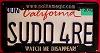
As for being a guru: look at the signature below.

Registered User
Joined: Jun 2006
Posts: 26
Likes: 0
^^ Can I ask where you started to learn your information, and if you have read any books to help you get started?
I am wanting to inform myself about investments.
What you said IRA is tax deductable, and you can withdraw it then you are taxed?
Whats the benefit? Is there a certain age that you can pull it out without getting taxed? And I was told by someone, that they can send a percentage of their wage into a IRA fund before they are taxed on their earnings to get more money into their IRA account. I was a little confused about this.
thanks for the info
I am wanting to inform myself about investments.
What you said IRA is tax deductable, and you can withdraw it then you are taxed?
Whats the benefit? Is there a certain age that you can pull it out without getting taxed? And I was told by someone, that they can send a percentage of their wage into a IRA fund before they are taxed on their earnings to get more money into their IRA account. I was a little confused about this.
thanks for the info

Registered User
Joined: Jul 2006
Posts: 14
Likes: 0
Unlimited: What you wer referring to is one of the main reasons why individuals want to defer their compensation: The ability to earn from the portion that has not yet been taxed. Here's are two scenarios; both with 10K pre tax compensation:
Scenario A:
You defer the whole 10K into your (k) acct. Assuming a 6% return for 20 years, you would end up with $30,256. Your distribution will be taxed as income (approx 30%) when you do decide to withdrawal funds from your (k) acct. There are rules to when you can start withdrawing $ from your (k) acct, but for now let's assume you have met the rules and therefore not subject to any penalties. You would have 21,179
Scenario B:
You get taxed @ 30% for the 10K and you invest the remaing 7K. Assuming a 6% return for 20 years, your would end up with $21,179. Distrubtions (Your initial 7K won't be taxed, since you paid taxes on it already) will be taxed @ Long Term Cap Gain Rates (right now it's 15%). ($21,179 - $7,000) X 15% = $12,052. Plus your original 7K, you would have 19,052.
There are 2 different types of Individual Retirement Account: Traditional and Roth.
Traditional - Contributions are deductible, withdrawal are taxed as income
Roth - Post Tax Contributions, Tax free when you withdraw (yes, no tax on the earnings).
Note about Roth: this is an attractive vehicle for estate planning, since there are no rules as you when an individual must take distributions. (This is not true for an Traditional IRA or your (k) account)
Scenario A:
You defer the whole 10K into your (k) acct. Assuming a 6% return for 20 years, you would end up with $30,256. Your distribution will be taxed as income (approx 30%) when you do decide to withdrawal funds from your (k) acct. There are rules to when you can start withdrawing $ from your (k) acct, but for now let's assume you have met the rules and therefore not subject to any penalties. You would have 21,179
Scenario B:
You get taxed @ 30% for the 10K and you invest the remaing 7K. Assuming a 6% return for 20 years, your would end up with $21,179. Distrubtions (Your initial 7K won't be taxed, since you paid taxes on it already) will be taxed @ Long Term Cap Gain Rates (right now it's 15%). ($21,179 - $7,000) X 15% = $12,052. Plus your original 7K, you would have 19,052.
There are 2 different types of Individual Retirement Account: Traditional and Roth.
Traditional - Contributions are deductible, withdrawal are taxed as income
Roth - Post Tax Contributions, Tax free when you withdraw (yes, no tax on the earnings).
Note about Roth: this is an attractive vehicle for estate planning, since there are no rules as you when an individual must take distributions. (This is not true for an Traditional IRA or your (k) account)
Trending Topics
Registered User
Joined: Jul 2001
Posts: 6,592
Likes: 0
From: Yorba Linda, CA
Originally Posted by unlimited77,Aug 1 2006, 08:53 PM
^^ Can I ask where you started to learn your information, and if you have read any books to help you get started?
I earned a Bachelor's degree in Business Administration - emphasis in Accounting - in 1980, and my Chartered Financial Analyst designation in 1999.
This is probably a good book to help one get started.
