Made a reliable 320whp @10psi on E


Joined: Jun 2008
Posts: 1,593
Likes: 75



Joined: Sep 2012
Posts: 3,301
Likes: 213
From: Greenwood, AR

The turbo size/efficiency (and the rest of the system) matters as well. Boost is just a restriction.
The S2000 made 400 whp at 8.5 PSI and has an instant and flat torque curve (in threshold). At HPR's back straight, I went from a top speed of 112mph while NA and no aero, to 128mph at 4.5 PSI and aero.
Last edited by yamahaSHO; Mar 17, 2023 at 10:44 PM.

Joined: Apr 2009
Posts: 1,513
Likes: 119
4.5psi is going to give you around 30% more inlet pressure so that's 30% more power at best - that's 285-295whp max before you even remove your extra flow losses and your turbo inefficiency/drive power.
A pressure ratio of 1.3 is going to be well down on the efficiency map for almost any common turbo - you're probably around 70% if you're lucky.
Some people have very optimistic dynos over there if that's what it said - you might make a little more on a hub dyno of course but still.
(I have a few runs from 4.5psi on mine, on a hub dyno so no tyre losses, it was about 255-270 depending on fuel. And that's a dyno that's calibrated against a standalone engine test bench. Sure I probably have a little more loss in drive but certainly not 60 horsepower. The transmission and belts would be glowing red hot after a run if that was the case.)
Last edited by BuggyofMildDiscomfort; Mar 18, 2023 at 06:52 AM.
Joined: Apr 2009
Posts: 1,513
Likes: 119
Yes but that restriction is the rest of your engine, and unless there's some massive changes like you're running race cams, serious headwork and 10krpm+, then that's not going to change a whole lot.
There's a reason everyone else is pushing 8-10psi to make 320whp. It's not magic.
There's a reason everyone else is pushing 8-10psi to make 320whp. It's not magic.
Last edited by BuggyofMildDiscomfort; Mar 18, 2023 at 06:53 AM.
Joined: Jun 2008
Posts: 1,593
Likes: 75

Joined: Jun 2008
Posts: 1,593
Likes: 75
Yes, the compressor efficiency is 'terrible' at that operating point. However, it's low pressure ratio and relatively low mass flow, therefore the compressor power requirement is low. Which translates into a low turbine power requirement and therefore low turbine pressure ratio requirement. The relatively low compressor efficiency is driving a percentage increase of a low turbine pressure ratio, which is to say, not a large absolute value impact. As compared to the same percentage increase on a higher power operating point with higher turbine pressure ratio. If you think of it, we operate our engines in the 'terrible' parts of the BSFC maps in everyday driving almost the whole time.

Joined: Sep 2012
Posts: 3,301
Likes: 213
From: Greenwood, AR
I knew you'd be arguing this, which is why I added the top speed delta down the back straight, which doesn't lie and this log is one of those runs down the straight, showing just how much boost is being run:

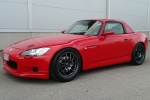
When Robert Thorne originally tuned the S2000 below, it made 300whp on 3 PSI (different dyno than I used) and the guy who owns it left it that way for awhile (like me) as it was fun. The last time I tuned it, it made 470whp, but a bit more boost. Now it's got a larger turbo and I am going out to tune it again. The weekend this picture was taken, he took first in class and the class record, IIRC.

The dyno I did my car on, I've actually tuned a lot of cars on and have a pretty good idea on the numbers it puts out. I've also used many other dyno and understand some reading low/high. The one I used here has been one of the most consistent dynos I've ever used. Believe the numbers or not, the track improvement was substantial. Since it's a track car these days, that's all I care about. On the plus side, temps stay low and I can run it all day.
This was the day I did the dyno tuning with my car:
For reference, here are the graphs from both cars on the dyno:

When Robert Thorne originally tuned the S2000 below, it made 300whp on 3 PSI (different dyno than I used) and the guy who owns it left it that way for awhile (like me) as it was fun. The last time I tuned it, it made 470whp, but a bit more boost. Now it's got a larger turbo and I am going out to tune it again. The weekend this picture was taken, he took first in class and the class record, IIRC.
The dyno I did my car on, I've actually tuned a lot of cars on and have a pretty good idea on the numbers it puts out. I've also used many other dyno and understand some reading low/high. The one I used here has been one of the most consistent dynos I've ever used. Believe the numbers or not, the track improvement was substantial. Since it's a track car these days, that's all I care about. On the plus side, temps stay low and I can run it all day.
This was the day I did the dyno tuning with my car:
For reference, here are the graphs from both cars on the dyno:
Last edited by yamahaSHO; Mar 19, 2023 at 04:52 PM.