


Does tire size affect starting pressures?

Thread Starter
Registered User
Joined: Aug 2002
Posts: 48,203
Likes: 10
From: Lewisville, TX
 Does tire size affect starting pressures?
Normally, I have tracked with the standard 225/245 RA-1's on oem AP1 wheels. Full interior, instructor, and 1/2 tank of fuel. Starting pressures ended up needing to be about 24 F & R.
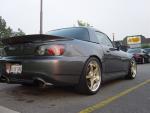
This weekend I used my oem rear wheel on the front(245) and a Volk CE28N on the rear(255) for the first time. Softtop and bulkhead are gone, but the instructor remained. I started the day with the 24psi settings. Only the front left got to 30psi, while the rest were lower. Thinking maybe it was because it was cooler in the morning, I went up 2psi all around. Still not enough. 2psi more- not enough. I just can't wrap my mind around having to start at 30psi.
Can this be caused by the wider tire selection or with the lowering of the vehicle's weight or both? gfacter had to bump the pressures on his C6(RA-1's also) from what he normally ran on his S. Can it be track dependent?
Thanks. I'm now keeping notes on the different events to facilitate better/faster adjustments at each event.
This weekend I used my oem rear wheel on the front(245) and a Volk CE28N on the rear(255) for the first time. Softtop and bulkhead are gone, but the instructor remained. I started the day with the 24psi settings. Only the front left got to 30psi, while the rest were lower.
Thinking maybe it was because it was cooler in the morning, I went up 2psi all around. Still not enough. 2psi more- not enough. I just can't wrap my mind around having to start at 30psi.Can this be caused by the wider tire selection or with the lowering of the vehicle's weight or both? gfacter had to bump the pressures on his C6(RA-1's also) from what he normally ran on his S. Can it be track dependent?
Thanks. I'm now keeping notes on the different events to facilitate better/faster adjustments at each event.

Registered User
Joined: Feb 2004
Posts: 2,246
Likes: 0
From: Gilbert, Arizona

Here's the skinny.
Analyze the track layout. If your track has more long, high G turns to one side, then that side will heat up more than the other. For example, at PIR, our right tire pressures will be a couple pounds higher hot after a run than the left side. If you are equally pressuring all tires and see a higher pressure on one side, then follow the car through the course. The tire(s) that have the most friction will get the hottest and the air will expand accordingly... which is "normal".
From your write-up, it appears that your left-front is receiving the most friction / heat. Here's what I'd suggest for starters:
1. Euro Alignment.
2. For Toyos, start with 28 pounds cold pressure each.
3. Stiffen front end shocks to help eliminate roll.
One excellent indicator of how your tires are working in corners is to look at the shoulder roll. Make sure that the tread on the outside of your tires is scuffing only to about the half-way mark on the tread "shoulders". Any more indicates that your tire pressure is too low and your tires are rolling too much.
Make sure your tires have the best footprint in corners.
Most likely, your car is under-steering, (guessing). To help with the front tire planting, I had the caster pushed out to 7.5 degrees, while the front camber is set to 2 degrees. The camber/caster adjustments, along with stiffening the front end allowed greater traction for my stook.
In summary, if you are seeing more pressure on one tire than the others, it is an indication of more friction and heat caused by that corner working harder to obtain grip.
Make sense?
Analyze the track layout. If your track has more long, high G turns to one side, then that side will heat up more than the other. For example, at PIR, our right tire pressures will be a couple pounds higher hot after a run than the left side. If you are equally pressuring all tires and see a higher pressure on one side, then follow the car through the course. The tire(s) that have the most friction will get the hottest and the air will expand accordingly... which is "normal".
From your write-up, it appears that your left-front is receiving the most friction / heat. Here's what I'd suggest for starters:
1. Euro Alignment.
2. For Toyos, start with 28 pounds cold pressure each.
3. Stiffen front end shocks to help eliminate roll.
One excellent indicator of how your tires are working in corners is to look at the shoulder roll. Make sure that the tread on the outside of your tires is scuffing only to about the half-way mark on the tread "shoulders". Any more indicates that your tire pressure is too low and your tires are rolling too much.
Make sure your tires have the best footprint in corners.
Most likely, your car is under-steering, (guessing). To help with the front tire planting, I had the caster pushed out to 7.5 degrees, while the front camber is set to 2 degrees. The camber/caster adjustments, along with stiffening the front end allowed greater traction for my stook.
In summary, if you are seeing more pressure on one tire than the others, it is an indication of more friction and heat caused by that corner working harder to obtain grip.
Make sense?
Thread Starter
Registered User
Joined: Aug 2002
Posts: 48,203
Likes: 10
From: Lewisville, TX
Thanks for the detailed response. I'll try to address your points in order.
- Alignment is
- Two events before, we were able to get 7* of caster with -2.0 camber with 225's. My car felt like it was on rails in the corners. The wing was not a factor. We did change the wing attack angle after the first session this time. It made a difference in hard braking and higher speed turns.
- 28psi cold didn't allow the tires to get to 36-38psi hot. The tires never really were completely cold- we added 2psi at a time.
- The Koni yellows are set to 3/4 stiff on front and rear. The Eibach/GC springs are 500F/550R. I have the Gendron bar on second stiffest.
- We used tire paint to show tire roll. We were right on target with Toyo's arrow indicators.
- Yes, I'd say I had understeer for sure. I had to use throttle modulation to induce the desired results. While it made me(and my instructor) happy that I could do it, I know I could be going faster through certain sections.
With the new tire setup, I had envisioned having to fight the backend from wanting to see what was going on up front, however, that was not the case. I used the Gendron on the same setting with more of a front-to-rear stagger and didn't feel as much pushing. I was guessing that my entry speeds were contributing to the plowing.
- Alignment is
- Two events before, we were able to get 7* of caster with -2.0 camber with 225's. My car felt like it was on rails in the corners. The wing was not a factor. We did change the wing attack angle after the first session this time. It made a difference in hard braking and higher speed turns.
- 28psi cold didn't allow the tires to get to 36-38psi hot. The tires never really were completely cold- we added 2psi at a time.
- The Koni yellows are set to 3/4 stiff on front and rear. The Eibach/GC springs are 500F/550R. I have the Gendron bar on second stiffest.
- We used tire paint to show tire roll. We were right on target with Toyo's arrow indicators.
- Yes, I'd say I had understeer for sure. I had to use throttle modulation to induce the desired results. While it made me(and my instructor) happy that I could do it, I know I could be going faster through certain sections.
With the new tire setup, I had envisioned having to fight the backend from wanting to see what was going on up front, however, that was not the case. I used the Gendron on the same setting with more of a front-to-rear stagger and didn't feel as much pushing. I was guessing that my entry speeds were contributing to the plowing.

Registered User
Joined: Feb 2004
Posts: 2,246
Likes: 0
From: Gilbert, Arizona
Yes. The entry speed...
I had a champion Miata Spec driver give me supurb pointers on corner entry speed. It happened to be that my entry speed into corners was way too fast and I was blowing the apex. What I find now is that by slowing down sooner than what I used to do, ends up with my car hitting the apex right and "we" are exiting the apex under power at an over greater speed! No under-steer and greater exit speeds puts me about 3 car lengths ahead of where I used to be! Aint that some shit!
But the key here is to drive your car accordingly. With greater traction, you can brake later and take tighter corners. Adjust to what your car can do.
If your car is understeering in the corners, then you need to shift weight to the front by either entering the corner a bit slower - or applying slight brake ... like left-foot braking....
yada... It is all about traction and weight moments.
Party on...
I had a champion Miata Spec driver give me supurb pointers on corner entry speed. It happened to be that my entry speed into corners was way too fast and I was blowing the apex. What I find now is that by slowing down sooner than what I used to do, ends up with my car hitting the apex right and "we" are exiting the apex under power at an over greater speed! No under-steer and greater exit speeds puts me about 3 car lengths ahead of where I used to be! Aint that some shit!
But the key here is to drive your car accordingly. With greater traction, you can brake later and take tighter corners. Adjust to what your car can do.
If your car is understeering in the corners, then you need to shift weight to the front by either entering the corner a bit slower - or applying slight brake ... like left-foot braking....
yada... It is all about traction and weight moments.
Party on...
Trending Topics
Thread Starter
Registered User
Joined: Aug 2002
Posts: 48,203
Likes: 10
From: Lewisville, TX
Originally Posted by SPLNDID,Apr 2 2007, 08:31 PM
Set the Konis to 1/4 turn more stiff on the fronts and 1/4 turn loose on the rears.

Registered User
Joined: Apr 2003
Posts: 22,888
Likes: 3
From: Covington WA, USA
Originally Posted by FF2Skip,Apr 2 2007, 06:25 PM
1/4 more in the front would be full stiff. I haven't tried that with this setup, but I haven't had much fun with it before. Reason for this?

Registered User
Joined: Mar 2007
Posts: 2,202
Likes: 1
Prevent corner exit push I reckon; since the front wheels would be planted more due to the slower weight transfer from the stiffer front rebound when you're getting on the throttle.
Personally, i'd recommend a tick of front toe out, slightly less rear toe in and soften rear rebound 1/4 turn. if you have ride height adjustable suspension, lower the front and raise the rear (1/4 inch and 1/8 inch respectively)
Personally, i'd recommend a tick of front toe out, slightly less rear toe in and soften rear rebound 1/4 turn. if you have ride height adjustable suspension, lower the front and raise the rear (1/4 inch and 1/8 inch respectively)