


J's type 1 and 2 gt wing


Joined: Sep 2006
Posts: 4,762
Likes: 3
From: San Diego

Gurneys increase the pressure on the pressure side and decrease the pressure on the low pressure side.
To my understanding, it does so by creating more turbulence near the trailing edge which in turn lowers the boundary layer thickness.
In order to maintain L/D, gurney should be no more than 2% of the chord length.
Hopefully BKL can chime in.
-Dino
To my understanding, it does so by creating more turbulence near the trailing edge which in turn lowers the boundary layer thickness.
In order to maintain L/D, gurney should be no more than 2% of the chord length.
Hopefully BKL can chime in.
-Dino


Registered User
Joined: Mar 2005
Posts: 1,248
Likes: 0
From: Vancouver
Antonov has it right.
A gurney slows down the air ahead of it, increasing the static pressure on the upside of the wing. It also adds a pair of vorticies directly behind the flap which is often associated with a drop in pressure, which in turn maintain flow attachment on the bottom side of the wing.
So a wing can have an even higher angle of attack, or camber, without flow separation when a gurney is installed.
A gurney slows down the air ahead of it, increasing the static pressure on the upside of the wing. It also adds a pair of vorticies directly behind the flap which is often associated with a drop in pressure, which in turn maintain flow attachment on the bottom side of the wing.
So a wing can have an even higher angle of attack, or camber, without flow separation when a gurney is installed.

Registered User
Joined: Mar 2005
Posts: 1,248
Likes: 0
From: Vancouver
Even with a low AOA, the wing will produce greater downforce with a gurney. This is because the gurney is still slowing down the air ahead of it which increases the static pressure on the wing's upside.


Registered User
Joined: Apr 2006
Posts: 394
Likes: 0
Originally Posted by BKL,Apr 6 2010, 03:41 PM
Antonov has it right.
A gurney slows down the air ahead of it, increasing the static pressure on the upside of the wing. It also adds a pair of vorticies directly behind the flap which is often associated with a drop in pressure, which in turn maintain flow attachment on the bottom side of the wing.
So a wing can have an even higher angle of attack, or camber, without flow separation when a gurney is installed.
A gurney slows down the air ahead of it, increasing the static pressure on the upside of the wing. It also adds a pair of vorticies directly behind the flap which is often associated with a drop in pressure, which in turn maintain flow attachment on the bottom side of the wing.
So a wing can have an even higher angle of attack, or camber, without flow separation when a gurney is installed.

the visualization
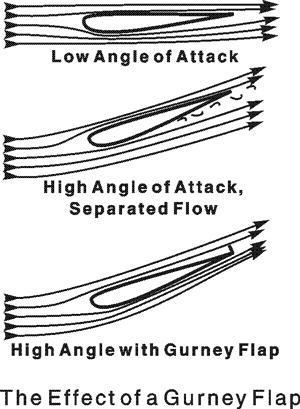
and how it helps


Thread
Thread Starter
Forum
Replies
Last Post