


Rake and ride height


Thread Starter


Joined: Nov 2002
Posts: 16,703
Likes: 74
From: High Knob Mountain
 Rake and ride height
I am fooling with my ride height today, looking at my notes it seems from 2 years ago I originally set the car up with about a 19mm lower than stock ride height in the front and about 15mm lower in the rear. I guess I had some rake dialed in from the stock settings.
Does anyone have a preference for more or less rake and why so?
Thanks
Does anyone have a preference for more or less rake and why so?
Thanks

Registered User
Joined: Oct 2000
Posts: 2,560
Likes: 0
From: Studio City, CA
Greater rake is supposed to increase oversteer and less rake is supposed to reduce it. In my experience though, it doiesn't make any real difference. If you were running aero, you might want to put some extra though into your rake, but otherwise, just do what looks good to you. I typically go for a more european car look and lower the rear slightly more than I lower the front.

Registered User
Joined: Oct 2003
Posts: 15,082
Likes: 0
From: Knoxville, TN
If you like the way your car feels on the track, then leave the rake the way it is. If you feel that your car has too much oversteer, then decrease the rake. If your car has too much understeer, then increase it a little bit.
Who cares how it looks, all I care about is what the car does on the track.
Who cares how it looks, all I care about is what the car does on the track.
Thread Starter
Joined: Nov 2002
Posts: 16,703
Likes: 74
From: High Knob Mountain
 I don't care how the car looks, and am not sure I wil be able to tell much of a difference without making a major change
I was just curious if someone here had some S2000 specefic results with more or less rake.
Registered User
Joined: Oct 2003
Posts: 15,082
Likes: 0
From: Knoxville, TN
I wouldn't be too concerned about results from other cars. I would make a decision based on what your car is doing at this time. You are probably right about not being able to feel much of a difference without making a major change. On the other hand, if your setup is track oriented (Moton, JRZ ect.) and tuned very well, you just might feel quite a difference.
If you like the way your car handles, I would stay with your 4 mm of rake.
If you like the way your car handles, I would stay with your 4 mm of rake.

Registered User
Joined: Jul 2003
Posts: 623
Likes: 0
From: LA
I believe there's an optimum rake value (sweet spot) for getting the most DF through ground-effects. There are books that generalize on the subject based on aspect ratios but only short of wind tunnel testing will you be able to optimise your setting. What you are shooting for is just the right amount of diverging ground clearance to promote air scavenging (i,e, speeding up air velocity to lower the coefficient pressure). Too much rake and the air flow will separate and cause turbulence defeating its purpose. Too little and you won't realize the benefit of your goal. In general +rake is a given just like -camber.
FWIW, the surface underneath the S2k is too much of a disaster area to get any substantial DF from. You would first need to board up the the drive shaft tunnel and any part that would obstruct a smooth air flow.
ps. sorry, no real life experience to share with you my susp is still stock.
FWIW, the surface underneath the S2k is too much of a disaster area to get any substantial DF from. You would first need to board up the the drive shaft tunnel and any part that would obstruct a smooth air flow.
ps. sorry, no real life experience to share with you my susp is still stock.
Registered User
Joined: Oct 2003
Posts: 15,082
Likes: 0
From: Knoxville, TN
First off, we all know that the S2K, or any street car for that matter do not utilize ground effects. I believe there is a kit, I think Mugen, I'm not sure, that consists of plates that prevent the air flow from collecting in pockets underneath the car. Combined with a modified front end, (aero dynamically efficient) these plates will absolutely make your car faster in terms of overall top speed. These plates by no means are the same as ground effects as they will provide no down force, they just provide efficiency.
When you adjust the rake, you are changing the cars roll center. This affects the balance of the car. The amount of grip in the front of the car verses the amount of grip in the back of the car.
Rake does not affect aero, but affects the transfer of weight from opposite ends of the car.
The down force on a racecar is generated through tunnels on the bottom of it and wings at the front and rear of the car. These tunnels and wings are developed by engineers to provide optimum down force at a particular roll center setting.
The purpose of adjusting rake on a race car is to change or fine tune the roll center.
When you adjust the rake, you are changing the cars roll center. This affects the balance of the car. The amount of grip in the front of the car verses the amount of grip in the back of the car.
Rake does not affect aero, but affects the transfer of weight from opposite ends of the car.
The down force on a racecar is generated through tunnels on the bottom of it and wings at the front and rear of the car. These tunnels and wings are developed by engineers to provide optimum down force at a particular roll center setting.
The purpose of adjusting rake on a race car is to change or fine tune the roll center.
Trending Topics


Registered User
Joined: Oct 2003
Posts: 15,082
Likes: 0
From: Knoxville, TN
That is a trick question. When a cars rake is set, keep in mind that what is being adjusted would be the height of the rear of the car verses the height at the front of the car. When the car is either raised or lowered at either end, both the left and right sides of the car would be adjusted equally to keep ride height the same on the left and right sides. The only exception is if you plan on only going left as in a oval.
The corner weights will indeed be thrown off after making a rake or ride height adjustment, therefore, the corner weights will have to be re-adjusted. This is why the corner weights are the last thing to be adjusted.
Rake is an adjustment that is not dictated by corner balancing, but will affect the corner weights after an adjustment. That is why the corner weights are the last adjustment to be made.
Rake is it's own adjustment independent of corner balancing. In other words, rake and the corner weights do entirely different things.
The corner weights will indeed be thrown off after making a rake or ride height adjustment, therefore, the corner weights will have to be re-adjusted. This is why the corner weights are the last thing to be adjusted.
Rake is an adjustment that is not dictated by corner balancing, but will affect the corner weights after an adjustment. That is why the corner weights are the last adjustment to be made.
Rake is it's own adjustment independent of corner balancing. In other words, rake and the corner weights do entirely different things.
Joined: Jan 2002
Posts: 4,666
Likes: 2
From: Encinitas (San Diego), CA
Originally Posted by twohoos,Jan 9 2005, 05:24 PM
Also, isn't rake completely determined by corner-balancing?
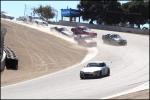
I saw a photo of my car braking into a corner at Buttonwillow, and I was surprised to see how much the rear was up and the nose down entering the corner, so rake can change substantially under dynamic conditions like when trailbraking (?I guess roll center too??).