


S2000 Awards


Registered User
Joined: May 2007
Posts: 2,140
Likes: 0
From: Orlando, FL

Originally Posted by jeggy,Apr 7 2008, 10:56 PM
it's also the most riced out convertible according to super street.

I hate to be THAT guy but does anyone note that the F22 is not in any of those, thus concluding
F20C > F22C

 AP1 FTW
Trending Topics


Joined: Mar 2003
Posts: 3,037
Likes: 26
From: SoCal
If we're going to get all choked up, here's an informative article on the S2000 from 1999...
S2000 Concept
A minimalist design geared towards giving the driver the closest thing to experiencing a Formula type single seat race car for the street. "Lighter in feel than a Porsche Boxster, more like a Lotus Elise." Such lofty aspirations for a new sports car would be wishful thinking for many automakers, but not for Honda Executive Chief Engineer Shigeru Uehara.
In developing the new S2000 roadster, Uehara and his team set out to reaffirm Honda's reputation for engineering and technology. That reputation has become dulled in recent years, as Honda concentrated on popular but uninspiring mainstream cars such as the Accord.
With development virtually stalled on the exotic, expensive Acura NSX, attention at Honda turned to the more affordable roadster segment. In 1995, the company unveiled the SSM concept at the Tokyo show, and even though the sports car market was at a low point, company-President Nobuhiko Kawamoto decided to proceed with a production version. Four years later, the S2000 debuts in time to celebrate the millennium and (belatedly) Honda's 50th anniversary.
The car launches amidst a sports car rebirth, with successful entries including the Boxster, BMW Z3, Mercedes SLK and the now-classic Mazda Miata. Dan Bonawitz, vice-president of American Honda, believes the market sector in the U.S. will continue to grow through 2001 and level off at around 100,000 units annually. The resurgence, he says, is due to "baby boomers, reaching their peak earning years and, with their kids leaving home, who are looking to recapture their youth -- a time when they might have been driving MGs or Triumphs or one of Detroit's muscle cars."
Topping Uehara's list of desired attributes were high performance and first-class driving dynamics. But while rivals BMW and Benz cloak their roadsters in luxury trappings, the S2000 would remain a "true" sports car; like a Miata with a few extra frills.
Powerful and Clean
The S2000's character is rooted in an all-new 2.0L dohc inline 4-cylinder engine. The compact, all-aluminum unit develops a claimed 240 hp at 8,300 rpm and 153 lb-ft of torque at 7,500 rpm. It's the highest specific-output, naturally aspirated car engine in production, thanks to a superbike-like 8,900 rpm redline. But Uehara's team also designed in durability and low emissions, starting with a new version of Honda's familiar VTEC variable valve timing system.
"We used coaxial roller-bearing cam followers instead of the slipper-type in the existing design in order to reduce friction," Uehara explains. The cylinder block features fiber-reinforced metal (FRM) cylinder liners, which are lighter and more wear resistant than normal ferrous-metal liners.
The forged-aluminum pistons, a first for a Honda production car, have ultra-short skirts for light weight and low friction. Connecting rods and crankshaft are carburized and heat treated for durability. Ensuring a copious supply of cool intake air is a conical axial-flow filter, which sits in a large 5.5L expansion chamber located ahead of the longitudinally mounted engine.
To meet low emission vehicle regs, S2000 features a new metallic honeycomb catalyst, plus secondary air injection. The thin-walled metal converter takes the place of a typical ceramic design and quickly increases exhaust gas temperature, thus reducing hydrocarbon emissions. The new catalyst also makes 40% less back pressure than a conventional converter. Its fast light-off time is aided by the air-injection system, which uses an ECM-controlled electric pump to feed fresh air into the exhaust. The result is 40% lower exhaust emissions than are produced by the Civic Si coupe, claims Honda.
Bad To The X-Bone
To allow S2000 drivers to make the best use of the revs, a new close ratio 6-speed manual transmission routes power via a one-piece propshaft and CV joints (not U-joints) to the rear wheels. A Torsen limited-slip differential is standard. By using two parallel shafts in the transmission, loads on the gear synchronizers are reduced and the shifting effort is lightened. Double-cone synchronizers on flint, third and fourth gears, plus triple-cone synchronizers for the often used second gear, further improve shifting feel.
Throughout the car's development, emphasis was placed on making the S2000 as responsive to driver inputs as possible. This led Uehara to study how a driver rates acceleration "feel."
"Our tests showed that a driver feels acceleration response is `excellent' when the damping of acceleration G is rapid -- that is, when the time to reach steady G is short," he says. And the biggest factor contributing to this fast acceleration damping effect is the rigidity of the drivetrain, "especially the torsional rigidity of the driveshaft." As a result, the diameter of the rear half-shafts were enlarged.
A similarly detailed approach was taken with the brake system, which was modified by enlarging the master poppet valve in the master cylinder to give faster initial response to pedal application. "The pedal firmness is generally high in sports cars," Uehara notes, "but brake application effectiveness is low. For the S2000 we aimed to achieve both application effectiveness and pedal firmness."
The starting point for the dynamic excellence displayed by the S2000 on our test drive, is a proven one: a 50/50 front/rear weight balance. Combined with a low center of gravity, it creates a lowyawing moment of inertia, making the car quicker and more linear in its responses to driver input. Steps taken to benefit dynamic response included locating the entire drivetrain behind the centerline of the axle, specifying a wide track (57.8 inches front/59.4 inches rear), designing a compact "in-wheel" double-wishbone suspension and a highly rigid body structure.
The latter is a standout feature of the open-top S2000. A centralized-backbone frame, which Honda calls the "high X-bone," was developed for S2000. Unlike other roadster flame designs, the Honda's center backbone tunnel is extremely tall. Diagonally braced front and rear bulkheads tie the frame members together into a strong beam-like structure that resists bending and torsional forces. The result, the company claims, is that the S2000 is actually superior in torsional rigidity to fixed-roof cars in the Honda stable, including the Accord and Integra.
Steering is handled in S2000 by an electrically assisted system, borrowed from the NSX. As well as saving horsepower over a hydraulic system, its advantages include "a high degree of freedom in setting the steering force to match vehicle speed and high performance steering compliance," explains Uehara. A small diameter steering wheel, with magnesium alloy core, adds to the crisp, responsive feel.
Undoubtedly, the S2000 could have been made even lighter than its 2,756 pounds (about 150 pounds under a BMW Z3). And it could have been made cheaper. The electrically operated roof, for instance, is costlier and heavier than a manual design. Considerable weight could also have been saved by use of more aluminum body panels (only the hood is aluminum) in place of steel, but that would have driven the price up.
The S2000 might enjoy at least a $10,000 advantage on its prime rivals, BMW and Mercedes -- if dealers don't jack up the price first. Production is under way at the new Takanezawa plant in Tochigi, Japan, where S2000 shares a line with the aluminum-bodied NSX, although modified welding fixtures are used to deal with the different body materials. Total monthly output for world markets, including Japan, Europe and the U.S., is 2,000 units. Though the production number is small, the relatively affordable S2000 is likely to have an even wider impact on Honda's image than did the NSX before it.
Features:
The highest specific HP per liter, naturally aspirated production piston automobile engine in the world. 120HP/liter.
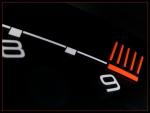
The highest reving production piston engine (car) in the world. 9000RPMs
With all this performance it is still rated as an LEV
VTEC on both intake and exhaust
Forged pistons
Forged Rods
Forged crank
Hollow Cams (for lightness and oil flow to the valve springs)
Valve springs and main bearing material derived from the championship winning CART Engines.
Roller valve train
Carbon fiber/metalic ceramic cylinder liners
Chain/gear driven cams
Split cam gears for zero backlash and low noise
Hand welded and formed stainless headers
Nutless rod design
Girdled main bearing carrier with cast iron inserts.
Tapered wristpins for light weight
No ballance shafts
Individual Coils for each cylinder
Die cast aluminum block
Die cast finned aluminum oil pan
Die cast finned aluminum Transmission case
Die cast finned aluminum differential housing
Torsen (torque sensing) Limited Slip Differential
Pressure fed oil circulation in transmission
Perhaps the best shifting 6 speed ever made
Honda reliability and build quality
Designed by the same engineers who designed the Championship winning (6 times in 9 years) F1 engines for such greats as Prost, Piquet, and Senna.
Hand assembled in Honda's Premier Tochigi Plant.
Only Front Engined Rear Wheel drive Honda Roadster available since the S800.
Winner of numerous awards for best in class and best engine.
Is consistently compared to cars that cost upwards of $20,000 more.
Rigid high center backbone X Frame design. As rigid as many coupes. This allows a stiffer more highly tuned suspension without the worry of chassis flex.
"In wheel" double wishbone suspension.
Showa monotube gas Shocks with the rears having a remote reservoir.
Four wheel disc brakes with ABS.
Specially designed Bridgestone tires.
Electronic Power Steering.
Integrated roll bars both behind the passenger compartment and in the windshield frame.
Excellent crash worthiness.
Recaro Seats.
Alloy pedals perfectly placed for Heel/Toe shifting.
50-50 weight distribution. The S2000 is really a mid engine design with the engine mounted in front of the driver but behind the front axle.
Dual airbags.
High Intensity Discharge (HID) Headlights.
Big Red Starter Button.
All controls within fingertip reach of the Steering Wheel.
COPYRIGHT 1999 Cahners Publishing Company
COPYRIGHT 2000 Gale Group
S2000 Concept
A minimalist design geared towards giving the driver the closest thing to experiencing a Formula type single seat race car for the street. "Lighter in feel than a Porsche Boxster, more like a Lotus Elise." Such lofty aspirations for a new sports car would be wishful thinking for many automakers, but not for Honda Executive Chief Engineer Shigeru Uehara.
In developing the new S2000 roadster, Uehara and his team set out to reaffirm Honda's reputation for engineering and technology. That reputation has become dulled in recent years, as Honda concentrated on popular but uninspiring mainstream cars such as the Accord.
With development virtually stalled on the exotic, expensive Acura NSX, attention at Honda turned to the more affordable roadster segment. In 1995, the company unveiled the SSM concept at the Tokyo show, and even though the sports car market was at a low point, company-President Nobuhiko Kawamoto decided to proceed with a production version. Four years later, the S2000 debuts in time to celebrate the millennium and (belatedly) Honda's 50th anniversary.
The car launches amidst a sports car rebirth, with successful entries including the Boxster, BMW Z3, Mercedes SLK and the now-classic Mazda Miata. Dan Bonawitz, vice-president of American Honda, believes the market sector in the U.S. will continue to grow through 2001 and level off at around 100,000 units annually. The resurgence, he says, is due to "baby boomers, reaching their peak earning years and, with their kids leaving home, who are looking to recapture their youth -- a time when they might have been driving MGs or Triumphs or one of Detroit's muscle cars."
Topping Uehara's list of desired attributes were high performance and first-class driving dynamics. But while rivals BMW and Benz cloak their roadsters in luxury trappings, the S2000 would remain a "true" sports car; like a Miata with a few extra frills.
Powerful and Clean
The S2000's character is rooted in an all-new 2.0L dohc inline 4-cylinder engine. The compact, all-aluminum unit develops a claimed 240 hp at 8,300 rpm and 153 lb-ft of torque at 7,500 rpm. It's the highest specific-output, naturally aspirated car engine in production, thanks to a superbike-like 8,900 rpm redline. But Uehara's team also designed in durability and low emissions, starting with a new version of Honda's familiar VTEC variable valve timing system.
"We used coaxial roller-bearing cam followers instead of the slipper-type in the existing design in order to reduce friction," Uehara explains. The cylinder block features fiber-reinforced metal (FRM) cylinder liners, which are lighter and more wear resistant than normal ferrous-metal liners.
The forged-aluminum pistons, a first for a Honda production car, have ultra-short skirts for light weight and low friction. Connecting rods and crankshaft are carburized and heat treated for durability. Ensuring a copious supply of cool intake air is a conical axial-flow filter, which sits in a large 5.5L expansion chamber located ahead of the longitudinally mounted engine.
To meet low emission vehicle regs, S2000 features a new metallic honeycomb catalyst, plus secondary air injection. The thin-walled metal converter takes the place of a typical ceramic design and quickly increases exhaust gas temperature, thus reducing hydrocarbon emissions. The new catalyst also makes 40% less back pressure than a conventional converter. Its fast light-off time is aided by the air-injection system, which uses an ECM-controlled electric pump to feed fresh air into the exhaust. The result is 40% lower exhaust emissions than are produced by the Civic Si coupe, claims Honda.
Bad To The X-Bone
To allow S2000 drivers to make the best use of the revs, a new close ratio 6-speed manual transmission routes power via a one-piece propshaft and CV joints (not U-joints) to the rear wheels. A Torsen limited-slip differential is standard. By using two parallel shafts in the transmission, loads on the gear synchronizers are reduced and the shifting effort is lightened. Double-cone synchronizers on flint, third and fourth gears, plus triple-cone synchronizers for the often used second gear, further improve shifting feel.
Throughout the car's development, emphasis was placed on making the S2000 as responsive to driver inputs as possible. This led Uehara to study how a driver rates acceleration "feel."
"Our tests showed that a driver feels acceleration response is `excellent' when the damping of acceleration G is rapid -- that is, when the time to reach steady G is short," he says. And the biggest factor contributing to this fast acceleration damping effect is the rigidity of the drivetrain, "especially the torsional rigidity of the driveshaft." As a result, the diameter of the rear half-shafts were enlarged.
A similarly detailed approach was taken with the brake system, which was modified by enlarging the master poppet valve in the master cylinder to give faster initial response to pedal application. "The pedal firmness is generally high in sports cars," Uehara notes, "but brake application effectiveness is low. For the S2000 we aimed to achieve both application effectiveness and pedal firmness."
The starting point for the dynamic excellence displayed by the S2000 on our test drive, is a proven one: a 50/50 front/rear weight balance. Combined with a low center of gravity, it creates a lowyawing moment of inertia, making the car quicker and more linear in its responses to driver input. Steps taken to benefit dynamic response included locating the entire drivetrain behind the centerline of the axle, specifying a wide track (57.8 inches front/59.4 inches rear), designing a compact "in-wheel" double-wishbone suspension and a highly rigid body structure.
The latter is a standout feature of the open-top S2000. A centralized-backbone frame, which Honda calls the "high X-bone," was developed for S2000. Unlike other roadster flame designs, the Honda's center backbone tunnel is extremely tall. Diagonally braced front and rear bulkheads tie the frame members together into a strong beam-like structure that resists bending and torsional forces. The result, the company claims, is that the S2000 is actually superior in torsional rigidity to fixed-roof cars in the Honda stable, including the Accord and Integra.
Steering is handled in S2000 by an electrically assisted system, borrowed from the NSX. As well as saving horsepower over a hydraulic system, its advantages include "a high degree of freedom in setting the steering force to match vehicle speed and high performance steering compliance," explains Uehara. A small diameter steering wheel, with magnesium alloy core, adds to the crisp, responsive feel.
Undoubtedly, the S2000 could have been made even lighter than its 2,756 pounds (about 150 pounds under a BMW Z3). And it could have been made cheaper. The electrically operated roof, for instance, is costlier and heavier than a manual design. Considerable weight could also have been saved by use of more aluminum body panels (only the hood is aluminum) in place of steel, but that would have driven the price up.
The S2000 might enjoy at least a $10,000 advantage on its prime rivals, BMW and Mercedes -- if dealers don't jack up the price first. Production is under way at the new Takanezawa plant in Tochigi, Japan, where S2000 shares a line with the aluminum-bodied NSX, although modified welding fixtures are used to deal with the different body materials. Total monthly output for world markets, including Japan, Europe and the U.S., is 2,000 units. Though the production number is small, the relatively affordable S2000 is likely to have an even wider impact on Honda's image than did the NSX before it.
Features:
The highest specific HP per liter, naturally aspirated production piston automobile engine in the world. 120HP/liter.
The highest reving production piston engine (car) in the world. 9000RPMs
With all this performance it is still rated as an LEV
VTEC on both intake and exhaust
Forged pistons
Forged Rods
Forged crank
Hollow Cams (for lightness and oil flow to the valve springs)
Valve springs and main bearing material derived from the championship winning CART Engines.
Roller valve train
Carbon fiber/metalic ceramic cylinder liners
Chain/gear driven cams
Split cam gears for zero backlash and low noise
Hand welded and formed stainless headers
Nutless rod design
Girdled main bearing carrier with cast iron inserts.
Tapered wristpins for light weight
No ballance shafts
Individual Coils for each cylinder
Die cast aluminum block
Die cast finned aluminum oil pan
Die cast finned aluminum Transmission case
Die cast finned aluminum differential housing
Torsen (torque sensing) Limited Slip Differential
Pressure fed oil circulation in transmission
Perhaps the best shifting 6 speed ever made
Honda reliability and build quality
Designed by the same engineers who designed the Championship winning (6 times in 9 years) F1 engines for such greats as Prost, Piquet, and Senna.
Hand assembled in Honda's Premier Tochigi Plant.
Only Front Engined Rear Wheel drive Honda Roadster available since the S800.
Winner of numerous awards for best in class and best engine.
Is consistently compared to cars that cost upwards of $20,000 more.
Rigid high center backbone X Frame design. As rigid as many coupes. This allows a stiffer more highly tuned suspension without the worry of chassis flex.
"In wheel" double wishbone suspension.
Showa monotube gas Shocks with the rears having a remote reservoir.
Four wheel disc brakes with ABS.
Specially designed Bridgestone tires.
Electronic Power Steering.
Integrated roll bars both behind the passenger compartment and in the windshield frame.
Excellent crash worthiness.
Recaro Seats.
Alloy pedals perfectly placed for Heel/Toe shifting.
50-50 weight distribution. The S2000 is really a mid engine design with the engine mounted in front of the driver but behind the front axle.
Dual airbags.
High Intensity Discharge (HID) Headlights.
Big Red Starter Button.
All controls within fingertip reach of the Steering Wheel.
COPYRIGHT 1999 Cahners Publishing Company
COPYRIGHT 2000 Gale Group
