


S2000 not made for the track?


Thread Starter
Registered User
Joined: Dec 2002
Posts: 1,349
Likes: 0
From: anaheim
 S2000 not made for the track?
So I am in an argument with this guy who makes it a point that all verts were not made with the track in mind. I pointed out the s2000 and how its main point was handling (not power or comfort). In other words Honda made the s2000 (vert) with the track in mind; and the HT is an OPTION.
He goes on to say that "then why is the HT so popular." Unless I am missing something, the HT makes the s2000 BETTER but that does not take anything away from a stock vert and what it was made for (track). Also as I am aware, the main reason the HT is so popular because people want the coupe look, not because it makes the s2000 better at the track.
Same goes for the m3 vert and the miata. My point was that he is mixing up the fact that HT makes it better for the verts and yes verts lose a little to the coupes, but that does NOT make the verts not have any track-oriented engineering in it. Just because a vehicle is a vert doesn't mean it's made for "cruising" (as he says). I sure as shit don't think Honda had "cruising" in mind for the s2000.
Did I miss a memo somewhere? Opinions?
He goes on to say that "then why is the HT so popular." Unless I am missing something, the HT makes the s2000 BETTER but that does not take anything away from a stock vert and what it was made for (track). Also as I am aware, the main reason the HT is so popular because people want the coupe look, not because it makes the s2000 better at the track.
Same goes for the m3 vert and the miata. My point was that he is mixing up the fact that HT makes it better for the verts and yes verts lose a little to the coupes, but that does NOT make the verts not have any track-oriented engineering in it. Just because a vehicle is a vert doesn't mean it's made for "cruising" (as he says). I sure as shit don't think Honda had "cruising" in mind for the s2000.
Did I miss a memo somewhere? Opinions?



Registered User

Joined: Mar 2006
Posts: 3,248
Likes: 0
From: socal
direct quote from honda's website
S2000 -- Body
The S2000 exterior styling portrays an angular, modern and sleek presence, while the long hood and flared front fenders create the impression of lowness and mass. The 2008 S2000 CR body includes exclusive modifications for enhanced aerodynamics and increased rigidity.
Designed to be highly rigid and lightweight, the S2000 uses monocoque steel body construction. The hood is aluminum. An ultra-rigid High X-Bone Frame is formed by the body's high side sills and diagonal (X) bracing underneath the body. The S2000's rigid body and frame contribute to the vehicle's razor-sharp handling and solid feel.
S2000 -- Body
The S2000 exterior styling portrays an angular, modern and sleek presence, while the long hood and flared front fenders create the impression of lowness and mass. The 2008 S2000 CR body includes exclusive modifications for enhanced aerodynamics and increased rigidity.
Designed to be highly rigid and lightweight, the S2000 uses monocoque steel body construction. The hood is aluminum. An ultra-rigid High X-Bone Frame is formed by the body's high side sills and diagonal (X) bracing underneath the body. The S2000's rigid body and frame contribute to the vehicle's razor-sharp handling and solid feel.
Registered User
Joined: Mar 2006
Posts: 3,248
Likes: 0
From: socal
show him this and tell him to STFU.
http://www.pistonheads.com/doc.asp?c=120&i=10015
X-Bone frame chassis
The S2000 has no scuttle shake, that bane of soft tops, because it uses what Honda calls an X-bone frame. (see picture). It's extremely rigid chassis, the centrepiece of which is a box-section central tunnel. From it, two diagonally projecting arms at the front connect to side rails and support the rear of the engine. Also two diagonally-projecting arms at the rear are fixed to a rear transverse rail. The diagonal arms and central tunnel form the X-bone shape.
The top of the centre tunnel and the front and rear longitudinal rails form a horizontal plane; these components are all at the same height. This height -- the centre line rigidity height -- is said to be at the same height as the centre-line rigidity of closed roof
http://www.pistonheads.com/doc.asp?c=120&i=10015
X-Bone frame chassis
The S2000 has no scuttle shake, that bane of soft tops, because it uses what Honda calls an X-bone frame. (see picture). It's extremely rigid chassis, the centrepiece of which is a box-section central tunnel. From it, two diagonally projecting arms at the front connect to side rails and support the rear of the engine. Also two diagonally-projecting arms at the rear are fixed to a rear transverse rail. The diagonal arms and central tunnel form the X-bone shape.
The top of the centre tunnel and the front and rear longitudinal rails form a horizontal plane; these components are all at the same height. This height -- the centre line rigidity height -- is said to be at the same height as the centre-line rigidity of closed roof

Registered User
Joined: Jan 2009
Posts: 76
Likes: 0
So convertibles are not made with the track in mind? Has your erudite friend had a look at the Top Gear Power Board lately?
# 4 is the Pagani Zonda F Roadster (which is faster than the Pagani Zonda hardtop version).
# 5 is the Caterham Seven Roadster
#12 is the Ariel Atom
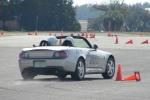
How about this S2000 memo from Car and Driver ...
# 4 is the Pagani Zonda F Roadster (which is faster than the Pagani Zonda hardtop version).
# 5 is the Caterham Seven Roadster
#12 is the Ariel Atom
How about this S2000 memo from Car and Driver ...

Trending Topics

 .
.
Thread Starter
Registered User
Joined: Dec 2002
Posts: 1,349
Likes: 0
From: anaheim
Lol I knew it all along!
Well the dude is now going into defensive mode and is stating that he only meant M3 verts. Which is weird because he was making a point as to why the s2000 is popular with the HT ....
Well the dude is now going into defensive mode and is stating that he only meant M3 verts. Which is weird because he was making a point as to why the s2000 is popular with the HT ....

Registered User
Joined: Jul 2008
Posts: 258
Likes: 0
From: SoCal
The s is stiffer than many passenger sedans, relative to its own weight. Flex is imperceptible in these cars, no shake, and no give. In the CR this is particularly noticeable and is the reason why the S lends so well to stiffened suspension setups which would otherwise bring out or emphasize every flaw in the chassis structure.