


CV joint failure, why exactly?


Community Organizer


Joined: Jun 2007
Posts: 31,070
Likes: 566

If there is even the possibility that the Honda grease is a contributing factor, shouldn't the recommended sequence for the axle lifespan prolonging techniques be:
1. Swap axle cups (and clean then repack with superior grease, like redline)
2. When a second prolong is needed, add spacers
It seems its being recommended to do spacers first instead. The reason being its less messy. But if you are going to keep the car for a long time, doing the swap first means more of the lifespan elapses with the superior grease, presumably meaning longer overall lifespan.
That of course assumes the grease is in any way a factor. Which doesn't yet seem conclusive...
1. Swap axle cups (and clean then repack with superior grease, like redline)
2. When a second prolong is needed, add spacers
It seems its being recommended to do spacers first instead. The reason being its less messy. But if you are going to keep the car for a long time, doing the swap first means more of the lifespan elapses with the superior grease, presumably meaning longer overall lifespan.
That of course assumes the grease is in any way a factor. Which doesn't yet seem conclusive...
Last edited by s2000Junky; Jul 17, 2019 at 10:45 AM.

Thread Starter

Joined: Oct 2009
Posts: 847
Likes: 140
Again, from all the reading I've done in the past few days, the recommended sequence, based on cost, is :
1) swap cups
2) add spacers - which should move the axle over a bit so that the bearings load onto a slightly different part of the joint
3) swap cups again with the spacers - same theory as above
4) buy new CV joint housing or axles
New grease should be used each time regardless. If the joint has failed, the grease is most likely contaminated with metal shavings and be nasty looking anyways.
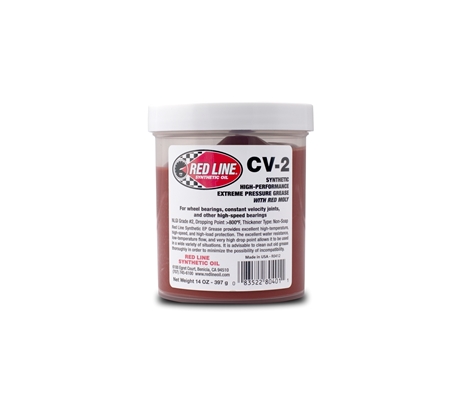
Whether the root issue is Honda's case hardening or the grease, I think swapping the grease out with a high pressure moly based grease would be best. The OEM Honda grease does not mention there being any moly in their formulation. The moly has a number of properties that help with shock loading, metal-on-metal friction and lubrication.
1) swap cups
2) add spacers - which should move the axle over a bit so that the bearings load onto a slightly different part of the joint
3) swap cups again with the spacers - same theory as above
4) buy new CV joint housing or axles
New grease should be used each time regardless. If the joint has failed, the grease is most likely contaminated with metal shavings and be nasty looking anyways.
Whether the root issue is Honda's case hardening or the grease, I think swapping the grease out with a high pressure moly based grease would be best. The OEM Honda grease does not mention there being any moly in their formulation. The moly has a number of properties that help with shock loading, metal-on-metal friction and lubrication.



Joined: Feb 2001
Posts: 4,063
Likes: 364
From: Redondo Beach
It's the grease. Like so many things on this car, the OE grease was fine for street-driven cars, but with added power and/or track/autox with high-grip tires, it just couldn't hold up. This was discovered *very* early on -- in my DIY CV thread (see sig), I link to Pinky's post from late *2001*:
https://www.s2ki.com/forums/s2000-un...ng-rear-39249/
To my knowledge, jyeung is correct: none of us who've switched to the Redline grease have ever (knock wood) experienced any pitting.
S2000Junky, your experience is likely due to having a later-model car. Honda evidently upgraded the grease for '02: according to TSB 02-063 (issued well into the '03 model year), they claimed that only '00-'01 models were affected. Moreover, it's certain that the AP2 clutch delay valve has spared many thousands of CV cups. Did Honda perhaps change/upgrade the cups? Impossible to know for sure, but it appears the answer is no: the "inboard joint" part number (42320-S2A-310) is the same for all model years, and in fact has remained unchanged since 1999. Typically, if there's any meaningful change in a part, Honda will assign it a new number.
Regardless, it's clear from the experience of '00-'01 owners who've kept their original cups and just used upgraded grease that the cups were never the issue.
https://www.s2ki.com/forums/s2000-un...ng-rear-39249/
To my knowledge, jyeung is correct: none of us who've switched to the Redline grease have ever (knock wood) experienced any pitting.
S2000Junky, your experience is likely due to having a later-model car. Honda evidently upgraded the grease for '02: according to TSB 02-063 (issued well into the '03 model year), they claimed that only '00-'01 models were affected. Moreover, it's certain that the AP2 clutch delay valve has spared many thousands of CV cups. Did Honda perhaps change/upgrade the cups? Impossible to know for sure, but it appears the answer is no: the "inboard joint" part number (42320-S2A-310) is the same for all model years, and in fact has remained unchanged since 1999. Typically, if there's any meaningful change in a part, Honda will assign it a new number.
Regardless, it's clear from the experience of '00-'01 owners who've kept their original cups and just used upgraded grease that the cups were never the issue.
Community Organizer
Joined: Jun 2007
Posts: 31,070
Likes: 566
Mine is an abused 01. But again I employed all measures to prolong the life to get 230k miles out of them on the factory grease. Maybe if I used Redline grease at the first cup swap I could still be one them with getting 300k+, I don't know 
Thread Starter
Joined: Oct 2009
Posts: 847
Likes: 140
It's the grease. Like so many things on this car, the OE grease was fine for street-driven cars, but with added power and/or track/autox with high-grip tires, it just couldn't hold up. This was discovered *very* early on -- in my DIY CV thread (see sig), I link to Pinky's post from late *2001*:
https://www.s2ki.com/forums/s2000-un...ng-rear-39249/
To my knowledge, jyeung is correct: none of us who've switched to the Redline grease have ever (knock wood) experienced any pitting.
S2000Junky, your experience is likely due to having a later-model car. Honda evidently upgraded the grease for '02: according to TSB 02-063 (issued well into the '03 model year), they claimed that only '00-'01 models were affected. Moreover, it's certain that the AP2 clutch delay valve has spared many thousands of CV cups. Did Honda perhaps change/upgrade the cups? Impossible to know for sure, but it appears the answer is no: the "inboard joint" part number (42320-S2A-310) is the same for all model years, and in fact has remained unchanged since 1999. Typically, if there's any meaningful change in a part, Honda will assign it a new number.
Regardless, it's clear from the experience of '00-'01 owners who've kept their original cups and just used upgraded grease that the cups were never the issue.
https://www.s2ki.com/forums/s2000-un...ng-rear-39249/
To my knowledge, jyeung is correct: none of us who've switched to the Redline grease have ever (knock wood) experienced any pitting.
S2000Junky, your experience is likely due to having a later-model car. Honda evidently upgraded the grease for '02: according to TSB 02-063 (issued well into the '03 model year), they claimed that only '00-'01 models were affected. Moreover, it's certain that the AP2 clutch delay valve has spared many thousands of CV cups. Did Honda perhaps change/upgrade the cups? Impossible to know for sure, but it appears the answer is no: the "inboard joint" part number (42320-S2A-310) is the same for all model years, and in fact has remained unchanged since 1999. Typically, if there's any meaningful change in a part, Honda will assign it a new number.
Regardless, it's clear from the experience of '00-'01 owners who've kept their original cups and just used upgraded grease that the cups were never the issue.


Joined: Nov 2007
Posts: 8,841
Likes: 1,705
From: Illnoise. WAY downtown, jerky.
. Did Honda perhaps change/upgrade the cups? Impossible to know for sure, but it appears the answer is no: the "inboard joint" part number (42320-S2A-310) is the same for all model years, and in fact has remained unchanged since 1999. Typically, if there's any meaningful change in a part, Honda will assign it a new number.
They didn't change the CV assembly part number for 9 years, right? Even though they may have made improvements.
Joined: Feb 2001
Posts: 4,063
Likes: 364
From: Redondo Beach
^In this case I doubt it, because there was a TSB. If Honda felt that the cups were the issue, the TSB wouldn't have said to simply replace them with the same part -- that would just expose them to repeated claims if the part had been upgraded but the techs used new-old-stock cups. So they would want to distinguish between the upgraded cups and the originals, even if they were visually identical -- the best way to do that is with a new part number.
Alternatively, they could have distinguished between old and new by using a dating system, as they did, for example, on many of the plastics (molded in on undersides), on the shock absorber bodies (permanent labels), on the TCT (surface engraving), or the coil pack cover (ink stamp). In the TSB, that would let them specify to the techs not to use any part made before a certain date.
But they didn't do that either. They just said to replace the old parts with the exact same part. As I said, it's impossible to know for sure, but all signs point to Honda being very confident in the original cups.
All of this, by the way, is corroborated by the experience of owners who are doing just fine on their original 20-year-old cups, with no change except a left-right swap and new grease.
Alternatively, they could have distinguished between old and new by using a dating system, as they did, for example, on many of the plastics (molded in on undersides), on the shock absorber bodies (permanent labels), on the TCT (surface engraving), or the coil pack cover (ink stamp). In the TSB, that would let them specify to the techs not to use any part made before a certain date.
But they didn't do that either. They just said to replace the old parts with the exact same part. As I said, it's impossible to know for sure, but all signs point to Honda being very confident in the original cups.
All of this, by the way, is corroborated by the experience of owners who are doing just fine on their original 20-year-old cups, with no change except a left-right swap and new grease.

Community Organizer
Joined: Nov 2003
Posts: 20,983
Likes: 188
From: in my garage
If there is even the possibility that the Honda grease is a contributing factor, shouldn't the recommended sequence for the axle lifespan prolonging techniques be:
1. Swap axle cups (and clean then repack with superior grease, like redline)
2. When a second prolong is needed, add spacers
It seems its being recommended to do spacers first instead. The reason being its less messy. But if you are going to keep the car for a long time, doing the swap first means more of the lifespan elapses with the superior grease, presumably meaning longer overall lifespan.
That of course assumes the grease is in any way a factor. Which doesn't yet seem conclusive...
1. Swap axle cups (and clean then repack with superior grease, like redline)
2. When a second prolong is needed, add spacers
It seems its being recommended to do spacers first instead. The reason being its less messy. But if you are going to keep the car for a long time, doing the swap first means more of the lifespan elapses with the superior grease, presumably meaning longer overall lifespan.
That of course assumes the grease is in any way a factor. Which doesn't yet seem conclusive...
Off topic, I'd love to see this same topic posted on facebook. Just for entertainment value. There was good discussion here.
Last edited by freq; Jul 17, 2019 at 04:16 PM.


Joined: Aug 2012
Posts: 7,904
Likes: 3,435
From: Foothills East of Sacramento
Again, from all the reading I've done in the past few days, the recommended sequence, based on cost, is :
1) swap cups
2) add spacers - which should move the axle over a bit so that the bearings load onto a slightly different part of the joint
3) swap cups again with the spacers - same theory as above
4) buy new CV joint housing or axles
New grease should be used each time regardless. If the joint has failed, the grease is most likely contaminated with metal shavings and be nasty looking anyways.
Whether the root issue is Honda's case hardening or the grease, I think swapping the grease out with a high pressure moly based grease would be best. The OEM Honda grease does not mention there being any moly in their formulation. The moly has a number of properties that help with shock loading, metal-on-metal friction and lubrication.
1) swap cups
2) add spacers - which should move the axle over a bit so that the bearings load onto a slightly different part of the joint
3) swap cups again with the spacers - same theory as above
4) buy new CV joint housing or axles
New grease should be used each time regardless. If the joint has failed, the grease is most likely contaminated with metal shavings and be nasty looking anyways.
Whether the root issue is Honda's case hardening or the grease, I think swapping the grease out with a high pressure moly based grease would be best. The OEM Honda grease does not mention there being any moly in their formulation. The moly has a number of properties that help with shock loading, metal-on-metal friction and lubrication.
My question is this: How many issues/problems/failures occur with the other parts on the axle? How many bearing failures? I have heard of a couple of axle nut studs breaking from over torquing. I have never messed with the rear suspension so far. Is the replacement of the axle an easier job than messing with just the cups?