


Lets talk BATTERIES!


Thread Starter
Registered User
Joined: Jan 2006
Posts: 6,536
Likes: 0
From: Orlando
 Lets talk BATTERIES!
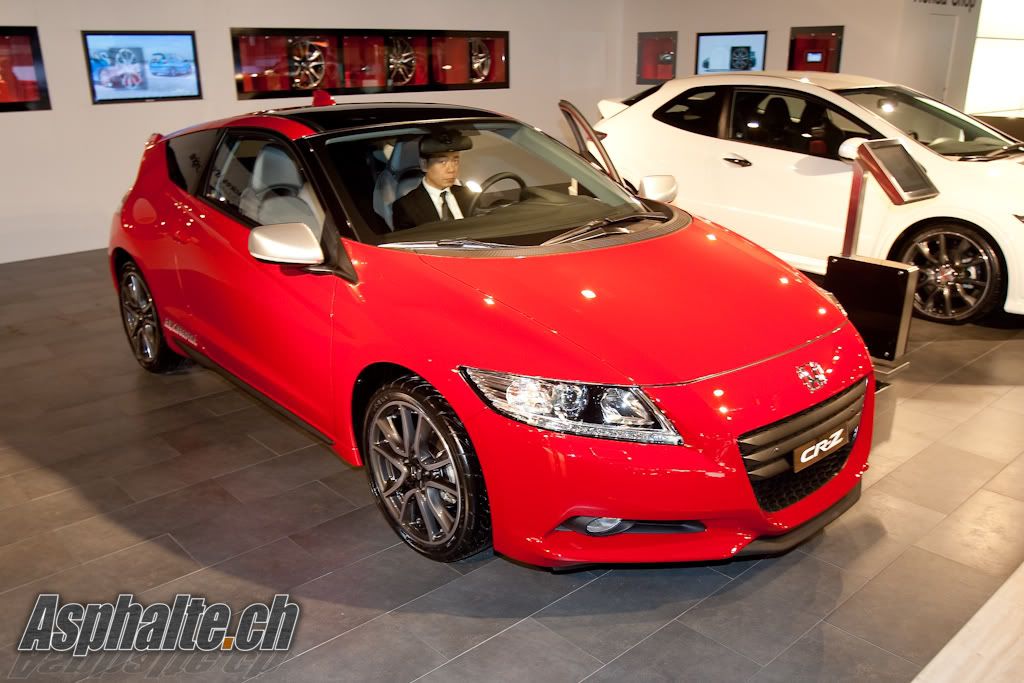
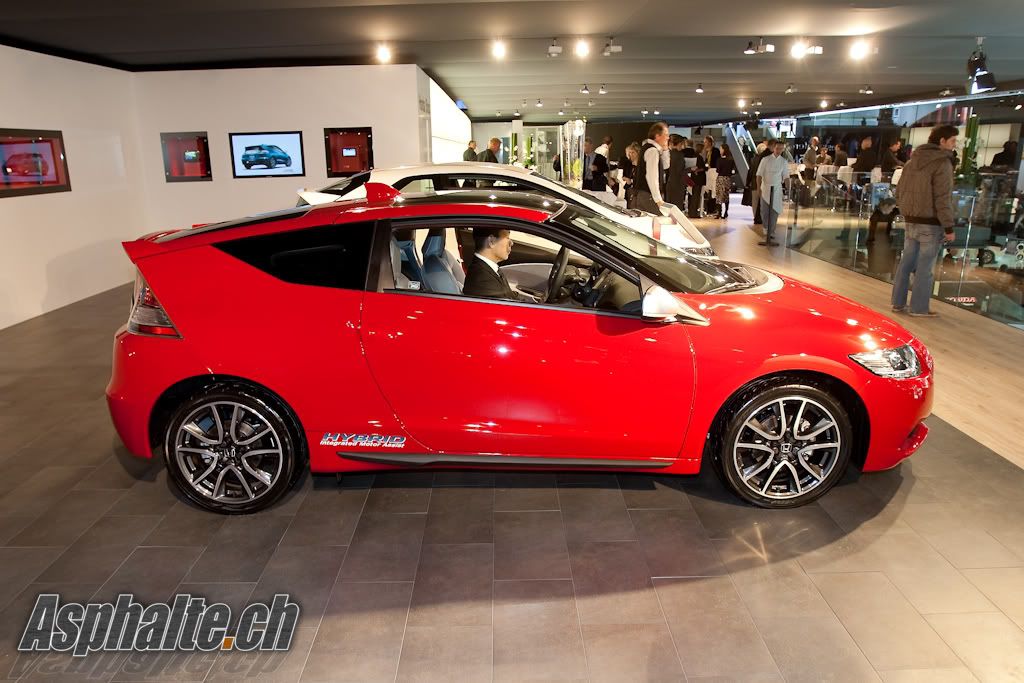
Autocar sat down with some people to discuss Honda's CR-Z:
“It’s true that we could work the hybrid assist system harder,” he goes on. “At the moment it’s supplying 13bhp and 60lb ft, but only using about 50 per cent of the capacity of our batteries. We could increase that assistance, but we would need to provide more cooling for the batteries, and we would also shorten the battery pack’s operational life. In our view, that’s too big a price to pay.”
http://www.autocar.co.uk/blogs/designlangu...-in-detail.aspx
We all know that Honda is all about reliability and all that Jazz. The current generation of Insight's battery has a 10yr 150,000mile warranty. One would assume it holds the CR-Z to the same standard. IMHO, this means that there is room to play for the tuners. They can have the car mirror its stock settings in the ECO and NORMAL modes and have it give more power in its SPORT setting, No? Worst case scenario is an all-new battery but that just sounds VERY expensive.
We already know that MUGEN, Spoon, and Noblese have already started working on parts for this car. I wonder if Hondata and other reputable S2000 tuners are up to the task.
***The CR-Z has an ECO, NORMAL, and SPORT modes. Honda's website states its EPA was tested in "Normal."
Thread Starter
Registered User
Joined: Jan 2006
Posts: 6,536
Likes: 0
From: Orlando

Originally Posted by sparrow,Mar 10 2010, 01:53 PM
can they not specify to test the car in eco mode? Do they test an M6 in M mode.
It would be nice to see somewhat of a "overboost" function tuned it. We'll see. I think most of the mags get their first drive reviews next week.

Registered User
Joined: Apr 2002
Posts: 394
Likes: 0
From: San Francisco
The Truth About EPA City / Highway MPG Estimates (From C&D)
http://editorial.autos.msn.com/article.asp...umentid=1089144
We thought the powerful BMW M5 starts up using "just" 400 horsepower to save fuel (the driver can push a button to get the full 500 horsepower). But most gimmicky buttons are just that: The EPA tested the M5 in both 400- and 500-hp modes and found no difference in the amount of fuel used. The demands of the test cycles never call upon all the M5's horses anyway. And the Honda Insight's econ mode — activated by a dash button and claimed to improve fuel economy — registered no effect, either. It relaxes throttle response, so the test driver simply compensates with additional throttle to achieve the required speeds.
With regards to the underutilized batteries, that is normal. It is meant to cool the battery to extend its life.
http://editorial.autos.msn.com/article.asp...umentid=1089144
We thought the powerful BMW M5 starts up using "just" 400 horsepower to save fuel (the driver can push a button to get the full 500 horsepower). But most gimmicky buttons are just that: The EPA tested the M5 in both 400- and 500-hp modes and found no difference in the amount of fuel used. The demands of the test cycles never call upon all the M5's horses anyway. And the Honda Insight's econ mode — activated by a dash button and claimed to improve fuel economy — registered no effect, either. It relaxes throttle response, so the test driver simply compensates with additional throttle to achieve the required speeds.
With regards to the underutilized batteries, that is normal. It is meant to cool the battery to extend its life.

Registered User
Joined: Mar 2007
Posts: 7,899
Likes: 1
Originally Posted by corey415,Mar 10 2010, 06:15 PM
The Truth About EPA City / Highway MPG Estimates (From C&D)
http://editorial.autos.msn.com/article.asp...umentid=1089144
We thought the powerful BMW M5 starts up using "just" 400 horsepower to save fuel (the driver can push a button to get the full 500 horsepower). But most gimmicky buttons are just that: The EPA tested the M5 in both 400- and 500-hp modes and found no difference in the amount of fuel used. The demands of the test cycles never call upon all the M5's horses anyway. And the Honda Insight's econ mode — activated by a dash button and claimed to improve fuel economy — registered no effect, either. It relaxes throttle response, so the test driver simply compensates with additional throttle to achieve the required speeds.
With regards to the underutilized batteries, that is normal. It is meant to cool the battery to extend its life.
http://editorial.autos.msn.com/article.asp...umentid=1089144
We thought the powerful BMW M5 starts up using "just" 400 horsepower to save fuel (the driver can push a button to get the full 500 horsepower). But most gimmicky buttons are just that: The EPA tested the M5 in both 400- and 500-hp modes and found no difference in the amount of fuel used. The demands of the test cycles never call upon all the M5's horses anyway. And the Honda Insight's econ mode — activated by a dash button and claimed to improve fuel economy — registered no effect, either. It relaxes throttle response, so the test driver simply compensates with additional throttle to achieve the required speeds.
With regards to the underutilized batteries, that is normal. It is meant to cool the battery to extend its life.

Thread Starter
Registered User
Joined: Jan 2006
Posts: 6,536
Likes: 0
From: Orlando
Originally Posted by corey415,Mar 10 2010, 02:15 PM
The Truth About EPA City / Highway MPG Estimates (From C&D)
http://editorial.autos.msn.com/article.asp...umentid=1089144
We thought the powerful BMW M5 starts up using "just" 400 horsepower to save fuel (the driver can push a button to get the full 500 horsepower). But most gimmicky buttons are just that: The EPA tested the M5 in both 400- and 500-hp modes and found no difference in the amount of fuel used. The demands of the test cycles never call upon all the M5's horses anyway. And the Honda Insight's econ mode — activated by a dash button and claimed to improve fuel economy — registered no effect, either. It relaxes throttle response, so the test driver simply compensates with additional throttle to achieve the required speeds.
With regards to the underutilized batteries, that is normal. It is meant to cool the battery to extend its life.
http://editorial.autos.msn.com/article.asp...umentid=1089144
We thought the powerful BMW M5 starts up using "just" 400 horsepower to save fuel (the driver can push a button to get the full 500 horsepower). But most gimmicky buttons are just that: The EPA tested the M5 in both 400- and 500-hp modes and found no difference in the amount of fuel used. The demands of the test cycles never call upon all the M5's horses anyway. And the Honda Insight's econ mode — activated by a dash button and claimed to improve fuel economy — registered no effect, either. It relaxes throttle response, so the test driver simply compensates with additional throttle to achieve the required speeds.
With regards to the underutilized batteries, that is normal. It is meant to cool the battery to extend its life.
Honda responded to the response of the MPG issue of the CR-Z:
The MPG Conundrum
When we first set out to design the CR-Z, we demanded it be a hybrid. If it was going to be the next-generation coupe, it had to be a hybrid. But our goal was to make it a hybrid that’s more fun.
The mileage numbers we released—an estimated 36 mpg in the city and 38 mpg on the highway—are projections of the future EPA mileage estimates. The CR-Z has three driving modes: Sport, Normal and ECON™. Our numbers were achieved with the CR-Z in Normal Mode. Which is the default mode and will be how the EPA tests the car. Driving the CR-Z in ECON mode typically delivers the best fuel economy of the three modes.
Trending Topics
Registered User
Joined: Mar 2007
Posts: 7,899
Likes: 1
Originally Posted by Onehots2k,Mar 10 2010, 06:18 PM
Driving the CR-Z in ECON mode typically delivers the best fuel economy of the three modes.
Time for magazine tests. Lets get some real world data



Joined: Oct 2003
Posts: 11,950
Likes: 474
From: MAHT-O-MEDI
I am sure tuners can play with it, my question is which tuners would have the required expertise. Tuning a combustion engine is one thing, playing with an expensive electronic system when you never have before could be disasterous.
It could be done, but if people buy this car for street performance hoping to tune it, they should maybe just look somewher else. I can imagine a thread on the CRZ board "I just broke into the 16's in the quarter!"
It could be done, but if people buy this car for street performance hoping to tune it, they should maybe just look somewher else. I can imagine a thread on the CRZ board "I just broke into the 16's in the quarter!"

Registered User
Joined: Feb 2004
Posts: 5,387
Likes: 0
From: Palo Alto
Even if you were to mess with the battery there is no guaranty that you can get more power out of the electric motor. Honda could have put a larger electric motor in the car but since they didn't you may be stuck.
As for the battery life warranty I've always asked what exactly is the guaranty? Take a laptop battery as an example. One one hand after about 1 year most laptop batteries show some noticable reduction in life. However, they still work. If I only need my battery to carry the laptop from room to room then as far as I'm concerned my battery is good so long as I have 10 minutes of life. However if I need 4 hours of battery a day a reduction from say 4 hours 30 minutes to 3 hours 40 minutes would be "end of life". In the battery industry end of life is often defined as 80% of original capacity. Most laptops have lost than in their first year of life. However the battery can still provide useful life for years after that.
So what's my point? Well, how does Honda (or Toyota, Ford, GM etc) define a failed battery? Do they define it as a % reduction in capacity or as a total failure that prevents the battery from actually operating? As an owner if you have less battery power your car simply relies on the engine more heavily that in used to. That results in lower gas mileage. So you will still have a hybrid but over time the mileage you enjoyed will drop as the car needs the gasoline engine more often. Only in the less common case of a complete battery failure would we lose the ability to actually operate the hybrid system.
Anyway, this is why I take claims of long hybrid battery life with a grain of salt. The battery still does it's job but odds are not as well as it did when new.
As for the battery life warranty I've always asked what exactly is the guaranty? Take a laptop battery as an example. One one hand after about 1 year most laptop batteries show some noticable reduction in life. However, they still work. If I only need my battery to carry the laptop from room to room then as far as I'm concerned my battery is good so long as I have 10 minutes of life. However if I need 4 hours of battery a day a reduction from say 4 hours 30 minutes to 3 hours 40 minutes would be "end of life". In the battery industry end of life is often defined as 80% of original capacity. Most laptops have lost than in their first year of life. However the battery can still provide useful life for years after that.
So what's my point? Well, how does Honda (or Toyota, Ford, GM etc) define a failed battery? Do they define it as a % reduction in capacity or as a total failure that prevents the battery from actually operating? As an owner if you have less battery power your car simply relies on the engine more heavily that in used to. That results in lower gas mileage. So you will still have a hybrid but over time the mileage you enjoyed will drop as the car needs the gasoline engine more often. Only in the less common case of a complete battery failure would we lose the ability to actually operate the hybrid system.
Anyway, this is why I take claims of long hybrid battery life with a grain of salt. The battery still does it's job but odds are not as well as it did when new.