


Diseasel drivers

Thread Starter
Joined: Mar 2001
Posts: 31,181
Likes: 58
From: Hertford
 Diseasel drivers
Diesels blamed for London's big increase in harmful nitrogen dioxide
City has highest level of air pollutant in Europe; Stuttgart second-worst
A motorist fills his car with diesel at a fuel station in the UK. Air pollutants from diesel emissions have been linked to respiratory problems.
Related Topics
Emissions
Pollution
European Union
Diesel
Regulation
UK
Diesel fuel
May 28, 2014 11:33 CET
LONDON (Bloomberg) -- London has a dirty secret. Levels of the harmful air pollutant nitrogen dioxide at a city center monitoring station are the highest in Europe.
Concentrations are greater even than in Beijing, where some have dubbed the city's smog the "airpocalypse."
European Union efforts to fight climate change have traditionally favored diesel fuel for vehicles over gasoline because it emits less carbon dioxide, or CO2.
However, diesel's contaminants including nitrogen dioxide have swamped benefits from measures to reduce car emissions in the city that include a toll drivers pay to enter central London, a thriving bike-hire program and growing public-transport network.
"Successive governments knew more than 10 years ago that diesel was producing all these harmful pollutants, but they myopically plowed on with their CO2 agenda," said Simon Birkett, founder of Clean Air in London, a nonprofit group. "It's been a catastrophe for air pollution, and that's not too strong a word. It's a public-health catastrophe."
Tiny particles called PM2.5s probably killed 3,389 people in London in 2010, the government agency Public Health England said in April. Like nitrogen dioxide, or NO2, they come from diesel combustion. Because the pollutants are found together, it's hard to identify deaths attributable only to NO2, said Jeremy Langrish, a clinical lecturer in cardiology at the University of Edinburgh.
"Exposure to air pollution is associated with increases in deaths from cardiovascular disease such as heart attacks and strokes," Langrish said. "It's associated with respiratory problems like asthma."
The World Health Organization says NO2 can inflame the airways and worsen bronchitis in children.
Europe's problem
London isn't alone in having bad air in Europe, where 301 sites breached the EU's NO2 limits in 2012, including seven in the British capital.
Paris, Rome, Athens, Madrid, Brussels and Berlin also had places that exceeded the ceiling. The second- and third-worst sites among 1,513 monitoring stations were both in Stuttgart after London's Marylebone Road.
"Nitrogen dioxide is a problem that you get in all big cities with a lot of traffic," said Alberto Gonzalez Ortiz, project manager for air quality at the European Environment Agency, which is based in Copenhagen. "In many cases it's gotten worse because of the new fleets of diesel cars."
The EU limits NO2 to a maximum of 40 micrograms per cubic meter of air. The concentration on Marylebone Road, a stone's throw from Regent's Park, was almost 94 micrograms in 2012, according to the most recent data from the EEA.
The level for the site last year was 81 micrograms, and it's averaging 83 micrograms this year, according to King's College London. In 1998, when the King's College data begins, it was 92. That's about the time the switch to diesel started.
Beijing's problem
In contrast, Beijing had a concentration of 56 micrograms last year, according to China's Ministry of Environmental Protection. The Chinese capital has a worse problem with other pollutants, registering almost triple the level of PM10 particles (bigger than PM2.5s) as on Marylebone Road.
London's air has improved since the "pea-souper" fogs in the 1800s and 1900s. In 1952, the so-called Great Smog killed 4,000 people. East Londoners couldn't see their feet through a choking blanket of smoke caused when cold air trapped industrial emissions and coal fumes. That led to passage of a clean-air law in 1956, seven years before the U.S. Clean Air Act.
Air pollution and particulates are "invisible and there isn't the same pressure on politicians" as in the 1950s, said Joan Walley, an opposition Labour Party lawmaker who leads the Parliament's cross-party Environmental Audit Committee. "It requires a long-term strategy."
Parliamentary inquiry
Walley's committee began an inquiry on May 2 to assess government efforts to improve air quality, calling for written submissions by June 5. While the government blamed an April spike in pollution on dust from the Sahara alongside domestic emissions and particles from continental Europe, the prevailing winds mean London typically exports its own problem. "It's not rocket science to figure out that we contribute mostly on westerly winds to our neighbors," said Martin Williams, professor of air quality at Kings College. Europewide policy triggered the problem.
The "dieselization" of London's cars began with an agreement between car manufacturers and the EU in 1998 that aimed to lower the average CO2 emissions of new vehicles. Because of diesel's greater fuel economy, it increased in favor. The European Commission, the EU regulatory arm, "is and always has been technologically neutral," said Joe Hennon, a spokesman. "It does not favor diesel over petrol-powered cars. How to achieve CO2 reductions is up to member states."
EU deadline
EU rules enforced since 2000 allowed diesel cars to produce more than three times the amount of oxides of nitrogen including NO2 as those using gasoline.
New rules that took effect in September narrow that gap. "The challenge is much greater that we had thought just a few years ago," said Matthew Pencharz, environment and energy adviser to London Mayor Boris Johnson. "A lot of that is due to a well-meant EU policy that failed. We're stuck now with these diesel cars -- about half our cars are diesel, whereas 10, 15 years ago, it was lower than 10 percent."
The UK Department of Environment, Food and Rural Affairs in 2011 estimated it would take London until 2025 to comply with the 2010 rules. The government didn't ask for an extension to comply because doing so comes with a requirement to show it was possible by 2015.
For Green Party Leader Natalie Bennett, the solution is simple: Get people out of their cars. "Fifty-six percent of journeys we make in Britain are less than 5 miles," Bennett said in an interview. "If you turn a significant percentage of those into walking and cycling journeys, then you've made huge progress."
From Autonews.
City has highest level of air pollutant in Europe; Stuttgart second-worst
A motorist fills his car with diesel at a fuel station in the UK. Air pollutants from diesel emissions have been linked to respiratory problems.
Related Topics
Emissions
Pollution
European Union
Diesel
Regulation
UK
Diesel fuel
May 28, 2014 11:33 CET
LONDON (Bloomberg) -- London has a dirty secret. Levels of the harmful air pollutant nitrogen dioxide at a city center monitoring station are the highest in Europe.
Concentrations are greater even than in Beijing, where some have dubbed the city's smog the "airpocalypse."
European Union efforts to fight climate change have traditionally favored diesel fuel for vehicles over gasoline because it emits less carbon dioxide, or CO2.
However, diesel's contaminants including nitrogen dioxide have swamped benefits from measures to reduce car emissions in the city that include a toll drivers pay to enter central London, a thriving bike-hire program and growing public-transport network.
"Successive governments knew more than 10 years ago that diesel was producing all these harmful pollutants, but they myopically plowed on with their CO2 agenda," said Simon Birkett, founder of Clean Air in London, a nonprofit group. "It's been a catastrophe for air pollution, and that's not too strong a word. It's a public-health catastrophe."
Tiny particles called PM2.5s probably killed 3,389 people in London in 2010, the government agency Public Health England said in April. Like nitrogen dioxide, or NO2, they come from diesel combustion. Because the pollutants are found together, it's hard to identify deaths attributable only to NO2, said Jeremy Langrish, a clinical lecturer in cardiology at the University of Edinburgh.
"Exposure to air pollution is associated with increases in deaths from cardiovascular disease such as heart attacks and strokes," Langrish said. "It's associated with respiratory problems like asthma."
The World Health Organization says NO2 can inflame the airways and worsen bronchitis in children.
Europe's problem
London isn't alone in having bad air in Europe, where 301 sites breached the EU's NO2 limits in 2012, including seven in the British capital.
Paris, Rome, Athens, Madrid, Brussels and Berlin also had places that exceeded the ceiling. The second- and third-worst sites among 1,513 monitoring stations were both in Stuttgart after London's Marylebone Road.
"Nitrogen dioxide is a problem that you get in all big cities with a lot of traffic," said Alberto Gonzalez Ortiz, project manager for air quality at the European Environment Agency, which is based in Copenhagen. "In many cases it's gotten worse because of the new fleets of diesel cars."
The EU limits NO2 to a maximum of 40 micrograms per cubic meter of air. The concentration on Marylebone Road, a stone's throw from Regent's Park, was almost 94 micrograms in 2012, according to the most recent data from the EEA.
The level for the site last year was 81 micrograms, and it's averaging 83 micrograms this year, according to King's College London. In 1998, when the King's College data begins, it was 92. That's about the time the switch to diesel started.
Beijing's problem
In contrast, Beijing had a concentration of 56 micrograms last year, according to China's Ministry of Environmental Protection. The Chinese capital has a worse problem with other pollutants, registering almost triple the level of PM10 particles (bigger than PM2.5s) as on Marylebone Road.
London's air has improved since the "pea-souper" fogs in the 1800s and 1900s. In 1952, the so-called Great Smog killed 4,000 people. East Londoners couldn't see their feet through a choking blanket of smoke caused when cold air trapped industrial emissions and coal fumes. That led to passage of a clean-air law in 1956, seven years before the U.S. Clean Air Act.
Air pollution and particulates are "invisible and there isn't the same pressure on politicians" as in the 1950s, said Joan Walley, an opposition Labour Party lawmaker who leads the Parliament's cross-party Environmental Audit Committee. "It requires a long-term strategy."
Parliamentary inquiry
Walley's committee began an inquiry on May 2 to assess government efforts to improve air quality, calling for written submissions by June 5. While the government blamed an April spike in pollution on dust from the Sahara alongside domestic emissions and particles from continental Europe, the prevailing winds mean London typically exports its own problem. "It's not rocket science to figure out that we contribute mostly on westerly winds to our neighbors," said Martin Williams, professor of air quality at Kings College. Europewide policy triggered the problem.
The "dieselization" of London's cars began with an agreement between car manufacturers and the EU in 1998 that aimed to lower the average CO2 emissions of new vehicles. Because of diesel's greater fuel economy, it increased in favor. The European Commission, the EU regulatory arm, "is and always has been technologically neutral," said Joe Hennon, a spokesman. "It does not favor diesel over petrol-powered cars. How to achieve CO2 reductions is up to member states."
EU deadline
EU rules enforced since 2000 allowed diesel cars to produce more than three times the amount of oxides of nitrogen including NO2 as those using gasoline.
New rules that took effect in September narrow that gap. "The challenge is much greater that we had thought just a few years ago," said Matthew Pencharz, environment and energy adviser to London Mayor Boris Johnson. "A lot of that is due to a well-meant EU policy that failed. We're stuck now with these diesel cars -- about half our cars are diesel, whereas 10, 15 years ago, it was lower than 10 percent."
The UK Department of Environment, Food and Rural Affairs in 2011 estimated it would take London until 2025 to comply with the 2010 rules. The government didn't ask for an extension to comply because doing so comes with a requirement to show it was possible by 2015.
For Green Party Leader Natalie Bennett, the solution is simple: Get people out of their cars. "Fifty-six percent of journeys we make in Britain are less than 5 miles," Bennett said in an interview. "If you turn a significant percentage of those into walking and cycling journeys, then you've made huge progress."
From Autonews.



Joined: Mar 2012
Posts: 813
Likes: 0
For Green Party Leader Natalie Bennett, the solution is simple: Get people out of their cars. "Fifty-six percent of journeys we make in Britain are less than 5 miles," Bennett said in an interview. "If you turn a significant percentage of those into walking and cycling journeys, then you've made huge progress."
But that being said driving in London is insane. Reminds me of the Futurama quote that no one drives in New York because there's too much traffic.
Cutting down idle traffic time (otherwise known as 0mpg) would probably have a bigger effect on pollution than taking cars off the road.

Former Moderator


Joined: Jan 2004
Posts: 24,771
Likes: 311
From: Stanmore
She does sort of have a point. Most of my neighbours drive (or get a lift from the other half) to the local railway station, which is 3/4 of a mile away, and takes 11 minutes to walk.
Those sorts of journeys are the ones to target.
With regards to diseasals, well, we told everyone so.
Given the large backhanders given to EU politicians by the French and German car manufacturers, is it any wonder that we ended up in this mess.
There are very good reasons why it took the Japanese Manufacturers so long to produce diesel cars.
Those sorts of journeys are the ones to target.
With regards to diseasals, well, we told everyone so.
Given the large backhanders given to EU politicians by the French and German car manufacturers, is it any wonder that we ended up in this mess.
There are very good reasons why it took the Japanese Manufacturers so long to produce diesel cars.
Joined: Mar 2012
Posts: 813
Likes: 0
56% of journeys makes it sound huge, but short distance means low amounts of fuel used. So how big an impact do these little luxuries we afford ourself really have in the grand scheme of things?
I bet your neighbours journeys causes less emissions than a politician jetting off to Brussels to discuss climate change.
I'd argue the short journeys are the ones that are needed most. I drive to the supermarket which is 2 miles away, because I'm not carrying bags that far and 4 miles of walking is over an hour added to the time to shop.
I drive to my parents 2 1/2 miles away, because when I've been in work all week I don't want to spend close to 2 hours of my day walking.
What I don't need to drive is the 10 miles to work so I can use a computer and phone which I have at home. I don't need to drive the 200 miles when my company sends me for meetings and training, because the internet was invented. Let's look at cutting the unnecessary big journeys we all make where physical presence isn't essential rather than vilifying people for making life easier when it is.
Former Moderator
Joined: Jan 2004
Posts: 24,771
Likes: 311
From: Stanmore
Cars pollute the most when the engines are cold, so it would make a significant difference.
Any reduction in car use (and therefore pollution, of both the air and of noise) is a good thing. Less crowded roads mean that traffic flows more freely reducing pollution further.
I cycle to the supermarket, which is a mile away, as well as the 4 miles or so to my nearest large shopping centre. By the time you factor in parking and the time taken to walk from the car park to the shops, it doesn't take much longer than driving. I cycle to my parents who live 5 miles away.
I wouldn't want to do it in the rain though.
The biggest scandal is that the Greens having been telling us that CO2 is the most evil thing ever. Tax breaks have been given to low CO2 cars like diseasals which pollute the most (as anyone with half a braincell knew years ago). Of course, there's no suggestion of an apology or an admission they were so very wrong.
Any reduction in car use (and therefore pollution, of both the air and of noise) is a good thing. Less crowded roads mean that traffic flows more freely reducing pollution further.
I cycle to the supermarket, which is a mile away, as well as the 4 miles or so to my nearest large shopping centre. By the time you factor in parking and the time taken to walk from the car park to the shops, it doesn't take much longer than driving. I cycle to my parents who live 5 miles away.
I wouldn't want to do it in the rain though.
The biggest scandal is that the Greens having been telling us that CO2 is the most evil thing ever. Tax breaks have been given to low CO2 cars like diseasals which pollute the most (as anyone with half a braincell knew years ago). Of course, there's no suggestion of an apology or an admission they were so very wrong.
Thread Starter
Joined: Mar 2001
Posts: 31,181
Likes: 58
From: Hertford
Lovegroova's right, of course. My Trek is faster round Hertford than a 300BHP car.
The Law of Unintended Consequences raises its spectre re the C0^2 BS. No wonder soo many scientists are now dissociating themselves for it on the grounds that they were misled. But too many busybodies' income/boondoggles are predicated upon it.
Give it 10 years, we may be enjoying hybrids or BEVs instead.
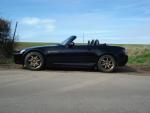
An S2000* or NSX or Tesla S are far cooler than any Failwagen TDS anyway.
*In case anyone is wondering, it seems it will be the NSX Lite that I suggested it should ages ago:

But don't fill in an order yet - Best Car can be a bit previous with these things.
The Law of Unintended Consequences raises its spectre re the C0^2 BS. No wonder soo many scientists are now dissociating themselves for it on the grounds that they were misled. But too many busybodies' income/boondoggles are predicated upon it.
Give it 10 years, we may be enjoying hybrids or BEVs instead.
An S2000* or NSX or Tesla S are far cooler than any Failwagen TDS anyway.
*In case anyone is wondering, it seems it will be the NSX Lite that I suggested it should ages ago:
But don't fill in an order yet - Best Car can be a bit previous with these things.
Trending Topics
Joined: Mar 2012
Posts: 813
Likes: 0
I don't need to make my work commute. And car is cheaper than train for other journeys even with no passengers.
Those are the ways you get people out of their car cheaper long distance travel and a reduction in travel when the purpose of the journey could be performed via telecommunications.
That's the other thing about most short journeys, it would defeat the purpose if they were in busy traffic so again I suspect even not warmed up I'm doing less damage driving to my parents than people say in nose to trail traffic.

Registered User
Joined: Jun 2006
Posts: 3,423
Likes: 0
From: Reading, UK
I will be surprised if this issue is just diesel.
New gasolines with direct injection are just as bad, even worse when the injectors foul up on cheap crappy supermarket fuel and start to increase PM emissions in orders of magnitude. This is the problem, brand new cars are tested but after a few thousand miles on crappy fuel the injectors dont spray properly increasing PM and fuel consumption.
China recently changed the fuel spec on gasoline allowing more aromatics, in turn this has nearly double PM2.5 emissions from direct injection petrols (40% of cars are direct injection in china citys due to the young car parc out there)
Once they sort out Euro6 emissions and decide if cars need GPFs or not, it should help clear things up
New gasolines with direct injection are just as bad, even worse when the injectors foul up on cheap crappy supermarket fuel and start to increase PM emissions in orders of magnitude. This is the problem, brand new cars are tested but after a few thousand miles on crappy fuel the injectors dont spray properly increasing PM and fuel consumption.
China recently changed the fuel spec on gasoline allowing more aromatics, in turn this has nearly double PM2.5 emissions from direct injection petrols (40% of cars are direct injection in china citys due to the young car parc out there)
Once they sort out Euro6 emissions and decide if cars need GPFs or not, it should help clear things up
Former Moderator
Joined: Jan 2004
Posts: 24,771
Likes: 311
From: Stanmore
And they're still cold at the start of a long journey but the short journey is missing the emissions from the part where it's warmed up, so yes proportionally per mile more polluting but less miles and thus as a journey less polluting, and the number of miles doesn't equate to the importance of the journey.
It's much cheaper and quicker for me and many millions of people to walk/take the train to work than it is to drive. It is also much cheaper to drive to work for many millions of people. Horses for courses.
You would pollute even less if you cycled the 2 miles to your parents, wouldn't you?