


The Formula 1 Thread - 2015


Registered User
Joined: Mar 2004
Posts: 11,747
Likes: 1
From: South Coast

Nice article.
I don't think it's been mentioned here, but does anybody else think that Nico's engineer was sailing a bit close to the wind regarding driver coaching in Brasil?
I heard him say several times that "Lewis is trying really hard right now".
Of course he is, they all are, it's a bloody race.
So what did he mean ? Possibly that Lewis has just turned the wick right up and I can see that you're in a lower engine mode so I suggest you do the same pretty damn quick.

I don't think it's been mentioned here, but does anybody else think that Nico's engineer was sailing a bit close to the wind regarding driver coaching in Brasil?
I heard him say several times that "Lewis is trying really hard right now".
Of course he is, they all are, it's a bloody race.
So what did he mean ? Possibly that Lewis has just turned the wick right up and I can see that you're in a lower engine mode so I suggest you do the same pretty damn quick.


Joined: Apr 2006
Posts: 9,022
Likes: 1
From: There's no i in toast!
I knew it wouldn't take long before the rose tinted glasses came out  That battle between Villeneuve and Arnoux was a freak event, although great to watch it was a one off.
There is no right answer to solve the F1 problem, and this debate will rumble on and on for ever. What I feel they need to focus on is making it a better spectacle to watch on TV. At the moment the cars zip round corners flat and can't overtake due to invisible forces like wind turbulence. It's hard to convey a sense of speed on TV, but more could be done by having static cameras on track like they do in Indy Car.
If however you heard more of the engines on TV, saw the cars sliding out the rear end on corners and squirming under braking, along with more crowd noise you would getting a better sense of racing and felt the drivers were really on the edge, trying their hardest. Allowing the cars to racer closer behind each other is a must. I don't know how you do that, but that must be a priority for the sport. Lewis probably would have won in Mexico and Brazil had he been able to get closer to Nico, and no doubt Lewis would not have won so many races this year for the same reason.
I think we need the following. More power should hopefully give us bigger and better sounding engines, less tyre grip means more tail out action and with more power means the drivers really have to control the cars through the corners. And weaker brakes means longer braking distances, so more opportunity to out-brake someone going into a corner. Coupled with DRS, means you have more chances to overtake on the straight, and going into a corner.
Noise and tail out action should help to make it a slightly better spectacle to watch on TV, and you might see a few more drivers running wide/out braking themselves which gives you the impression that they are on the limit and trying to race. At the moment, it doesn't look that exciting on TV to the casual viewer, and people switch off.
That is by no means a guaranteed plan for success, but the FIA don't seem interested in trying anything different. All they focus on is changing the engines and a bit of aero design, which costs huge bucks for the teams. Worsen the brakes and put narrower tyres on for 2016. Let's see who has the biggest balls
That battle between Villeneuve and Arnoux was a freak event, although great to watch it was a one off.There is no right answer to solve the F1 problem, and this debate will rumble on and on for ever. What I feel they need to focus on is making it a better spectacle to watch on TV. At the moment the cars zip round corners flat and can't overtake due to invisible forces like wind turbulence. It's hard to convey a sense of speed on TV, but more could be done by having static cameras on track like they do in Indy Car.
If however you heard more of the engines on TV, saw the cars sliding out the rear end on corners and squirming under braking, along with more crowd noise you would getting a better sense of racing and felt the drivers were really on the edge, trying their hardest. Allowing the cars to racer closer behind each other is a must. I don't know how you do that, but that must be a priority for the sport. Lewis probably would have won in Mexico and Brazil had he been able to get closer to Nico, and no doubt Lewis would not have won so many races this year for the same reason.
I think we need the following. More power should hopefully give us bigger and better sounding engines, less tyre grip means more tail out action and with more power means the drivers really have to control the cars through the corners. And weaker brakes means longer braking distances, so more opportunity to out-brake someone going into a corner. Coupled with DRS, means you have more chances to overtake on the straight, and going into a corner.
Noise and tail out action should help to make it a slightly better spectacle to watch on TV, and you might see a few more drivers running wide/out braking themselves which gives you the impression that they are on the limit and trying to race. At the moment, it doesn't look that exciting on TV to the casual viewer, and people switch off.
That is by no means a guaranteed plan for success, but the FIA don't seem interested in trying anything different. All they focus on is changing the engines and a bit of aero design, which costs huge bucks for the teams. Worsen the brakes and put narrower tyres on for 2016. Let's see who has the biggest balls

Former Moderator


Joined: Jan 2004
Posts: 24,771
Likes: 311
From: Stanmore
 They do have a few fixed cameras but not enough. Watching the cars coming towards you give no sense of speed at all.
 If however you heard more of the engines on TV, saw the cars sliding out the rear end on corners and squirming under braking, along with more crowd noise you would getting a better sense of racing and felt the drivers were really on the edge, trying their hardest. Allowing the cars to racer closer behind each other is a must. I don't know how you do that, but that must be a priority for the sport. Lewis probably would have won in Mexico and Brazil had he been able to get closer to Nico, and no doubt Lewis would not have won so many races this year for the same reason.
I think we need the following. More power should hopefully give us bigger and better sounding engines, less tyre grip means more tail out action and with more power means the drivers really have to control the cars through the corners. And weaker brakes means longer braking distances, so more opportunity to out-brake someone going into a corner. Coupled with DRS, means you have more chances to overtake on the straight, and going into a corner.

Joined: Jul 2004
Posts: 18,456
Likes: 5
From: Glasgow, Scotland
I think that's a bit harsh. That Allen article refers to the FIA "Overtaking Working Group" (which I didn't know existed) so it does appear the powers that be know they have a problem they need to address ...
Joined: Oct 2005
Posts: 10,112
Likes: 2
From: Banbury, Oxfordshire
The nose heights were lowered for this year which is the cause of a lot of the change.
Explained at length here: http://www.jamesallenonf1.com/2015/0...rtake-in-2015/
Explained at length here: http://www.jamesallenonf1.com/2015/0...rtake-in-2015/
But it shows that we don't need to go back 30 years; we only need to go back 1 year.
Don't forget that qualifying puts the fastest driver at the front, so why do we think making it easier for the cars to run close is necessarily going to increase the racing? Most of the times there's been a dominant driver, like Schumacher or Vettel, nobody was able to get within 30 seconds of them. In Brazil Rosberg was faster on Saturday and had first call on the pit stops; why is there an assumption that Hamilton would have got past if only the aerodynamics were different? He was beaten by the better driver over the weekend, which is how it should be.
Former Moderator
Joined: Jan 2004
Posts: 24,771
Likes: 311
From: Stanmore
Originally Posted by lovegroova' timestamp='1447874003' post='23806792
The nose heights were lowered for this year which is the cause of a lot of the change.
Explained at length here: http://www.jamesalle...ertake-in-2015/
Explained at length here: http://www.jamesalle...ertake-in-2015/
But it shows that we don't need to go back 30 years; we only need to go back 1 year.
Don't forget that qualifying puts the fastest driver at the front, so why do we think making it easier for the cars to run close is necessarily going to increase the racing? Most of the times there's been a dominant driver, like Schumacher or Vettel, nobody was able to get within 30 seconds of them. In Brazil Rosberg was faster on Saturday and had first call on the pit stops; why is there an assumption that Hamilton would have got past if only the aerodynamics were different? He was beaten by the better driver over the weekend, which is how it should be.
As for Brazil, that's not the entire picture as Hamilton was 0.0088 seconds slower on his qualifying lap, so their pace was to all intents and purposes the same (and Rosberg has been very close to Hamilton on a few occasions, so it works both ways).
To remove the driver bias, let's view things this way:
Driver A (on pole) and driver B are very closely matched. At present, Driver B cannot even make an attempt to pass driver A, even with a DRS advantage and at what is a very good overtaking spot.
At another race, driver B gets pole and the same situation occurs.
The leading driver is able to go a bit slower, knowing that the following driver will experience higher tyre degradation if he tries to follow closely and overtake.
Some real life examples from this season:
1) China: Hamilton got pole, Rosberg accused Hamilton of driving slowly to allow Vettel to catch him. If Hamilton was that slow, why did Rosberg not attempt to overtake? http://www.theguardian.com/sport/201...ish-chinese-gp
2) Brazil: Rosberg got pole, and claimed he was managing his race carefully, pointing out that Hamilton used up his tyres trying to follow.
Joined: Apr 2006
Posts: 9,022
Likes: 1
From: There's no i in toast!
Originally Posted by j8mie' timestamp='1447929436' post='23807225
What I feel they need to focus on is making it a better spectacle to watch on TV. It's hard to convey a sense of speed on TV, but more could be done by having static cameras on track like they do in Indy Car.
They do have a few fixed cameras but not enough. Watching the cars coming towards you give no sense of speed at all. If however you heard more of the engines on TV, saw the cars sliding out the rear end on corners and squirming under braking, along with more crowd noise you would getting a better sense of racing and felt the drivers were really on the edge, trying their hardest. Allowing the cars to racer closer behind each other is a must. I don't know how you do that, but that must be a priority for the sport. Lewis probably would have won in Mexico and Brazil had he been able to get closer to Nico, and no doubt Lewis would not have won so many races this year for the same reason.
I think we need the following. More power should hopefully give us bigger and better sounding engines, less tyre grip means more tail out action and with more power means the drivers really have to control the cars through the corners. And weaker brakes means longer braking distances, so more opportunity to out-brake someone going into a corner. Coupled with DRS, means you have more chances to overtake on the straight, and going into a corner.

Your quite right about the current engine power output, it's so easy to forget just how powerful these engines are. What I should have put was simpler/cheaper engines, like a nice V8 or V6. Something more be-fitting an F1 car. If they are cheaper to make and develop, that should help out the smaller teams, and might encourage a couple more to join the ranks.
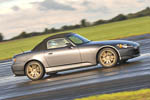
This is what I mean by sliding about through the corners.

What we see now is very minimal, and to the layman almost invisible. Massa had a couple of slides during qual. for Brazil which made it clear he was trying his all (or the car just handled like a pig
).


Joined: Nov 2005
Posts: 4,130
Likes: 169
From: Bristol
Originally Posted by Shiskine
I think that's a bit harsh. That Allen article refers to the FIA "Overtaking Working Group" (which I didn't know existed) so it does appear the powers that be know they have a problem they need to address ...
I like the idea of longer braking distances, but I doubt that idea would ever get pegs due to the safety implications.
Joined: Nov 2005
Posts: 4,130
Likes: 169
From: Bristol
Another issue is that driving fast is inevitably driving smooth and uneventful. Hanging the tail out and squirming on the brakes is slower, so drivers won't do it unless they're pushed to the limit. So you need the limit to be more difficult to stay away from (big power is harder to control, so things get a bit 'wiggly').
Joined: Nov 2005
Posts: 4,130
Likes: 169
From: Bristol
Originally Posted by chrispayze
Another issue is that driving fast is inevitably driving smooth and uneventful. Hanging the tail out and squirming on the brakes is slower, so drivers won't do it unless they're pushed to the limit. So you need the limit to be more difficult to stay away from (big power is harder to control, so things get a bit 'wiggly').
This is doubly true when the tyres shred as soon as they spin up.
This is doubly true when the tyres shred as soon as they spin up.