


Guitars


Thread Starter
Joined: Jan 2007
Posts: 32,283
Likes: 0
From: Cincinnati, OH
 Guitars
Would anyone like to take some time to thoroughly educate me on what makes one guitar different from another?
Here are some questions I have, and please answer as if I'm a complete idiot... chances are, I am.
-What is the difference, practically speaking, between a set neck and a bolt on neck?
-What are the differences between the various types of wood used - on the fretboard, for example..
-What sort of things make one coilover significantly different from another? Example, single coil vs humbucker. What about a combination? Also, what about the various brands? It seems like higher-end models from the various manufacturers sometimes use the same pickups (seymore duncans come to mind)... why is that?
-What do some of the common terms used by guitar manufacturers when describing their products *actually mean* to a person like me who isn't that knowledgable? Example: "warm tone" " Over the top crunch tones with glistening clean sound. " "lightening fast response and a sweet, full mid-range and singing upper register. "
-If I go to a guitar store and I try out a few guitars, what should I be looking for? Obviously, do I like it ... but if you were to break it down into a more objective list of criteria, what would those be?
If you want to tackle just one of the many things I've gone through, be my guest. 8d has already tried to give me recommendations on specific guitars. From just playing guitars by borrowing from friends or at various stores, I found I liked Ibanez guitars... something about the fretboard/action just feels good to me. I just want to know (for example) why some guitar snobs will go on and on about the 'tone' from a gibson and how you'll never get that kind of amazing 'tone' from another guitar. What the hell does that even mean?
Here are some questions I have, and please answer as if I'm a complete idiot... chances are, I am.
-What is the difference, practically speaking, between a set neck and a bolt on neck?
-What are the differences between the various types of wood used - on the fretboard, for example..
-What sort of things make one coilover significantly different from another? Example, single coil vs humbucker. What about a combination? Also, what about the various brands? It seems like higher-end models from the various manufacturers sometimes use the same pickups (seymore duncans come to mind)... why is that?
-What do some of the common terms used by guitar manufacturers when describing their products *actually mean* to a person like me who isn't that knowledgable? Example: "warm tone" " Over the top crunch tones with glistening clean sound. " "lightening fast response and a sweet, full mid-range and singing upper register. "
-If I go to a guitar store and I try out a few guitars, what should I be looking for? Obviously, do I like it ... but if you were to break it down into a more objective list of criteria, what would those be?
If you want to tackle just one of the many things I've gone through, be my guest. 8d has already tried to give me recommendations on specific guitars. From just playing guitars by borrowing from friends or at various stores, I found I liked Ibanez guitars... something about the fretboard/action just feels good to me. I just want to know (for example) why some guitar snobs will go on and on about the 'tone' from a gibson and how you'll never get that kind of amazing 'tone' from another guitar. What the hell does that even mean?

Former Moderator


Joined: Oct 2000
Posts: 16,175
Likes: 0
From: Erock is da shizzle
-What is the difference, practically speaking, between a set neck and a bolt on neck?
> IMO no real difference. A set neck has a mortise and tenon construction that makes a "better" interface of the neck to the guitar body. A bolt on neck just sits in the neck pocket and is bolted on. I feel that there is no difference between them as far as sound or strength is concerned. A neck through guitar however is for all intents and purposes one piece. that makes a difference.
-What are the differences between the various types of wood used - on the fretboard, for example..
> Most common are Mahogany, which is heavy, Alder which is middle of the road, and Basswood which is lighter and softer sometimes.
Fretboards are usually Maple ( like a strat ) Rosewood ( brown ) or Ebony ( black )
Maple fretboards have a brighter sound, rosewood and ebony the same IMO, but ebony is a denser wood, very tight grain, so perhaps a little sharper then rosewood..
Rosewood and Maple are the two most common.
-What sort of things make one coilover significantly different from another? Example, single coil vs humbucker. What about a combination? Also, what about the various brands? It seems like higher-end models from the various manufacturers sometimes use the same pickups (seymore duncans come to mind)... why is that?
> Pickups vary greatly depending on the magnets used, how many windings of wire they have, their ouptut, etc.
Single coils give that "Strat" sound, but pick up interferance and can hum, Humbuckers are just that, two single coils wired together to cancel that hum. They are typically more rounded in sound, and have more flexability since you can split them, put them in and out of phase, and they typically have a hotter output.
Manufactures buy in bulk, and will use a company name, but the pick ups can still differ. they have differant EQ curves, so some may sound better in basswood then mahogany. Most of the time even in high end guitars, replacing pups can make a big difference in your sound, for the better, sometimes for the worse.
There are many pick up brands, Seymour Duncan and DiMarzio probably being the biggest. Those two companies make 200 different pickups.
-What do some of the common terms used by guitar manufacturers when describing their products *actually mean* to a person like me who isn't that knowledgable? Example: "warm tone" " Over the top crunch tones with glistening clean sound. " "lightening fast response and a sweet, full mid-range and singing upper register. "
Warm is usually more bass heavy, no over the top high end, balanced eq through out.
Crunch is a hotter output, really drives the preamp tubes, can make harmonics easier, more aggressive sound.
Other things are like not articulation, does it sound like one big wall of fuzz, or can you pick out each note? they all vary.
-If I go to a guitar store and I try out a few guitars, what should I be looking for? Obviously, do I like it ... but if you were to break it down into a more objective list of criteria, what would those be?
> first thing is ya, do you like it, does it fit your style, because lets face it, you want to look cool.
More important though is how it feels in your hands. Is it comfortable? is the neck profile what you're looking for? thin and flat, or big and round. Are you a chord player or a shredder? two different styles, two different feels.
No guitar is alike, even the same model. If you like one on the shelf, play all of them, some will sound better then others. more resonance, a tone you're looking for.
No one can say one is better then the other, it's personal preference. I love Ibanez guitars, love their necks and that's pretty much all I play. Others hate them and prefer Gibsons or Fenders.
It's a myth that one type of guitar is made for one type of thing. I have Ibanez's that can sound like a strat, or a less paul. So again, find something you like and that is comfortable. the sound can be changed, as in the pick up swaps noted above.
There are other broader questions. Do you want a double locking floating trem? hard tail? string through?
And as I've said many time, if you find one you like, have a pro set it up. They'll set the string action, intonation, etc and you can turn a mediocre guitar into a great one with a proper set up.
> IMO no real difference. A set neck has a mortise and tenon construction that makes a "better" interface of the neck to the guitar body. A bolt on neck just sits in the neck pocket and is bolted on. I feel that there is no difference between them as far as sound or strength is concerned. A neck through guitar however is for all intents and purposes one piece. that makes a difference.
-What are the differences between the various types of wood used - on the fretboard, for example..
> Most common are Mahogany, which is heavy, Alder which is middle of the road, and Basswood which is lighter and softer sometimes.
Fretboards are usually Maple ( like a strat ) Rosewood ( brown ) or Ebony ( black )
Maple fretboards have a brighter sound, rosewood and ebony the same IMO, but ebony is a denser wood, very tight grain, so perhaps a little sharper then rosewood..
Rosewood and Maple are the two most common.
-What sort of things make one coilover significantly different from another? Example, single coil vs humbucker. What about a combination? Also, what about the various brands? It seems like higher-end models from the various manufacturers sometimes use the same pickups (seymore duncans come to mind)... why is that?
> Pickups vary greatly depending on the magnets used, how many windings of wire they have, their ouptut, etc.
Single coils give that "Strat" sound, but pick up interferance and can hum, Humbuckers are just that, two single coils wired together to cancel that hum. They are typically more rounded in sound, and have more flexability since you can split them, put them in and out of phase, and they typically have a hotter output.
Manufactures buy in bulk, and will use a company name, but the pick ups can still differ. they have differant EQ curves, so some may sound better in basswood then mahogany. Most of the time even in high end guitars, replacing pups can make a big difference in your sound, for the better, sometimes for the worse.
There are many pick up brands, Seymour Duncan and DiMarzio probably being the biggest. Those two companies make 200 different pickups.
-What do some of the common terms used by guitar manufacturers when describing their products *actually mean* to a person like me who isn't that knowledgable? Example: "warm tone" " Over the top crunch tones with glistening clean sound. " "lightening fast response and a sweet, full mid-range and singing upper register. "
Warm is usually more bass heavy, no over the top high end, balanced eq through out.
Crunch is a hotter output, really drives the preamp tubes, can make harmonics easier, more aggressive sound.
Other things are like not articulation, does it sound like one big wall of fuzz, or can you pick out each note? they all vary.
-If I go to a guitar store and I try out a few guitars, what should I be looking for? Obviously, do I like it ... but if you were to break it down into a more objective list of criteria, what would those be?
> first thing is ya, do you like it, does it fit your style, because lets face it, you want to look cool.
More important though is how it feels in your hands. Is it comfortable? is the neck profile what you're looking for? thin and flat, or big and round. Are you a chord player or a shredder? two different styles, two different feels.
No guitar is alike, even the same model. If you like one on the shelf, play all of them, some will sound better then others. more resonance, a tone you're looking for.
No one can say one is better then the other, it's personal preference. I love Ibanez guitars, love their necks and that's pretty much all I play. Others hate them and prefer Gibsons or Fenders.
It's a myth that one type of guitar is made for one type of thing. I have Ibanez's that can sound like a strat, or a less paul. So again, find something you like and that is comfortable. the sound can be changed, as in the pick up swaps noted above.
There are other broader questions. Do you want a double locking floating trem? hard tail? string through?
And as I've said many time, if you find one you like, have a pro set it up. They'll set the string action, intonation, etc and you can turn a mediocre guitar into a great one with a proper set up.
Former Moderator
Joined: Oct 2000
Posts: 16,175
Likes: 0
From: Erock is da shizzle
Oh, since I missed your last paragraph..
Tone is subjective. You rarely hear the same guitar tone on any album of any artist, in any decade. So find something you like and that becomes your "sound"
Tone however is the overall sound of your rig. Guitar, cables, amps, effects.
A plywood guitar will not have a full bodied, tight, warm sound of a les paul. They are big and heavy for a reason. But, any mid-high end guitar can give you a top notch sound.
Tone also, and mostly IMO comes from your fingers. You'd tell EVH if he played your sisters Hello Kitty guitar. he sounds like him because the tone comes from his fingers. Sure he could sound better with better equipment, but he'd still make every chump here look like a 2nd grade music recital.
Tone is subjective. You rarely hear the same guitar tone on any album of any artist, in any decade. So find something you like and that becomes your "sound"
Tone however is the overall sound of your rig. Guitar, cables, amps, effects.
A plywood guitar will not have a full bodied, tight, warm sound of a les paul. They are big and heavy for a reason. But, any mid-high end guitar can give you a top notch sound.
Tone also, and mostly IMO comes from your fingers. You'd tell EVH if he played your sisters Hello Kitty guitar. he sounds like him because the tone comes from his fingers. Sure he could sound better with better equipment, but he'd still make every chump here look like a 2nd grade music recital.

Registered User
Joined: Oct 2004
Posts: 1,478
Likes: 0
Mindcore is giving awesome advice, so I don't think I can add to that very much.
There's a lot to be said about trying out gear, playing with different sounds, and as your ear matures, discovering what you like.
One thing I will say is that there's a lot of snake oil in this business. Guitars are very subjective, and very emotional purchases for people, and manufacturers know that. They'll tell you crap about having "the best tonewoods" or "there's a reason why <arist xyz> plays these guitars". Don't buy it, those guitar center guys spew so much crap it's ridiculous.
Don't throw huge amounts of money at gear thinking it'll make you better. It won't. You will still sound like you whether you're playing a $200 guitar or a $5000 guitar. Your tone comes from (IMHO):
-50% in your fingers
-35% from your amp
-20% from your pickups
-5% the physical construction of the guitar
There's a lot to be said about trying out gear, playing with different sounds, and as your ear matures, discovering what you like.
One thing I will say is that there's a lot of snake oil in this business. Guitars are very subjective, and very emotional purchases for people, and manufacturers know that. They'll tell you crap about having "the best tonewoods" or "there's a reason why <arist xyz> plays these guitars". Don't buy it, those guitar center guys spew so much crap it's ridiculous.
Don't throw huge amounts of money at gear thinking it'll make you better. It won't. You will still sound like you whether you're playing a $200 guitar or a $5000 guitar. Your tone comes from (IMHO):
-50% in your fingers
-35% from your amp
-20% from your pickups
-5% the physical construction of the guitar
Former Moderator
Joined: Oct 2000
Posts: 16,175
Likes: 0
From: Erock is da shizzle
Originally Posted by Kremlin,Dec 16 2009, 12:58 PM
Your tone comes from (IMHO):
-50% in your fingers
-35% from your amp
-20% from your pickups
-5% the physical construction of the guitar
PS... if you like Ibanez's watch craigslist and buy the first RG550 under $500 bucks you see. That guitar will last you for the rest of your life.
Joined: Oct 2009
Posts: 3,194
Likes: 28
From: South Carolina
Even further into the whole discussion on pickups, not all pickups of the same "type" are going to sound the same. There are some humbuckers created with a "clean break" kind of sound in mind, and some are created with super high gain in mind.
Also, as far as how they "describe" tones of certain pickups and guitars, they're referring to a few stereotypes as far as tone is concerned. "Warm" can refer to a number of different things, but mostly they're talking about good low end response, "midrang-ey." Think anything you usually hear in Jazz, Blues, even some rock. "Glassy" is more reserved for a cleaner blues tone. The high end is more crisp, with a scooped mid kind of sound.
"Crunch" you're getting into hi-gain territory. When I think crunch, I'm thinking of when you palm mute and you get that "chunk" noise when you play low power chords. "Singing upper registers" and "singing overtones" are more for hi-gain as well, mostly referring to solo-ing and playing higher up on the neck.
What it really comes down to in the end, is that the whole thing is really just as you describe, as in, it's all subjective. It's best to go on youtube and view some reviews on specific amps and guitars. Also, I would go on what I refer to as a "Tone quest." If you don't feel comfortable enough with your skill on guitar you can find a friend who is reasonably proficient, and ride around and play all kinds of guitars and all kinds of different amps.
If you want blues, stick to Class A powered amps, if you want rock, you could do something Class A/B, or if you want stratospheric gain you can do something in rectifier territory (not my fav, but alot of ppl like them). I suggest playing something like a Mesa Boogie 5:25 or 5:50 to start with.
In general, stick to all tube for amplifiers. I've played a few solid-state amps that are ok, but they're generally not that great.
Also, as far as how they "describe" tones of certain pickups and guitars, they're referring to a few stereotypes as far as tone is concerned. "Warm" can refer to a number of different things, but mostly they're talking about good low end response, "midrang-ey." Think anything you usually hear in Jazz, Blues, even some rock. "Glassy" is more reserved for a cleaner blues tone. The high end is more crisp, with a scooped mid kind of sound.
"Crunch" you're getting into hi-gain territory. When I think crunch, I'm thinking of when you palm mute and you get that "chunk" noise when you play low power chords. "Singing upper registers" and "singing overtones" are more for hi-gain as well, mostly referring to solo-ing and playing higher up on the neck.
What it really comes down to in the end, is that the whole thing is really just as you describe, as in, it's all subjective. It's best to go on youtube and view some reviews on specific amps and guitars. Also, I would go on what I refer to as a "Tone quest." If you don't feel comfortable enough with your skill on guitar you can find a friend who is reasonably proficient, and ride around and play all kinds of guitars and all kinds of different amps.
If you want blues, stick to Class A powered amps, if you want rock, you could do something Class A/B, or if you want stratospheric gain you can do something in rectifier territory (not my fav, but alot of ppl like them). I suggest playing something like a Mesa Boogie 5:25 or 5:50 to start with.
In general, stick to all tube for amplifiers. I've played a few solid-state amps that are ok, but they're generally not that great.
Thread Starter
Joined: Jan 2007
Posts: 32,283
Likes: 0
From: Cincinnati, OH
all your input is much appreciated. 
current setup is a squier strat and a crate rfx30 combo

i love the amp... it was something like $100-$150 on clearance when i bought it and the sound is far better than anything else in that price range. i won't be replacing it until i get much better at actually playing.
the guitar on the other hand... it has been through a lot with me... the trem bar broke part way into the bridge. no trem for me anymore. it has scratches and scrapes all over. i love the thing, but every time i play a well set up ibanez i just want it. it's one of those totally unnecessary purchases that i've thought about many times and simply haven't pulled the trigger on.
current setup is a squier strat and a crate rfx30 combo
i love the amp... it was something like $100-$150 on clearance when i bought it and the sound is far better than anything else in that price range. i won't be replacing it until i get much better at actually playing.
the guitar on the other hand... it has been through a lot with me... the trem bar broke part way into the bridge. no trem for me anymore. it has scratches and scrapes all over. i love the thing, but every time i play a well set up ibanez i just want it.
it's one of those totally unnecessary purchases that i've thought about many times and simply haven't pulled the trigger on.
Trending Topics
Registered User
Joined: Oct 2004
Posts: 1,478
Likes: 0
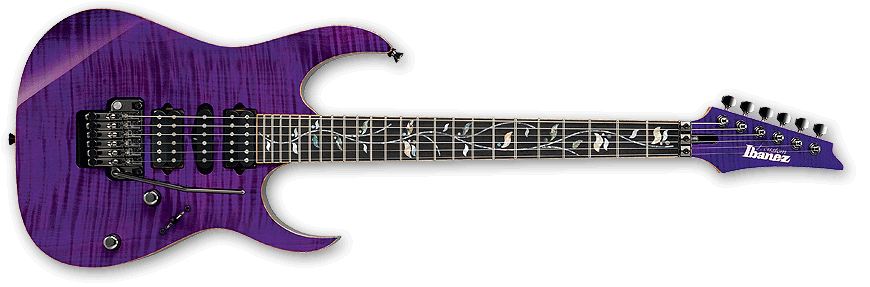
Niiiiiiiiiiiiiiiiiiiiiiiiiiice  I've always wanted a J-Custom. I don't recognize that bridge, is it some newer revision of the Lo Pro Edge?
From Ibanez I have a Jem7VWH, a JS10th, and a USA Custom from back when they had a USA custom shop.
I've always wanted a J-Custom. I don't recognize that bridge, is it some newer revision of the Lo Pro Edge?From Ibanez I have a Jem7VWH, a JS10th, and a USA Custom from back when they had a USA custom shop.
Thread Starter
Joined: Jan 2007
Posts: 32,283
Likes: 0
From: Cincinnati, OH
Rg1570 ... any thoughts?
http://www.ibanez.com/ElectricGuitars/model-RG1570

think that has everything i want. i've played a similar but much cheaper one a couple times and loved it..., the RG5EX1

http://www.ibanez.com/ElectricGuitars/model-RG1570
think that has everything i want. i've played a similar but much cheaper one a couple times and loved it..., the RG5EX1