


IAT by AEM




Joined: Oct 2002
Posts: 8,044
Likes: 6
From: South Florida

mine changes temps very fast. i saw i think evans mention this once. i spray water and as soon as the water kicks on, temps drop right away.
ehhh, the only thing i agree is the iat calc table is WAY off.
i do agree though its placement shows higher numbers then those that have it plumbed into intake piping, but remember, its reading inside an oven. of course the temps are gonna look heat soaked, ITS HOT IN THERE. if you stick the sensor outside of the IM, your not seeing how hot the air gets right before it enters the combustion chamber. just like an intercooler cools air as it passes through it, the IM wamrs air as it passes through it.
so to me, in the end, 6 of 1, half dozen of the other. your choice of where to accurately read temps.
ehhh, the only thing i agree is the iat calc table is WAY off.
i do agree though its placement shows higher numbers then those that have it plumbed into intake piping, but remember, its reading inside an oven. of course the temps are gonna look heat soaked, ITS HOT IN THERE. if you stick the sensor outside of the IM, your not seeing how hot the air gets right before it enters the combustion chamber. just like an intercooler cools air as it passes through it, the IM wamrs air as it passes through it.
so to me, in the end, 6 of 1, half dozen of the other. your choice of where to accurately read temps.

Banned
Joined: May 2002
Posts: 3,624
Likes: 11
From: Raleigh, NC
Originally Posted by siadam,Jul 16 2009, 05:27 PM
In so many words, you should be concerned w/the difference in temps between a pull and cruising, as compared to the "actual" temp, of course thats to a certain point.

the only time i care what the "actual" intake temps are is when im trying to decide if a turbo, supercharger or intercooler is out of its efficiency. But even then the change is more important
Trending Topics


Joined: Feb 2008
Posts: 3,964
Likes: 7
From: USA
The problem with a Turbo car is that it can spool very rapidly causing large swings in temperature due to the heat of compression and efficiency. So depending on the intercooler efficancy at that particular time (depends on many factors such as delta T and air velocity) you will see a very quick and sharp increase in temperature that the soaked intake temperature sensor will not see. Either way you will have to adjust your breakpoints in a nonlinear fasion to get a good tune.
You can find it cheaper here
http://www.diyautotune.com/catalog/

You can find it cheaper here
http://www.diyautotune.com/catalog/

Registered User
Joined: Oct 2002
Posts: 868
Likes: 0
From: Ft. Lauderdale
the stock sensor reacts very quickly. when we tested it outside the car to get an accurate IAT table any air moving around it changed the readings really quick. plus looking at old logs I have the sensor would show changes in fractions of a second. the logs alone prove that the sensor reacts very fast/
the big thing that throws people off is that the sensor is in the manifold and when you let off of the gas you get reversion from the combustion chamber and the temps in the manifold stay higher for a little while until cool air starts to flow through the motor again. this is why I think people think there's a problem with the stock sensor, it doesn't react how they guess it will act so it must be "wrong".
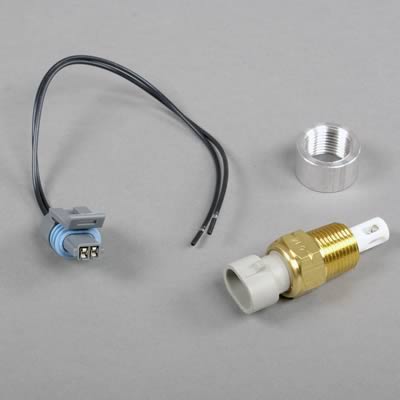
the guys who get the AEM sensor and relocate the sensor to before the throttle body say the sensor reacts faster and doesn't get heat soaked aren't correct. all they're really doing is not exposing the sensor to the reversion from the combustion chamber, that's why the temps drop fast when you let off the gas. when you're on the gas the difference in temps is just one sensor in sitting in a 140 degree oven (the temp the intake manifold usually heat soaks to) and the other isn't.
the big thing that throws people off is that the sensor is in the manifold and when you let off of the gas you get reversion from the combustion chamber and the temps in the manifold stay higher for a little while until cool air starts to flow through the motor again. this is why I think people think there's a problem with the stock sensor, it doesn't react how they guess it will act so it must be "wrong".
the guys who get the AEM sensor and relocate the sensor to before the throttle body say the sensor reacts faster and doesn't get heat soaked aren't correct. all they're really doing is not exposing the sensor to the reversion from the combustion chamber, that's why the temps drop fast when you let off the gas. when you're on the gas the difference in temps is just one sensor in sitting in a 140 degree oven (the temp the intake manifold usually heat soaks to) and the other isn't.