


Meth Heads


Thread Starter
Registered User
Joined: May 2008
Posts: 3,791
Likes: 1
From: Around
 Meth Heads
On the AEM meth kit, and the AEM EMS, there is a green and blue wire that are optional.
I forget which one is the correct color, I can check when I get home, but my question is this:
The output from the aem controller is supposed to be wired into a pin on teh AEM that will change the map/pull timing/etc in case it see's an error.
I don't see any documentation on this..
Can anyone shed some light on what pin it is?
Thanks!!
I forget which one is the correct color, I can check when I get home, but my question is this:
The output from the aem controller is supposed to be wired into a pin on teh AEM that will change the map/pull timing/etc in case it see's an error.
I don't see any documentation on this..
Can anyone shed some light on what pin it is?
Thanks!!


Joined: Oct 2002
Posts: 8,044
Likes: 6
From: South Florida
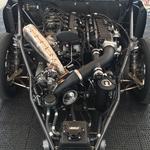
i beleive the correct way to wire it is to have the aem ems activate the meth kit, and if the other wire grounds out, then deactivate it.
i set mine up to activate when i ground a switch, and if that error wire grounds it pulls timing in the ignition map.
tech the first way is the right way to do it, but i wanted to be able to run water only if i wanted, and not have to worry about the map switching to extra timing map.
lemme dig up the shit i have.
Aem switch in has to be ground = off from the green meth wire since the meth outputs a ground if there’s a fault.
Aem switch out has to be 12V to trigger the meth’s arm switch
thats the basic, you wire those two wires to teh extra plug on the aem ems. in the ins manual it tells u which input/output pin does what. page 6 and 7 of ins manual. connector is D.
D5 switched 12v out
d11 switched ground input
should work as aem activating aem meth, and deactivating when error wire grounds.
i set mine up to activate when i ground a switch, and if that error wire grounds it pulls timing in the ignition map.
tech the first way is the right way to do it, but i wanted to be able to run water only if i wanted, and not have to worry about the map switching to extra timing map.
lemme dig up the shit i have.
Aem switch in has to be ground = off from the green meth wire since the meth outputs a ground if there’s a fault.
Aem switch out has to be 12V to trigger the meth’s arm switch
thats the basic, you wire those two wires to teh extra plug on the aem ems. in the ins manual it tells u which input/output pin does what. page 6 and 7 of ins manual. connector is D.
D5 switched 12v out
d11 switched ground input
should work as aem activating aem meth, and deactivating when error wire grounds.
Registered User
Joined: Jan 2009
Posts: 1,601
Likes: 14
From: Zionsville, IN
On my setup I used Pin A26 for the failsafe. You use the green (boost-safe) wire coming out of the pump controller and pin it to A26 or several other switched inputs for that matter (your choice). Then obviously you have to make the appropriate change in the EMS to accommodate that.
My kit is always on, and if it detects a error, it switches over to a low boost/timing map.
My kit is always on, and if it detects a error, it switches over to a low boost/timing map.
Thread Starter
Registered User
Joined: May 2008
Posts: 3,791
Likes: 1
From: Around
Originally Posted by boostedf22c,Mar 9 2010, 09:42 AM
On my setup I used Pin A26 for the failsafe. You use the green (boost-safe) wire coming out of the pump controller and pin it to A26 or several other switched inputs for that matter (your choice). Then obviously you have to make the appropriate change in the EMS to accommodate that.
My kit is always on, and if it detects a error, it switches over to a low boost/timing map.
My kit is always on, and if it detects a error, it switches over to a low boost/timing map.
Mine will always be on too, I wired the yellow wire out of the controller to an accessory so it comes on when the car is one...I didn't think a switch was a good idea...never a reason to have it off as far as I can see.
Thanks!


Thread Starter
Registered User
Joined: May 2008
Posts: 3,791
Likes: 1
From: Around
Guys....where is the optimum placement for the nozzle?
I'm not talking about where on the pipe, I'm talking about top, bottom, left ride in relationship to the i/c piping.
I am going to mount my fitting, and I haven't seen anything on that really other than how many inches away from the throttle plate/etc.
I'm not talking about where on the pipe, I'm talking about top, bottom, left ride in relationship to the i/c piping.
I am going to mount my fitting, and I haven't seen anything on that really other than how many inches away from the throttle plate/etc.
Trending Topics

Joined: Jan 2008
Posts: 9,570
Likes: 3
From: New Jersey
Originally Posted by siadam,Mar 10 2010, 06:20 AM
Guys....where is the optimum placement for the nozzle?
I'm not talking about where on the pipe, I'm talking about top, bottom, left ride in relationship to the i/c piping.
I am going to mount my fitting, and I haven't seen anything on that really other than how many inches away from the throttle plate/etc.
I'm not talking about where on the pipe, I'm talking about top, bottom, left ride in relationship to the i/c piping.
I am going to mount my fitting, and I haven't seen anything on that really other than how many inches away from the throttle plate/etc.

http://www.alcoholinjectionsystems.com/a40...ticle_info.html
Positioning The Water Injection Nozzle
One of the most common questions we receive from customers is "Where is the best place to install my water injection nozzle ?". Unfortunately, the answer to this question is often times different for everyone as it depends on the application. There are many factors such as type engine, supercharger or turbocharger, EFI or carbureted, intercooled or non-intercooled and so forth. In this section will go over the various locations in which you can mount your water injection nozzle or nozzles. As well as locations in which you do not want to install your nozzles and explaining the reasons for both. Are you ready? Lets begin.
EFI/Carbureted Turbocharged & Centrifugal Applications
Due to their similarities in system design and layout, we have combined both turbocharger and centrifugal superchargers applications in one category as the nozzle locations are the same for both applications.
water methanol injection
1. Pre-Turbocharger/Centrifugal Injection
By placing the water methanol injection nozzle or nozzles pre-turbocharger or centrifugal supercharger and injecting a fine precise amount of water methanol into the air inlet of the compressor can have a dramatic positive effect on compressor efficiency (particularly with turbocharger systems and high boost centrifugal applications) while substantially lowering discharge temperatures at the source of compression. On 8-25 psi applications, users can expect to see a 70-160+ degree drop in compressor discharge temperatures. While reductions of 160-240+degree's can be had on 25-60+ psi high boost applications such as diesels.
How is this possible?
When water methanol is first injected, we're able to begin slightly cooling the incoming air entering the compressor. This air is already relatively cool in relation to the ambient temperature of the day as it has yet to be compressed and heated. Depending on the temperature of the day and how the air inlet is plumped and where the air is being drawn in from, the incoming air entering into the inlet of the compressor commonly ranges between 5-20 degree's above ambient. Only minor cooling of the air charge occurs at this stage before it enters into the compressor. More importantly, we are about to dramatically cool the air that is being compressed and heated within the turbocharger.
It's important to understand it is here that the heat is being generated.
water methanol injectionA turbochargers impeller can spin at an astonishing speed between 100,000- 150,000 rpms. While centrifugal supercharger impellers spin between 40,000-65,000+ rpm. Between each pair of blades on an impeller exists a wedge shaped open space which the air fills in. As the impeller is spinning, this wedge shaped air pocket is subjected to tremendous centrifugal forces and is forced outward away from the center of the impeller to the outer edges. It is here where the air begins to stack up and compress against the compressor housing forming the heat as it makes it way into the scroll.
water methanol injectionAs the compressed air heats up, it tries to further expand, making it now more difficult for the heated compressed air to pass through and exit the compressor thereby lowering the compressor efficiency. In addition, this compressed air is taking up more space within the compressor limiting new incoming air from being processed. Furthermore, the hot compressed air exiting the turbocharger is less dense as it has been heated significantly. Therefore, containing less power producing oxygen while making the engine considerably more prone to detonation.
By cooling the air as it's being compressed within the turbocharger or centrifugal supercharger, the compressed air is now substantially cooler, more dense, taking less space and moves more efficiently through the compressor allowing us to pack and process more air through the turbocharger or centrifugal supercharger. This leads us to our second benefit. Improved compressor efficiency.
All of this results in improved compressor efficiency. Because of this improved efficiency the compressor does not have to work as hard to produce the same amount of boost as without the water methanol injection. In turn it raises the maximum mass air flow of the compressor. Thereby, making a smaller turbocharger or centrifugal supercharger now perform like a larger turbocharger or centrifugal supercharger with the addition of the water methanol injection.
water methanol injectionLastly, as already mentioned above, pre-compressor injection substantially lowers the discharge temperatures exiting the compressor. The engine is now less prone to detonation through this reduction in air charge temperatures. Furthermore, the use of an intercooler is dramatically reduced and in some applications no longer needed as it may not offer substantial further cooling effects in return for the pressure drop caused by it. Removal of the intercooler could now offer a further increase in boost pressure at the engine as well as compressor efficiency.
While all of this sounds very exciting. To do this properly requires proper sizing of the nozzles in relation to the compressor size and output. Additionally, the type fluid being used also effects the size of the water injection nozzle selected. When done properly, very little of the water methanol mist injected into the inlet of the compressor survives the process. Thereby, discharging a much cooler air charge with a relativity high humidity with very little or no water methanol droplets present.
When injecting water, we can quickly over saturate the air charge and have an excess of fluid discharging the compressor. Water has a much higher latent heat of vaporization, nearly double that of methanol, and does not flash (instantly evaporate) like that of methanol or other alcohols when injected into a hot air stream. Therefore, a smaller nozzle must be used when spraying pure water.
water methanol injectionA better choice for pre-compressor injection is a greater concentration of methanol vs. water or pure methanol. Methanol instantly flashes (evaporating) as soon as it enters into a hot compressor and meets the heat within it. By using an alcohol, this dramatically reduces the amount of actual fluid exiting the compressor due to it‘s fast evaporation. Additionally, methanol offers much greater cooling effect then water. Furthermore, methanol is also less dense then water thereby having a softer impact on the impeller. The specific gravity of pure methanol is .792 @ 68° F compared to water which is 1.00 @ 64° F.
One major concern associated with pre-compressor injection is erosion of the impeller. This is only likely to occur when injecting solid stream of water at the impeller of a turbocharger or using an excessively large nozzle. Impeller erosion is highly unlikely with centrifugal supercharger as they spin at a considerably slower speed then turbochargers. Impeller erosion is of little concern with centrifugal superchargers.
2. Pre-Intercooler Injection
While pre-intercooler injection may at first seem like a logical approach. Thereby, combining the effects of water methanol injection within the air-to-air intercooler for an increased synergistic effect. It is not so. Matter of fact, it's the opposite. The cooling effects and benefits offered by the water methanol injection are less when injected here then in all other locations. Further, more other issues arise such as puddling which can form in the bottom of the intercooler. Additionally, pour atomization will occur as the fluid will accumulate in the individual air to air intercooler core walls of the intercooler forming larger droplets which will eventually break away resulting in pour atomization. We do not recommend pre-intercooler injection.
3. Post Intercooler Injection
Post intercooler injection technically refers to injection anywhere after the intercooler. However, in this discussion we are specifically taking about post intercooler injection which takes place directly after the air-to-air intercooler on an application which has a considerably lengthy discharge tubes as shown in the picture above.
Here the user has numerous locations and plenty of space available to inject after the intercooler. Often times users will believe by placing the nozzle further away from the intake of the engine, they will have better atomization, better charge cooling and ultimately better performance. In a case like the engine above, placing the nozzles directly after the intercoolers is not as desirable as placing them directly inches away front of the throttle body or carburetor, as this is excessively further away then needed.
While this will result in a well atomized, cool air charge entering into the intake manifold. Much of the water methanol injection would have already evaporated leaving little injection available for internal cylinder cooling, added detonation control and reduced EGT's. Additionally, In some case's the air charge can actually begin to heat back up due to excessively long discharge pipes being routed around hot radiator, turbocharger, hot pipes and exhaust.
Location of the mass air meter and IAT or ACT sensor location should always be considered. Never inject pre-mass air. Only in pre-turbocharger applications when done properly can one inject prior to the mass air.
4. Pre Throttle Body/Carburetor Injection
water methanol injectionPositioning the water methanol injection nozzles or nozzles just before the throttle body or carburetor on turbocharged and centrifugal supercharger applications is by far the most common position and one of the most beneficial of all. Furthermore, most every application can easily be fitted in this manor. With injection taking place just before the throttle body/carburetor, inches before the intake of the engine, significant cylinder cooling and detonation suppression is achieved. Additionally, air charge temperatures are significantly reduced through the intake manifold.
Care should always be taken concerning adequate distribution. In many cases intake manifolds can have individual intake ports beginning right after the throttle body. In applications such as this, the nozzle need only be pulled back away from the throttle body 4-5 inches to ensure proper distribution between all intake ports and not feeding one more then others.
Many of our concerns are eliminated when injecting in this location such as injecting prior to the mass air meter, intercooler or being excessively to far away from the intake of the engine. With injection taking place right before the intake of the engine, the effects are maximized.
As already mentioned, positioning the water methanol injection nozzles or nozzles just before the throttle body or carburetor on turbocharged and centrifugal supercharger applications is by far the most common position and one of the most beneficial of all as it offer excellent air charge cooling and exceptionable detonation control and cylinder cooling.
5. Post Throttle Body/Carburetor Injection
In some applications the need for injection after the throttle body or carburetor is necessary. This may be due to lack of other locations that are available. For instance with carbureted applications where users do not easily have the ability to spray before the carburetor, they may slip a carburetor plate under the carburetor and drill and tap it for the nozzles.
water methanol injectionWhen doing so it's absolutely imperative that the use of a check valve or solenoid is used to prevent siphoning during times when the engine is not in boost and under a vacuum. Unlike other competitors kits which do not include a one-way check valve or solenoid and charge additionally for it. We offer one-way check valves standard with every system as an integrated solution rather than just an after-thought.
As always and more so then ever, care must be taken to ensure proper distribution between all intake ports. Locating the nozzles after the throttle body or carburetor greatly raises the concern for proper distribution of the water methanol injection as injection is taking place right in the intake manifold plenum. Users must evaluate their intake manifold design and nozzle or nozzles location and determine if proper distribution will be maintained before injecting.
Post throttle body/carburetor injection should only be considered when other more preferable locations are nor available.
6. Direct Port Injection
Direct port injection involves positioning a water/methanol injection nozzle in each intake port of the manifold. This allows for the use of several smaller injectors to be used in each intake port as opposed to one larger nozzle located upstream of the intake manifold servicing all the cylinders. Unfortunately, direct port injection generally requires the removal of the intake manifold to complete installation. Thus making for a considerably longer and more complex installation.
water methanol injectionWhile this does offer the benefit of better atomization, more uniform and even distribution through out the cylinders. In addition to possibly better detonation control, cylinder cooling and reduced EGT's. It's generally not needed as other nozzle locations can be nearly just as effective requiring considerably less work and costs involved. Furthermore, one problem with running direct port injection is users are not likely to monitor differences in IAT's (intake air temperatures)
Port injection is more common on 4 cylinder engines as added cost's for additional nozzles and fittings is acceptable and removal of these type of intake manifold is generally much easier. In general, we do not recommend port injection as we have achieved excellent results using other less complicated and costly nozzle arrangements and locations.
7. Staggered Injection
Staggered injection involves combining pre-compressor injection with an additional secondary nozzle positioned further down the turbocharger or centrifugal supercharger, such as pre-throttle body/carburetor injection. By combining pre-compressor injection with pre-throttle body injection, were able to improve the efficiency of the compressor while dramatically reducing air charge temperatures at the compressor and again at the intake for a combined synergistic effect. Furthermore, the secondary nozzle provides the necessary cylinder cooling, detonation control, and reduced EGT's which the pre-turbocharger nozzles does not.
Best of all, installation remains essentially the same and costs are only marginally more as the addition of a secondary nozzle and tee fitting are all that is required. We highly recommend the staggered injection for all turbocharged applications and high boost centrifugal applications.
For complete details on Pre-compressor injection and Pre-Throttle Body/Carburetor injection these are listed above individually.
Pre-Compressor Injection Precautions
Never place your water methanol injector before the mass air meter. The only time this may be allowed is with pre-compressor injection. When done properly, little or no fluid is exiting the compressor. Only a cooler denser, high humidity air charge with little or no actual fluid remaining in the air charge after the compressor.
When installing your water methanol injection system on a EFI vehicle, it's best to first determine where the IAT or ACT sensor is located before deciding on a nozzle locations. Often times we can position the nozzle before the factory IAT (intake air temperature) or ACT (air charge temperature) sensor location without having to relocate it. This allows us the ability to better use the IAT or ACT sensor for retuning the ECU for the addition of the water methanol injection system.
Unfortunately, many of our newer vehicles have now incorporated the IAT sensor in to the mass air meter. With most applications we can disable this IAT sensor in the mass air meter and install a new separate IAT sensor in a new desirable location.
Thread Starter
Registered User
Joined: May 2008
Posts: 3,791
Likes: 1
From: Around
I appreciate that Joey.
I read that the other day.
I'm sorry I wasn't more clear.
I know the fitting needs to be a few inches before the throttle plate, check.
However should I mount it so it sprays perpendicular to the stream of air, or mount it underneath the pipe, so it sprays up into the air, or what?
I can't mount it on top, as my hood wouldn't close, lol.
I read that the other day.
I'm sorry I wasn't more clear.
I know the fitting needs to be a few inches before the throttle plate, check.
However should I mount it so it sprays perpendicular to the stream of air, or mount it underneath the pipe, so it sprays up into the air, or what?
I can't mount it on top, as my hood wouldn't close, lol.
Joined: Jan 2008
Posts: 9,570
Likes: 3
From: New Jersey
I dont think it matters, I mounted mine on like a 90 angle to the charge pipe (basically parallel to the ground), however because the air is being pushed through at a high PSI it think it immediately gets dispersed in the airstream as if it was just part of it, ya know what I mean?