


Camber settings?


Thread Starter
Registered User
Joined: Oct 2007
Posts: 124
Likes: 1
 Camber settings?
Hi there,
I have changed my set up and am looking for some input on camber settings. My search of this forum has left me with a few questions:
1) Is the general idea that as much camber as possible is best?
2) To what extent do tire compounds and spring rates matter?
3) Should I be running more rear camber in relation to the front. If so, how much more?
For reference, my set up is:
- AP1
- Star Specs 225/245 F/R (AP2 wheels)
- GC Coilover/Koni Yellow, 500lb/400lb F/R
Any input is much appreciated!
I have changed my set up and am looking for some input on camber settings. My search of this forum has left me with a few questions:
1) Is the general idea that as much camber as possible is best?
2) To what extent do tire compounds and spring rates matter?
3) Should I be running more rear camber in relation to the front. If so, how much more?
For reference, my set up is:
- AP1
- Star Specs 225/245 F/R (AP2 wheels)
- GC Coilover/Koni Yellow, 500lb/400lb F/R
Any input is much appreciated!

Former Moderator


Joined: Jul 2005
Posts: 4,634
Likes: 28
From: West Virginia
Hi there,
I have changed my set up and am looking for some input on camber settings. My search of this forum has left me with a few questions:
1) Is the general idea that as much camber as possible is best?
2) To what extent do tire compounds and spring rates matter?
3) Should I be running more rear camber in relation to the front. If so, how much more?
For reference, my set up is:
- AP1
- Star Specs 225/245 F/R (AP2 wheels)
- GC Coilover/Koni Yellow, 500lb/400lb F/R
Any input is much appreciated!
I have changed my set up and am looking for some input on camber settings. My search of this forum has left me with a few questions:
1) Is the general idea that as much camber as possible is best?
2) To what extent do tire compounds and spring rates matter?
3) Should I be running more rear camber in relation to the front. If so, how much more?
For reference, my set up is:
- AP1
- Star Specs 225/245 F/R (AP2 wheels)
- GC Coilover/Koni Yellow, 500lb/400lb F/R
Any input is much appreciated!
Without camber adding mods, yes, max stock camber front and rear = best handling but your tires will wear out faster from street driving.
2) To what extent do tire compounds and spring rates matter?
Not much in reality.
3) Should I be running more rear camber in relation to the front. If so, how much more?
That is the standard, safe way to run the car. It gives you a more stable rear end with some push in the front at the limit of adhesion. If you have your alignment guy set max negative camber front and rear you will end up with about -2 up front and -3 in the rear (depends on if you are lowered or not) which will be stable.
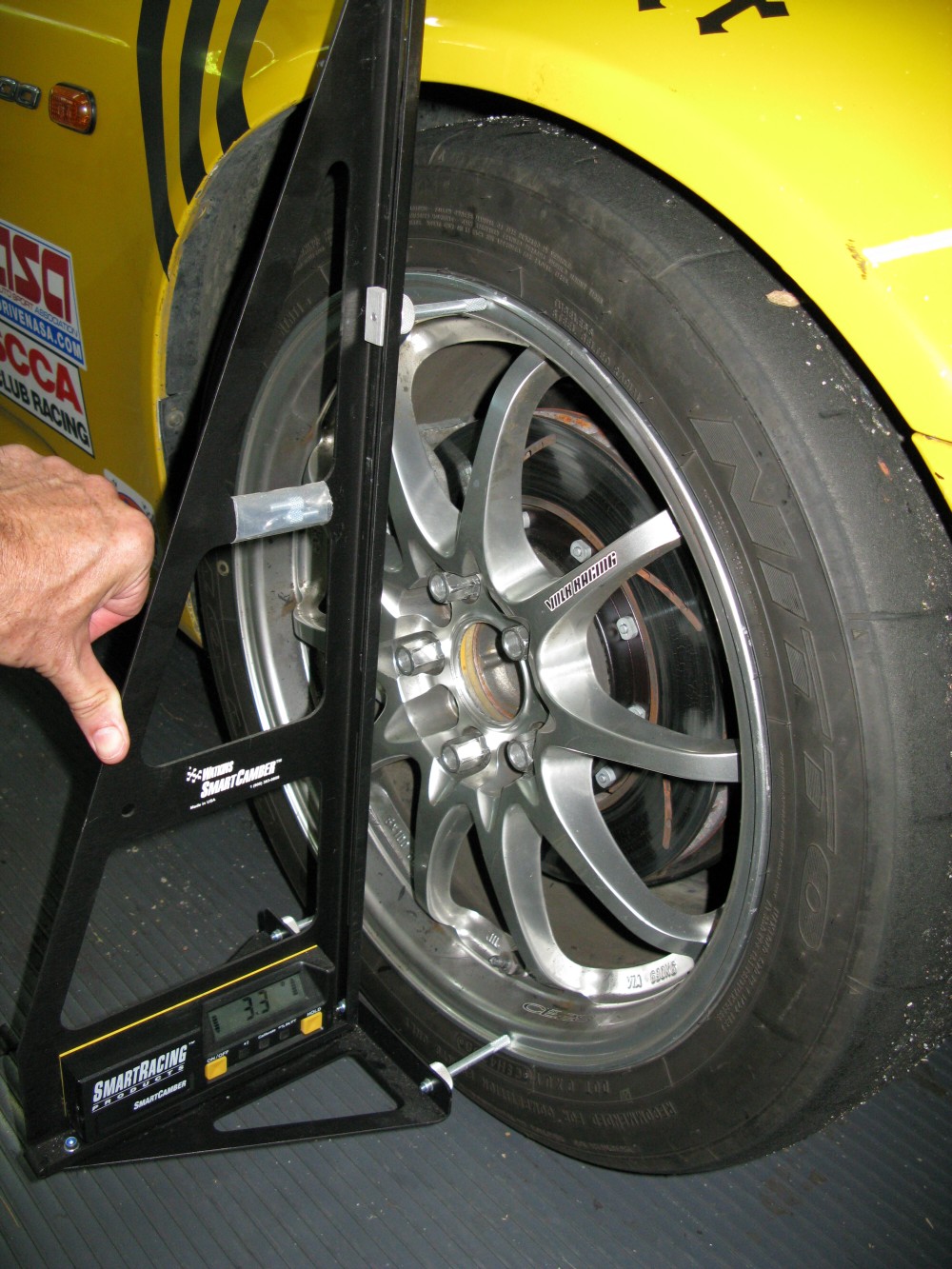
Take a look at my S2000 alignment page for more info: http://robrobinette....00Alignment.htm

Former Moderator
Joined: Aug 2004
Posts: 14,729
Likes: 8
I pretty much agree with Rob, but will add the following pieces as food for thought:
1) Is the general idea that as much camber as possible is best?
Without camber adding mods, yes, max stock camber front and rear = best handling but your tires will wear out faster.
Counterpoint: Tires may actually wear more evenly depending on the amount of "street" vs "motorsport" driving you do. If you don't have enough camber and do a lot of motorsport, the outside shoulders will wear fastest. If you have a lot of street and not much motorsport, the insides will wear. If you do both, you may get nice, smooth, even wear (which is the point) across the tire.
2) To what extent do tire compounds and spring rates matter?
Not much in reality.
Counterpoint: There is a point where stiff rear springs coupled with street tires can actually reduce grip when uber cambered by not allowing the car to "squat" and flatten out the contact patch. For most people it isn't a problem, but depending on the motorsport application, there are people who keep the rear camber to ~2-2.5 in the rear. In general, hard core track guys can use more camber than autocross and casual motorsport guys. But at the beginning and intermediate levels, not really much of a difference.
3) Should I be running more rear camber in relation to the front. If so, how much more?
That is the standard, safe way to run the car. It gives you a more stable rear end with some push in the front at the limit of adhesion. If you have your alignment guy set max negative camber front and rear you will end up with about -2 up front and -3 in the rear (depends on if you are lowered or not) which will be stable.
Counterpoint: In stock form that may be the case, but largely because the front camber is limited from the factory. Again, in some cases, having flatter rear tires (less camber) makes the car more stable because it's easier to exceed the grip on the rears (cornering plus acceleration). With a relatively low power car like an NA S2000, maybe not so much an issue. Extreme example, look at the camber of an F1 car. Much more front camber than rear.

1) Is the general idea that as much camber as possible is best?
Without camber adding mods, yes, max stock camber front and rear = best handling but your tires will wear out faster.
Counterpoint: Tires may actually wear more evenly depending on the amount of "street" vs "motorsport" driving you do. If you don't have enough camber and do a lot of motorsport, the outside shoulders will wear fastest. If you have a lot of street and not much motorsport, the insides will wear. If you do both, you may get nice, smooth, even wear (which is the point) across the tire.
2) To what extent do tire compounds and spring rates matter?
Not much in reality.
Counterpoint: There is a point where stiff rear springs coupled with street tires can actually reduce grip when uber cambered by not allowing the car to "squat" and flatten out the contact patch. For most people it isn't a problem, but depending on the motorsport application, there are people who keep the rear camber to ~2-2.5 in the rear. In general, hard core track guys can use more camber than autocross and casual motorsport guys. But at the beginning and intermediate levels, not really much of a difference.
3) Should I be running more rear camber in relation to the front. If so, how much more?
That is the standard, safe way to run the car. It gives you a more stable rear end with some push in the front at the limit of adhesion. If you have your alignment guy set max negative camber front and rear you will end up with about -2 up front and -3 in the rear (depends on if you are lowered or not) which will be stable.
Counterpoint: In stock form that may be the case, but largely because the front camber is limited from the factory. Again, in some cases, having flatter rear tires (less camber) makes the car more stable because it's easier to exceed the grip on the rears (cornering plus acceleration). With a relatively low power car like an NA S2000, maybe not so much an issue. Extreme example, look at the camber of an F1 car. Much more front camber than rear.
Former Moderator
Joined: Jul 2005
Posts: 4,634
Likes: 28
From: West Virginia
CKit, I was giving a short, general answer that fits the OPs experience level. Yes, I could have discussed how stiff springs reduce dynamic camber change, stickier tires benefit from more camber, wider tires need less camber, an advanced driver would benefit from a more balanced camber setup, etc. . .
Edit: Man, do I sound like a whiny bitch or what?
Edit: Man, do I sound like a whiny bitch or what?

Registered User
Joined: Aug 2011
Posts: 479
Likes: 1
Very good info reguardless from bot of you 
I just had a non staggered 255x4 alignment done with
front -2.5 camber (max they could get with coilovers being the only mod and no adjustable ball joints or anything)
0 toe
6.3 caster
Rear -3.0 camber
1/8 total toe IN
Car feels a million times better already than with my old staggered alignment. I will find out for usre how she does at the track on the 26th!
I just had a non staggered 255x4 alignment done with
front -2.5 camber (max they could get with coilovers being the only mod and no adjustable ball joints or anything)
0 toe
6.3 caster
Rear -3.0 camber
1/8 total toe IN
Car feels a million times better already than with my old staggered alignment. I will find out for usre how she does at the track on the 26th!
Former Moderator
Joined: Jul 2005
Posts: 4,634
Likes: 28
From: West Virginia
Very good info reguardless from bot of you
I just had a non staggered 255x4 alignment done with
front -2.5 camber (max they could get with coilovers being the only mod and no adjustable ball joints or anything)
0 toe
6.3 caster
Rear -3.0 camber
1/8 total toe IN
Car feels a million times better already than with my old staggered alignment. I will find out for usre how she does at the track on the 26th!
I just had a non staggered 255x4 alignment done with
front -2.5 camber (max they could get with coilovers being the only mod and no adjustable ball joints or anything)
0 toe
6.3 caster
Rear -3.0 camber
1/8 total toe IN
Car feels a million times better already than with my old staggered alignment. I will find out for usre how she does at the track on the 26th!

Former Moderator
Joined: Aug 2004
Posts: 14,729
Likes: 8
(I'm guessing he's a little lowered on his coils to get those numbers)
And I totally know what you were saying, Rob. Completely agree with you. Just adding the "next level" commentary for some of the others who may come across the thread later.
And I totally know what you were saying, Rob. Completely agree with you. Just adding the "next level" commentary for some of the others who may come across the thread later.
Trending Topics
Registered User
Joined: Aug 2011
Posts: 479
Likes: 1
Yup rolled and slight pull on the fronts. Rears rolled as well with bumper tab relocated. the only rubbing issue I have had is under lots of compression over a bump the fronts rub on just the plastic inner fender liner. I am assuming that triming it with a razor blade will be the best fix