


How Did You Determine Optimal Camber


Thread Starter
Joined: Apr 2006
Posts: 1,953
Likes: 51
 How Did You Determine Optimal Camber
This can be tricky. Did you use a pyrometer?

Did you use a 1/32nd wear groove cut with a tool like this?

Did you do it by feel? Did you use some other method?
When making the determination, how many runs did you make on each setting?
When making adjustments, did you use an alignment shop? Do it in your shop with racer tools? Do it at the track with racer tools?
Did you use the same technique for determining tire pressures?
For reference, in oval track racing it is most common to adjust both (front) camber and tire pressure at the track using tire temperature. Camber in the front is quickly made with shim that slip right in. It is common to run shims on both sides of the control arm so the adjustment is just loosening the bolts, slipping the shims to their new position and tightening. Toe is checked with toe plates and tape measures, also in a matter of just a few minutes. On the oval track cars rear toe isn't adjustable (well, it is by heating and shrinking the axle tubes or bending them with a hydraulic tool, but that is just to straighten the axles) and camber requires changing the snout and using camber tolerant drive plates.
Did you use a 1/32nd wear groove cut with a tool like this?
Did you do it by feel? Did you use some other method?
When making the determination, how many runs did you make on each setting?
When making adjustments, did you use an alignment shop? Do it in your shop with racer tools? Do it at the track with racer tools?
Did you use the same technique for determining tire pressures?
For reference, in oval track racing it is most common to adjust both (front) camber and tire pressure at the track using tire temperature. Camber in the front is quickly made with shim that slip right in. It is common to run shims on both sides of the control arm so the adjustment is just loosening the bolts, slipping the shims to their new position and tightening. Toe is checked with toe plates and tape measures, also in a matter of just a few minutes. On the oval track cars rear toe isn't adjustable (well, it is by heating and shrinking the axle tubes or bending them with a hydraulic tool, but that is just to straighten the axles) and camber requires changing the snout and using camber tolerant drive plates.

Joined: Jul 2012
Posts: 1,452
Likes: 23
I guess a alignment that I will try and align the car.
Then at the track I will use my pyrometer and tire pressure gauge to determine where the tires have a nice even spread.
Unfortunately most of us are weekend warrior's so going constantly back to the alignment shop is going to make a severe dent, so unless my camber is way off, I don't make a trip back.
On the s2k, unfortunately it's not shims so adjusting any of the eccentrics can throw off the other values and unless you have all the equipment and experience you can be wrenching for quite a long time to get the desired values.
Another thing to consider is that we go to various race tracks; not always will the alignment be optimal for all; so I usually choose the best compromise.
My rs3s' temps seem to be pretty happy with -3.2 camber all the way around; rear end is predictable with 0 toe up front; 1/16 total toe in in the rear; and steering effort seems to feel best for me with 7.0 degrees of caster.
I would love to eventually get ballsy enough to try a little bit of front toe out.
Then at the track I will use my pyrometer and tire pressure gauge to determine where the tires have a nice even spread.
Unfortunately most of us are weekend warrior's so going constantly back to the alignment shop is going to make a severe dent, so unless my camber is way off, I don't make a trip back.
On the s2k, unfortunately it's not shims so adjusting any of the eccentrics can throw off the other values and unless you have all the equipment and experience you can be wrenching for quite a long time to get the desired values.
Another thing to consider is that we go to various race tracks; not always will the alignment be optimal for all; so I usually choose the best compromise.
My rs3s' temps seem to be pretty happy with -3.2 camber all the way around; rear end is predictable with 0 toe up front; 1/16 total toe in in the rear; and steering effort seems to feel best for me with 7.0 degrees of caster.
I would love to eventually get ballsy enough to try a little bit of front toe out.

Registered User

Joined: Dec 2014
Posts: 181
Likes: 2
Everything learned about setting up cars based on tire temps taken in the pit lane, is wrong. Pyrometers temps taken in pit lane will not tell you a thing about contact patch. The best way without having a infrared camera system on the car is reading tire wear.
Thread Starter
Joined: Apr 2006
Posts: 1,953
Likes: 51

I'd like to do that, but do it right requires an array camera (not that expensive actually, under $70 each) and a translation of the data and recording it. This is a bit more complex as each reading is going to be 32 or 64 bytes of digital data, different from the analog data normally recorded. A single analog sensor would be pretty useless to show the temperature profile, especially of a tire moving vertically in response to roll, dive, squat, and bumps and in the front rotating from steering inputs. A 2016 project!
Joined: Jul 2012
Posts: 1,452
Likes: 23
http://949racing.com/using-a-tire-py...49-racing.aspx
unless you are the Tire Whisperer-er, cough cough Dave Moss cough cough, I would rather go by empirical data than my crappy remedial tire reading skills.

Registered User
Joined: Apr 2012
Posts: 257
Likes: 4
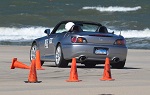
My car's camber right now is 2.3 front, 2.7 rear on 255 RS3's. It feels great on clean open open roads where I can load up the tires. On the extremely dirty autocross courses we have it feels awful, almost like ice, and I never really use the outer shoulders completely. I'm contemplating an experiment in reduced camber. The extra tire mileage would be a nice bonus too.
FWIW I do my own alignments. It saves a lot of money and I can put exactly how I want. Here is my thread about it: link And here is my alignment calculator: link
FWIW I do my own alignments. It saves a lot of money and I can put exactly how I want. Here is my thread about it: link And here is my alignment calculator: link
Thread Starter
Joined: Apr 2006
Posts: 1,953
Likes: 51
Originally Posted by gptoyz' timestamp='1431491347' post='23610967
http://949racing.com...949-racing.aspx
unless you are the Tire Whisperer-er, cough cough Dave Moss cough cough, I would rather go by empirical data than my crappy remedial tire reading skills.
My car's camber right now is 2.3 front, 2.7 rear on 255 RS3's. It feels great on clean open open roads where I can load up the tires. On the extremely dirty autocross courses we have it feels awful, almost like ice, and I never really use the outer shoulders completely. I'm contemplating an experiment in reduced camber. The extra tire mileage would be a nice bonus too.
FWIW I do my own alignments. It saves a lot of money and I can put exactly how I want. Here is my thread about it: link And here is my alignment calculator: link
FWIW I do my own alignments. It saves a lot of money and I can put exactly how I want. Here is my thread about it: link And here is my alignment calculator: link
Trending Topics
Registered User
Joined: Dec 2014
Posts: 181
Likes: 2
Do you have an infrared camera system on each tire?
I'd like to do that, but do it right requires an array camera (not that expensive actually, under $70 each) and a translation of the data and recording it. This is a bit more complex as each reading is going to be 32 or 64 bytes of digital data, different from the analog data normally recorded. A single analog sensor would be pretty useless to show the temperature profile, especially of a tire moving vertically in response to roll, dive, squat, and bumps and in the front rotating from steering inputs. A 2016 project!
I'd like to do that, but do it right requires an array camera (not that expensive actually, under $70 each) and a translation of the data and recording it. This is a bit more complex as each reading is going to be 32 or 64 bytes of digital data, different from the analog data normally recorded. A single analog sensor would be pretty useless to show the temperature profile, especially of a tire moving vertically in response to roll, dive, squat, and bumps and in the front rotating from steering inputs. A 2016 project!
I have talked with a few engineers from some WEC teams about their systems which are way more complex than what I would be looking to do to get some insight into doing it. 
Here's the setup that Pratt and Miller use on the GTLM Corvette.
Registered User
Joined: Apr 2012
Posts: 257
Likes: 4
Originally Posted by freetors' timestamp='1431491479' post='23610968
My car's camber right now is 2.3 front, 2.7 rear on 255 RS3's. It feels great on clean open open roads where I can load up the tires. On the extremely dirty autocross courses we have it feels awful, almost like ice, and I never really use the outer shoulders completely. I'm contemplating an experiment in reduced camber. The extra tire mileage would be a nice bonus too.
FWIW I do my own alignments. It saves a lot of money and I can put exactly how I want. Here is my thread about it: link And here is my alignment calculator: link
FWIW I do my own alignments. It saves a lot of money and I can put exactly how I want. Here is my thread about it: link And here is my alignment calculator: link
Registered User
Joined: Nov 2003
Posts: 2,141
Likes: 1
From: AZ
Originally Posted by freetors
My car is already set up softer than many other STR cars with 670 lb/in springs front and 560 rears and factory roll bars. My lower ride height should have also lowered the roll center more than the CG. I still get a good amount of body roll. Another reason I want to try less camber is so that I'm not compromising my braking and acceleration grip as much.