


Best Way to Break in a New Engine ?? The Short Answer: Run it Hard !


Thread Starter
Registered User
Joined: May 2001
Posts: 541
Likes: 0
From: Goodyear, AZ
 Best Way to Break in a New Engine ?? The Short Answer: Run it Hard !
This guy goes against all conventional break-in methods.. I wanted to let you guys read this and see what you think of his logic. He is a very well known Superbike builder.
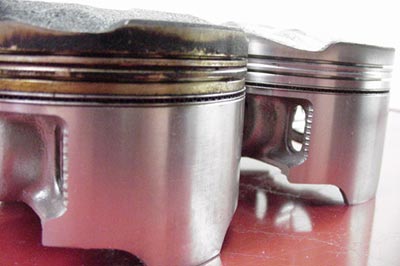
http://www.mototuneusa.com/break_in_secrets.htm
http://www.mototuneusa.com/break_in_secrets.htm

Registered User
Joined: Apr 2001
Posts: 289
Likes: 0
From: Lathrup Village
Interesting break-in method. I think that the first time the car is run at the factory there is probably a very specific start up and run procedure which probably is similar to his method (4000 rpm to 6000 rpm, 5000 rpm to.....,etc). I'm sure our engines have seen redline before being shipped to the dealer. There has been no conclusive evidence on what is the proper way to break-in the S2000 other than what is offered in our manuals.


Joined: Dec 2000
Posts: 4,307
Likes: 13
From: Ogden
Having raced Suzuki GSX-R 750's (as well as a 1288 cc Big Papa). And having raced Honda CBRF3's and 4's for Two Brothers Racing (God Bless Freddy). I can point out only one flaw in this authors discussion.....endurance! I used to rebuild my CBR's after every two races. No break in, no break in oil. Balls to the walls. Never tried to run a race motor 100,000 miles without a break in? I'd love to know how the theory holds up long term....just not on my car. Any volunteers? I especially agree with the part about the 3,000 break-in miles not being at Honda's expense.
Excellent thought provoking post!
Utah
Excellent thought provoking post!
Utah


Registered User
Joined: Jun 2001
Posts: 248
Likes: 0
From: Beaverton
His explanation makes sense for breaking in the rings, but he seem to ignore the issue of glazing. The whole problem with running a new engine hard is that it can cause excess heat and the oil hardens on the cylinder walls and actually prevents the crosshatch pattern from properly wearing. Contrary to what he says, the crosshatch pattern does not completely go away. Instead break-in is only supposed to flatten the ridges leaving the "valleys" to retain oil. The value of the recommended 500 mile break-in period is very debatable, but if you were to run a truly virgin engine in extremely hard you would damage it. However after the initial break-in on a dyno you could get away with it. The theory of break-in mostly applies to the first time an engine is run. 95% of your break-in happens there. There are many different qualified opinions about what happens during the other 5% of break-in that happens over the next 500 miles. You probably won't hurt it, but you probably won't gain as much as some might lead you to believe.
The break-in procedure on the page actually doesn't sound that excessive, since he allows the bike to cool down between runs and you are doing very short runs. His explanation on the right does seem questionable though.
The break-in procedure on the page actually doesn't sound that excessive, since he allows the bike to cool down between runs and you are doing very short runs. His explanation on the right does seem questionable though.

Registered User
Joined: Aug 2001
Posts: 2,774
Likes: 1
From: Central USA
I remember that when a friend and I rebuilt his engine (in the mid '60's) the instructions that came with the rings told us to put the car in high gear and run it from 20 to 60, floor it and let off, floor it and let off. You were supposed to do this four times. The thinking was to put a lot of pressure on the rings by flooring it and also flooding the cylinder walls with raw gas, thereby washing off the oil. This was to help the rings seat themselves You were also supposed to change the break-in oil after 400 miles. This seems to fit in with this thinking.

Registered User
Joined: Nov 2000
Posts: 1,349
Likes: 5
From: Ocean City
Im sort of a nobody, but with my new engines, or at least depending on whats new with a re-build - that changes exactly how I break in an engine. My Nissan Z24i engine had 240,000+ miles at rebuild time . . . the reason for rebuild? excessive clearance in the main bearings and brittle/leaking main seals. Yes crosshatch in the cylinders was still there - some engines it is and others its not.
Using new cams - or regrinds, the very first steps and 30 min of running is the most critical, your efforts
at lubricating contact surfaces is not only to reduce initial wear but to harden and smooth them out and even 'mate' them together.
The Nissan did not need a reground crank, and the cam was good to go, but new bearings/rings and gaskets finished up the job. I ran the engine normally (well a bit hard) for 3 days and managed to get 400 miles on it, then put it straight to work hauling a 4000lb trailer 2200 miles, well its still running well at 45,000miles a year later.
To seat the rings I would load them by doing the standard acceleration deceleration method.
On a Subaru EA-82 Turbo, highly modified, with new cams/pistons/block work. I opted to run for 3 hours with 30 weight oil and other special lubricants, at varying RPM's, then changed to 10w-30 oil and set out to seat the rings.
Of course these are bolted together by me, and Im the first to get oil pressure, thats not the case for a new car owner where the engine has already run for a short time.
Using new cams - or regrinds, the very first steps and 30 min of running is the most critical, your efforts
at lubricating contact surfaces is not only to reduce initial wear but to harden and smooth them out and even 'mate' them together.
The Nissan did not need a reground crank, and the cam was good to go, but new bearings/rings and gaskets finished up the job. I ran the engine normally (well a bit hard) for 3 days and managed to get 400 miles on it, then put it straight to work hauling a 4000lb trailer 2200 miles, well its still running well at 45,000miles a year later.
To seat the rings I would load them by doing the standard acceleration deceleration method.
On a Subaru EA-82 Turbo, highly modified, with new cams/pistons/block work. I opted to run for 3 hours with 30 weight oil and other special lubricants, at varying RPM's, then changed to 10w-30 oil and set out to seat the rings.
Of course these are bolted together by me, and Im the first to get oil pressure, thats not the case for a new car owner where the engine has already run for a short time.
Trending Topics

Registered User
Joined: Nov 2000
Posts: 4,436
Likes: 0
From: WA
The materials in the S2000 engine are also slightly different from most other cars.
Running and engine hard produces causes different "pressure points" on specific parts of the cylinder wall before they are "fully" hardened or set. The rings also need to "seat" with an even worn edge first.
Running and engine hard produces causes different "pressure points" on specific parts of the cylinder wall before they are "fully" hardened or set. The rings also need to "seat" with an even worn edge first.

Thread
Thread Starter
Forum
Replies
Last Post
98RON
UK & Ireland S2000 Community
35
May 16, 2009 08:31 AM
Colin
Car and Bike Talk
6
Oct 31, 2002 05:42 PM