Conservative shifting?

Registered User
Joined: Jul 2013
Posts: 351
Likes: 1

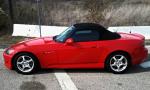
I feel the s 2000 transmission is near perfect for the car. It's pretty obvious when the s does not like your input.
It is a little race car we can drive on the street be happy with that. The engineers at honda squeezed everything they could out of this car and still gets good mpg and 200k+ miles on car if taken care of. Not to mention the cost to own and maintain this car is cheap for what it is. Yea it creaks, squeaks, hard suspension and loud at times. Will suck the fuel if you drive it. I think I can live with it.
There are many other cars with automatics and little mpg gages that may be a better fit. But we know you dont want that. Do you?
It is a little race car we can drive on the street be happy with that. The engineers at honda squeezed everything they could out of this car and still gets good mpg and 200k+ miles on car if taken care of. Not to mention the cost to own and maintain this car is cheap for what it is. Yea it creaks, squeaks, hard suspension and loud at times. Will suck the fuel if you drive it. I think I can live with it.
There are many other cars with automatics and little mpg gages that may be a better fit. But we know you dont want that. Do you?

Joined: Feb 2007
Posts: 6,863
Likes: 125
From: Pawtucket, RI
You will have greater frictional losses at the higher-rpm setting, and you will also have greater pumping losses as it takes more effort for the engine to pull air through the narrower throttle opening. Worse fuel economy, if you don't believe me try testing your highway mpg running in 5th gear.
The throttle pedal does NOT directly correspond to rate of fuel consumption. It didn't in carbureted cars and it doesn't in fuel injected cars. Higher rpm => higher fuel consumption at the same throttle setting.

Joined: Apr 2011
Posts: 305
Likes: 51
From: South East Queensland Oz.
Originally Posted by RedCelica' timestamp='1394121924' post='23049379
Gas isn't consumed based off rpm, it's consumed via throttle input. You'll actually use more gas at lower rpm cruising because you'll have to give it more throttle to accelerate at 2500 rpms than say 4500. I shift at 5k
You will have greater frictional losses at the higher-rpm setting, and you will also have greater pumping losses as it takes more effort for the engine to pull air through the narrower throttle opening. Worse fuel economy, if you don't believe me try testing your highway mpg running in 5th gear.
The throttle pedal does NOT directly correspond to rate of fuel consumption. It didn't in carbureted cars and it doesn't in fuel injected cars. Higher rpm => higher fuel consumption at the same throttle setting.
To accelerate the car from 30 to 40 MPH will require a smaller throttle opening, with more revs in a lower gear, & a larger throttle open with less revs in a higher gear, but in the normal operating range it will take the same application of effort in either, requiring the use of a very similar amount of fuel to supply that power.


Joined: Feb 2007
Posts: 6,863
Likes: 125
From: Pawtucket, RI
Sorry ZDan you've got that wrong. Yes there will be some very minor difference in frictional losses in the engine & transmission, but basically, provided you are in a reasonably efficient rev range for your cars breathing, no matter which gear you are in, or rev range, it takes the same amount of fuel to do the same work. This is particularly so when we are talking here about low/moderate engine output.
You're doing the same amount of work, but you'll have reduced pumping and frictional losses at the lower rpm.
To accelerate the car from 30 to 40 MPH will require a smaller throttle opening, with more revs in a lower gear, & a larger throttle open with less revs in a higher gear, but in the normal operating range it will take the same application of effort in either, requiring the use of a very similar amount of fuel to supply that power.
FWIW, I generally wind up shifting around 3500-4000rpm in town.
Thread Starter
Registered User
Joined: Aug 2013
Posts: 264
Likes: 0
This was essentially a hypermileing thread from square one. It just involves the idea of what mechanically goes into fuel consumption. The only reason I'm interested in this is because it's my daily, and there are many times that I'd like to use as little fuel as possible for the sole reason of saving as much money on gas as I can with this car.

Joined: Jan 2013
Posts: 1,137
Likes: 100
Originally Posted by RedCelica' timestamp='1394121924' post='23049379
Gas isn't consumed based off rpm, it's consumed via throttle input. You'll actually use more gas at lower rpm cruising because you'll have to give it more throttle to accelerate at 2500 rpms than say 4500. I shift at 5k
You will have greater frictional losses at the higher-rpm setting, and you will also have greater pumping losses as it takes more effort for the engine to pull air through the narrower throttle opening. Worse fuel economy, if you don't believe me try testing your highway mpg running in 5th gear.
The throttle pedal does NOT directly correspond to rate of fuel consumption. It didn't in carbureted cars and it doesn't in fuel injected cars. Higher rpm => higher fuel consumption at the same throttle setting.
It should be obvious really just by using anecdotal evidence. They keep coming out with 8 and 9 speed autos with super-long highway gears for increased efficiency. Cars with huge, thirsty engines like Corvettes and Vipers have insanely long 6th gears, so long that top speed is achieved in 5th because even with 500lb/ft+, they can't pull such a long gear toward 200mph. CVTs like the one in my dad's '13 Accord keep revs very low (below 1,500rpm most of the time) to achieve better gas mileage. Yet somehow people believe that you want to be in a lower gear to save gas? In what world does that make sense?
Higher revs = more friction = more energy wasted. Less throttle at a higher rpm to maintain a given speed = more pumping losses than using more throttle at a lower rpm to maintain the same speed. It's been proven time and time again, I don't know why people are trying to argue otherwise.

Joined: Dec 2012
Posts: 1,103
Likes: 4
The main point is to find the throttle input and rpm combination where the car is operating without working too hard (high RPM) or too uncomfortable (low RPM).
Obviously you want to cruise in 6th gear on Highway, but when I am just cruising around town I select the gear that will give me the lowest RPM and when accelerate, without any sense of vibration.
Obviously you want to cruise in 6th gear on Highway, but when I am just cruising around town I select the gear that will give me the lowest RPM and when accelerate, without any sense of vibration.
Joined: Jan 2013
Posts: 1,137
Likes: 100
The main point is to find the throttle input and rpm combination where the car is operating without working too hard (high RPM) or too uncomfortable (low RPM).
Obviously you want to cruise in 6th gear on Highway, but when I am just cruising around town I select the gear that will give me the lowest RPM and when accelerate, without any sense of vibration.
Obviously you want to cruise in 6th gear on Highway, but when I am just cruising around town I select the gear that will give me the lowest RPM and when accelerate, without any sense of vibration.