


Do we really need anything above 91 octane??


Registered User
Joined: Feb 2001
Posts: 2,895
Likes: 1
From: You wish

Indeed detonation is the issue. What is critical is to understand exactly how the F20C ECU works. Unfortunately, none of us knows exactly, but if its anything like the RSX/Civic Si ECU (and there are indications that it is), Honda uses a very interesting, and IMO unconventional, strategy for ignition timing and knock retard. I can't say much more about the details yet as this is all due to Hondata's research and its their province to describe their findings as they see fit.
However, what I can tell you is that if you get a single instance of knock, the ECU will pull out 6-8 degrees of timing immediately. This can cause losses of up to 15 lbs-ft of torque (more than 10%) at low rpm on the dyno, and I would assume a similar loss on the street. Usually by the time the engine has hit VTEC the ignition timing is back to normal as most knock on the F20C seems to occur at low rpms and high loads (just starting out, getting on it off a stop light, etc.). I think this is why sometimes the car can feel very, very sluggish down low, especially when its warm as, another poster mentioned, higher temps increase the chances of detonation. This is one of the reason why cooling mods are so useful and seem to be so widely heralded as making a difference even in everyday driving.
On 91 octane, in warmer weather, you will periodically get knock from the F20C. On 93 octane, you should get less knock and be able to use your most advanced ignition map more of the time - meaning more power. Based upon some dyno experiments, this engine likes a little more timing, so the higher the octane, the better IMO.
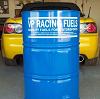
As for gasoline, I would suggest finding a local VP Fuels distributor. VP sells a new gas called VP103. Its unleaded and designed for high performance street cars and it works particularly well in my experience. It is sold in 5 gallon drums that have their own spout. You're looking at about $20/drum. On an average 10 gallon fillup, 1.5 gallons of VP103 would be enough to boost your octane by almost 2 full points, and its a very nice burning fuel. Something to think about.
UL
However, what I can tell you is that if you get a single instance of knock, the ECU will pull out 6-8 degrees of timing immediately. This can cause losses of up to 15 lbs-ft of torque (more than 10%) at low rpm on the dyno, and I would assume a similar loss on the street. Usually by the time the engine has hit VTEC the ignition timing is back to normal as most knock on the F20C seems to occur at low rpms and high loads (just starting out, getting on it off a stop light, etc.). I think this is why sometimes the car can feel very, very sluggish down low, especially when its warm as, another poster mentioned, higher temps increase the chances of detonation. This is one of the reason why cooling mods are so useful and seem to be so widely heralded as making a difference even in everyday driving.
On 91 octane, in warmer weather, you will periodically get knock from the F20C. On 93 octane, you should get less knock and be able to use your most advanced ignition map more of the time - meaning more power. Based upon some dyno experiments, this engine likes a little more timing, so the higher the octane, the better IMO.
As for gasoline, I would suggest finding a local VP Fuels distributor. VP sells a new gas called VP103. Its unleaded and designed for high performance street cars and it works particularly well in my experience. It is sold in 5 gallon drums that have their own spout. You're looking at about $20/drum. On an average 10 gallon fillup, 1.5 gallons of VP103 would be enough to boost your octane by almost 2 full points, and its a very nice burning fuel. Something to think about.
UL

Registered User

Joined: Oct 2000
Posts: 1,206
Likes: 0
From: Parsippany
Originally posted by Overdrive OP
Using fuel of a rating higher than 91 will not show any gains in power. The octane rating of fuel is a measure of it's resistance to detonation. Higher compression engines require higher octane values to keep them from detonating. Using anything above the specefied values in the owners manual is actually replacing more of the fuel with an octane additive. Buy the 91 and smile
Ole
White/Red
Using fuel of a rating higher than 91 will not show any gains in power. The octane rating of fuel is a measure of it's resistance to detonation. Higher compression engines require higher octane values to keep them from detonating. Using anything above the specefied values in the owners manual is actually replacing more of the fuel with an octane additive. Buy the 91 and smile
Ole
White/Red


Registered User
Joined: Dec 2001
Posts: 425
Likes: 0
From: Cupertino
I see, no 116 octane then... 
Just outta curiosity, what kind of damage would leaded fuel do your engine, anyone?
[QUOTE]Originally posted by samuelhon
[B]Rieger328Ci
S2000 has a catalytic convertor so leaded fuel would not be a good idea.
Just outta curiosity, what kind of damage would leaded fuel do your engine, anyone?
[QUOTE]Originally posted by samuelhon
[B]Rieger328Ci
S2000 has a catalytic convertor so leaded fuel would not be a good idea.


Registered User
Joined: Feb 2001
Posts: 2,895
Likes: 1
From: You wish
http://www.vpracingfuels.com
The VP103 is great for low boost turbo cars. In a back to back dyno with a turbo S2000, VP103 returned 10 more whp with no other changes. For a hi-boost race setup, I'd recommend VP C16 - but you don't want to run that on the street.
UL
The VP103 is great for low boost turbo cars. In a back to back dyno with a turbo S2000, VP103 returned 10 more whp with no other changes. For a hi-boost race setup, I'd recommend VP C16 - but you don't want to run that on the street.
UL
Registered User
Joined: Jun 2002
Posts: 1,590
Likes: 0
From: Waterford
[QUOTE]Originally posted by ultimate lurker
[B]http://www.vpracingfuels.com
The VP103 is great for low boost turbo cars.
[B]http://www.vpracingfuels.com
The VP103 is great for low boost turbo cars.