


Diff fluid change


Thread Starter


Joined: Dec 2007
Posts: 4,525
Likes: 1
From: Savannah, GA, USA
 Diff fluid change
I changed my diff fluid for the first time (21k miles) and I swear the car feels less tailhappy. Like if I get on the power coming out of a junction it seems to grip rather than slide.
I didn't think it would make any difference surely something else changed or I am imagining it?
I didn't think it would make any difference surely something else changed or I am imagining it?



Joined: Jan 2006
Posts: 4,953
Likes: 25
From: 17 ft below sea level.
The Torsen LSD uses friction to "lock".
Old oil may have lost its EP (Extreme Pressure) capabilities making the Torsen behave differently, especially coming out of corners under power.
This I have experienced myself, sudden understeer on small roundabouts.
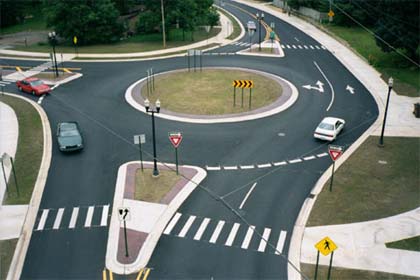
It felt like the inner rear wheel pushed the car forwards in stead of around the corner.
As if it was locked too much with the outer rear wheel (making more revs)
At first I figured I had a steering rack problem or one tire with low pressure.
Nope.
Fresh oil (SAE 90 GL-5) "fixed" it completely.
The old oil came out black AND was pretty thin (cold!) compared to what went in.

Old oil may have lost its EP (Extreme Pressure) capabilities making the Torsen behave differently, especially coming out of corners under power.
This I have experienced myself, sudden understeer on small roundabouts.
It felt like the inner rear wheel pushed the car forwards in stead of around the corner.
As if it was locked too much with the outer rear wheel (making more revs)
At first I figured I had a steering rack problem or one tire with low pressure.
Nope.
Fresh oil (SAE 90 GL-5) "fixed" it completely.
The old oil came out black AND was pretty thin (cold!) compared to what went in.
Registered User
Joined: Aug 2007
Posts: 8,504
Likes: 0
That seems backwards to me. As the gearset breaks in the differential proportioning is reduced, making the split more proportional, and then likelier to oversteer.
Torsen works very differently from other limited slips, so don't get confused. The side that has traction gets more torque. So in a locker, the split between axles is always the same in a straight line. That causes it to slide sideways in low traction. Ours proportion to keep the torque UP to 3x more on the side, keeping the car from oversteering (since the load is going to the traction side) but as it breaks in -it becomes more like a traditional locker.
Torsen states that the diff can take a wide range of viscocities and function with vaying degrees of differential action:
"Torque bias ratio (TBR) represents the "locking effect" of the differential. More specifically, it indicates how much more torque is sent to the high traction wheel (or axle) then is sent to the spinning wheel. For example, when a differential has a TBR of 3:1, 3 times the torque the spinning wheel can maintain (75% of the total torque) will go to the higher traction wheel... When shipped the torque bias ratio (TBR) is approximately 3.2:1. After break-in, it stabilizes at about 2.6:1."
"Using less viscous oil will also raise TBR. A more viscous fluid will lower it. If you are changing the oil, be sure that you still use a GL-5 specification lubricant."
Further: "A GL-4 or GL-5 gear oil is required by Torsen Type 1 units. This oil provides high-pressure additives needed to prevent the oil from breaking down under the extreme conditions generated by the tooth mesh. A 75W-90 is recommended, but higher or lower viscosities can be used if they meet GL-4 or GL-5 specification. Either synthetic or conventional oils can be used as well. "
Torsen works very differently from other limited slips, so don't get confused. The side that has traction gets more torque. So in a locker, the split between axles is always the same in a straight line. That causes it to slide sideways in low traction. Ours proportion to keep the torque UP to 3x more on the side, keeping the car from oversteering (since the load is going to the traction side) but as it breaks in -it becomes more like a traditional locker.
Torsen states that the diff can take a wide range of viscocities and function with vaying degrees of differential action:
"Torque bias ratio (TBR) represents the "locking effect" of the differential. More specifically, it indicates how much more torque is sent to the high traction wheel (or axle) then is sent to the spinning wheel. For example, when a differential has a TBR of 3:1, 3 times the torque the spinning wheel can maintain (75% of the total torque) will go to the higher traction wheel... When shipped the torque bias ratio (TBR) is approximately 3.2:1. After break-in, it stabilizes at about 2.6:1."
"Using less viscous oil will also raise TBR. A more viscous fluid will lower it. If you are changing the oil, be sure that you still use a GL-5 specification lubricant."
Further: "A GL-4 or GL-5 gear oil is required by Torsen Type 1 units. This oil provides high-pressure additives needed to prevent the oil from breaking down under the extreme conditions generated by the tooth mesh. A 75W-90 is recommended, but higher or lower viscosities can be used if they meet GL-4 or GL-5 specification. Either synthetic or conventional oils can be used as well. "


 I think 90W is recommended by Honda, not 75W-90.

Trending Topics

Joined: Jan 2006
Posts: 4,953
Likes: 25
From: 17 ft below sea level.
INTJ Posted on Aug 26 2008, 09:46 PM
What if BOTH sides have equal grip & traction but run at different revs?

The Torsen goes:
My point was that after some time the oil may not meet those specs anymore, creating different behavior.
Btw: Honda recommends SAE 90 GL-5
Not 90W or anything else.
And probably because of the final drive.
That's only a 7" ring&pinion set having to deal with a lot of horses in a relative small housing holding under a quart of oil.
The side that has traction gets more torque.
The Torsen goes:
If you are changing the oil, be sure that you still use a GL-5 specification lubricant."
Btw: Honda recommends SAE 90 GL-5
Not 90W or anything else.
And probably because of the final drive.
That's only a 7" ring&pinion set having to deal with a lot of horses in a relative small housing holding under a quart of oil.