Gauge cluster gets hot and turns red...


Thread Starter
Registered User
Joined: Sep 2008
Posts: 1,087
Likes: 0
From: Chesapeake, VA
 Gauge cluster gets hot and turns red...
So I have been noticiing more and more often that when I drive for long periods of time that my gauge cluster is hot to the touch and that they orange part of the RPM range turns red and that area is very hot to the touch. It happens when I drive the car for long periods of time. I have tried to dim the gauge cluster to see if that can help with the color shift and heat of the gauges but it doesnt. I also have the flickering of the gauges at a stop, idling. I dont know if the alternator has anything to do with it.
Attached is a stardard gauge cluster and circled is the area where it turns red and gets hot.
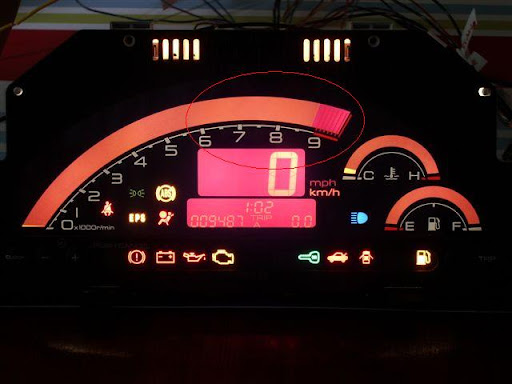
Attached is a stardard gauge cluster and circled is the area where it turns red and gets hot.


Registered User
Joined: Mar 2010
Posts: 1,331
Likes: 2
From: Rogersville, Alabama
No but from what I understand the flickering is from the rectifier bridge in the alternator. From what I understand, it's basically a voltage regulator or something but it isn't making smooth voltage...just what I take from it, not facts. Anyway, good luck with the hot thing.

Trending Topics

Joined: Apr 2014
Posts: 38
Likes: 0
Bumping this..
Starting to get this issue, i've had a flickering cluster for just under a year.. not really paying much attention to it, but now the cluster is getting red and very hot to touch.. Could the rectifier in the alternator cause this redness??
Anyone have the issue and change out their alternator??
Starting to get this issue, i've had a flickering cluster for just under a year.. not really paying much attention to it, but now the cluster is getting red and very hot to touch.. Could the rectifier in the alternator cause this redness??
Anyone have the issue and change out their alternator??


Joined: Aug 2012
Posts: 8,760
Likes: 1,862
My guess is yes, a bad rectifier that allows too much voltage into the system, could result in overheating things like the gauge cluster.
Electronic parts can 'wear' out, in that repeated small survivable damages add up to eventual premature failure (for silicon based parts like chips and transistors). So if you have flickering lights symptoms, get the regulator fixed asap, to prevent unseen damage that sometime down the road might lead to premature failure of various electronics...
Electronic parts can 'wear' out, in that repeated small survivable damages add up to eventual premature failure (for silicon based parts like chips and transistors). So if you have flickering lights symptoms, get the regulator fixed asap, to prevent unseen damage that sometime down the road might lead to premature failure of various electronics...



Joined: Sep 2014
Posts: 11,367
Likes: 1,795
Just to be complete... the regulator controls the voltage generated by the alternator. The rectifier changes AC, generated by the alternator to DC current. Bad rectifier may allow excess AC into lines. And also poor voltage.