When you click on links to various merchants on this site and make a purchase, this can result in this site earning a commission. Affiliate programs and affiliations include, but are not limited to, the eBay Partner Network.
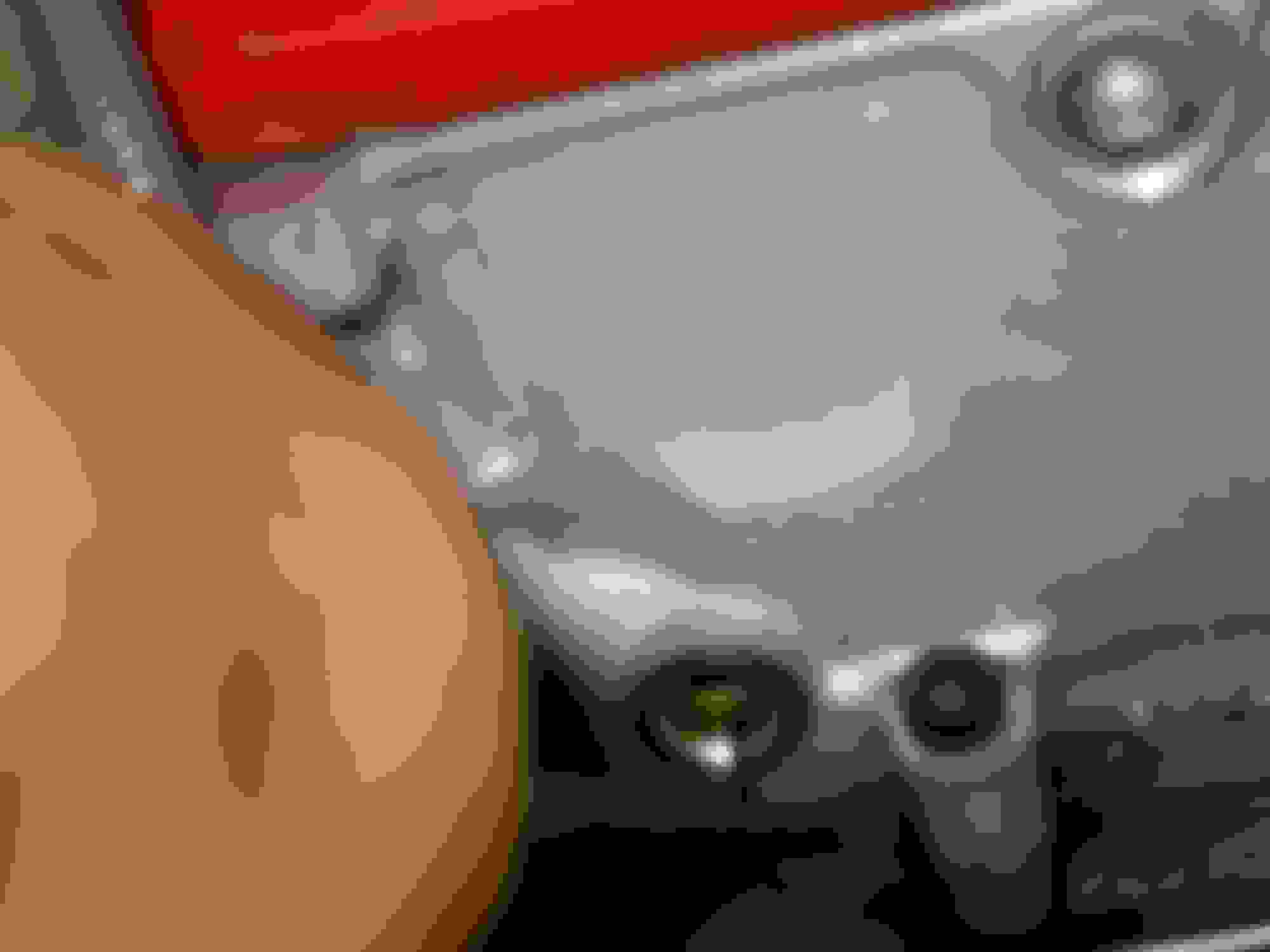
If you'd like to add an extremely easy way to get the tct out once the 2 bolts are removed, simply pry on it THROUGH the maintenence hole. Takes 0 effort
I think billman once stated that the TCT operates using an oil hydrolock, spring tension, and oil pressure, so three possible ways for a TCT to go bad, but the most common seems to be oil hydrolock failure as the worm gear and piston become too smooth to "catch" the oil - like a stone in a river it wears smooth with time.
There is IMO only 1 way for a TCT to go bad - the main piston stays in and it does not come out under oil pressure to remove the slack from the chain.
Without knowing why that piston stays in, keeping in mind there is nothing making it stay in, I would not change anything in a TCT.
The worm is IMO more like a ty-rap, it only allows movement one way once the oil pressure is gone, with oil pressure it floats to allow slack compensation when the engine warms up (the differences of expansion between alu block/head and steel chain/sprockets.)
Originally Posted by SpitfireS,Aug 9 2010, 09:57 PM
Its a very detailed DIY
But..
Saki GT Posted on Aug 9 2010, 05:51 AM
There is IMO only 1 way for a TCT to go bad - the main piston stays in and it does not come out under oil pressure to remove the slack from the chain.
Without knowing why that piston stays in, keeping in mind there is nothing making it stay in, I would not change anything in a TCT.
The worm is IMO more like a ty-rap, it only allows movement one way once the oil pressure is gone, with oil pressure it floats to allow slack compensation when the engine warms up (the differences of expansion between alu block/head and steel chain/sprockets.)
Oh well...
The TCT failure mechanism is a bit perplexing. As you said, a lack of tension exerted by the piston would require some sort of binding. Given that the piston is propelled by oil pressure and a spring, logically I cannot understand the cause of the failures. I have yet to have the TCT problems, but I would welcome gremlin so I could investigate the issure further.
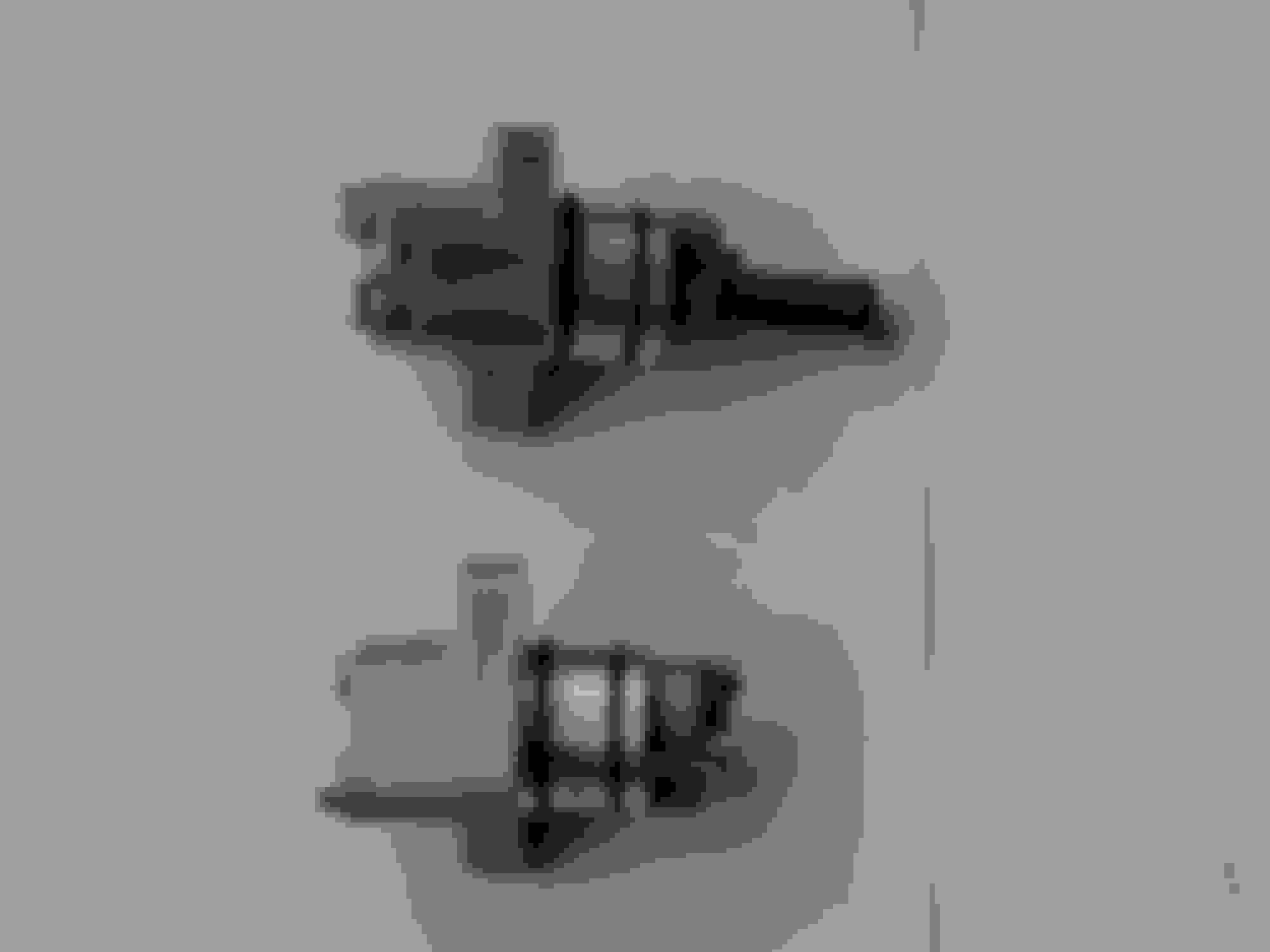
Here is a photo of an old and new TCT (upside down though) - the new one has the pin in place to hold the piston back:
- the pin is part 13.
david1 states:
Thx Saki for these explanations
So if we have te remove this pin using the maintenance hole, why don't we remove the pin before inserting the new TCT in its place? It would be easier wouldn't it?
Just out of curiosity, when the tct is installed in the engine, where does the piston sit in relation to the timing chain? just wondering if the TC is behind or in front of the piston, acting like a guide of some sorts. not sure if that makes any sense.
I'm just curious because if, i mean "when" i have to replace it, i want to know where that piston goes when i remove that pin lol.
I don't have that tct noise yet. As far as I know, its still the original with about 30K miles now, still using dino oil.