


Radiator Mat DIY


Former Sponsor
Joined: Mar 2002
Posts: 15,526
Likes: 19

What do you mean by "optimal coolant temp"? A healthy engine with a good tune and good fuel will make more power at 195F than it will at 180F. If coolant is any colder than necessary, then you're just sending valuable combustion energy right out the radiator instead of letting it push down on the pistons.
Registered User
Joined: Jan 2007
Posts: 992
Likes: 10
Originally Posted by gernby,Feb 8 2011, 06:24 AM
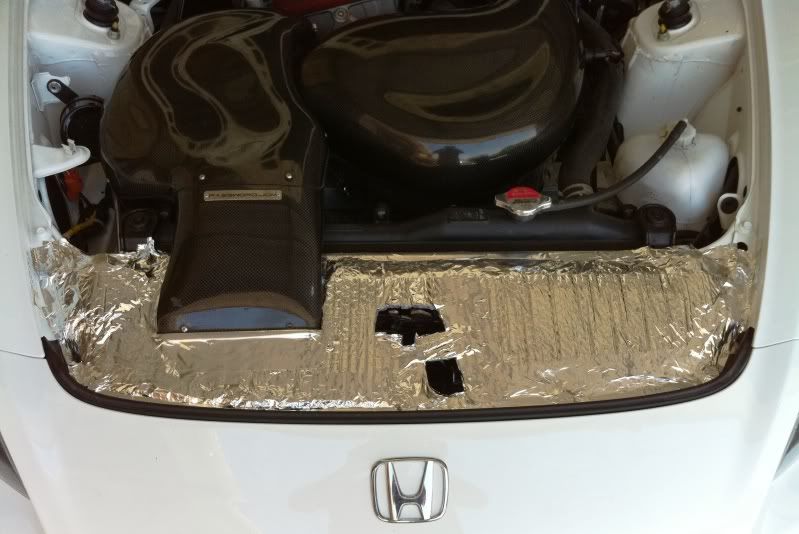
I just bought a roll of the reflective bubble insulation and a roll of aluminum ducting tape from the hardware store, and cut it out.


Former Sponsor
Joined: Mar 2002
Posts: 15,526
Likes: 19
Originally Posted by HS2K007,Feb 9 2011, 11:14 PM
You spent a lot of money for your intake, do not cheap out on a cooling plate. If you are going to use the bubble wrap for insulation, as least put it under the cooling plate. Also, beware of this foil bubble wrap when it comes to heat. What you see is foil, but what you do not see is that a layer of plastic is the first piece with the foil under neath it. The plastic is clear and can/or will melt. The is to stop the foil from oxidizing in most cases. I know because I make films like these. Also, home depot and lowes do not exactly carry materials that will be under the hood to resist heat. This bubble wrap is a fire waiting to happen
With regards to the fire hazard, I don't believe there is anything near that insulation that gets anywhere close to hot enough to melt anything. There's lots of plastic in the engine compartment that doesn't melt or catch fire.
Registered User
Joined: Jan 2007
Posts: 992
Likes: 10
Originally Posted by gernby,Feb 10 2011, 07:07 AM
With regards to the fire hazard, I don't believe there is anything near that insulation that gets anywhere close to hot enough to melt anything. There's lots of plastic in the engine compartment that doesn't melt or catch fire.
As far as the plastic that does not melt, this is because the resin formulation in the plastic is designed to resist the heating conditions it will be subject to. A lot of engineering went into this car and the parts under the hood. Home Depot and Lowes did not design the bubble wrap to withstand engine bay temperatures, it is for household insulation.
Just the same, would you use treated lumber to mount something to your car because it may be lighter or cheaper? As far as the weight savings, you could drink 1 less glass of water and achieve the same results.
If it is automotive designed wrap, you should be fine. If not, I am just saying watch out for a fire.
Former Sponsor
Joined: Mar 2002
Posts: 15,526
Likes: 19
The reason why Honda didn't make it air tight is because the stock intake needs air to flow over the radiator. My intake does not.
This insulation is designed for attics, which I believe get every bit as hot as this part of my engine compartment.
This insulation is designed for attics, which I believe get every bit as hot as this part of my engine compartment.

Registered User
Joined: Mar 2010
Posts: 2,733
Likes: 2
From: Clatskanie, OR
Originally Posted by gernby,Feb 9 2011, 03:43 PM
What do you mean by "optimal coolant temp"? A healthy engine with a good tune and good fuel will make more power at 195F than it will at 180F. If coolant is any colder than necessary, then you're just sending valuable combustion energy right out the radiator instead of letting it push down on the pistons.
Former Sponsor
Joined: Mar 2002
Posts: 15,526
Likes: 19
There's definitely an optimal mix of coolant temp, ignition timing, and AFR that's going to give best power without predetonation. If you go too hot on coolant, too advanced on timing, or too lean on fuel, things go south quickly. However, running a low coolant temp is going to reduce power similarly to retarding timing or running rich.
I'm not going to try guessing how much power you loose by running 10 degree colder coolant. All I know is that I'm getting awesome results from my setup with coolant temps in the high 190's. My coolant temp was 205 F for the dynojet run that I've posted so many times from the S2000 club dyno day.
I'm not going to try guessing how much power you loose by running 10 degree colder coolant. All I know is that I'm getting awesome results from my setup with coolant temps in the high 190's. My coolant temp was 205 F for the dynojet run that I've posted so many times from the S2000 club dyno day.