When you click on links to various merchants on this site and make a purchase, this can result in this site earning a commission. Affiliate programs and affiliations include, but are not limited to, the eBay Partner Network.
the only hole shots i've done were with much trepidation. Once i broke an axle at the track but i think i would have done it stock considering the VHT on the ground and my lack of skill. 0-60 is just a number that isnt very useful in regular driving. I'd be more interested in 30-100 times and in gear times to merge and overtake. Over about 400whp you won't be getting traction in first and 2nd gear without absolute ideal situations. To be honest, over 350-400whp its way too much power for the street.
Originally Posted by JoeyBalls,Dec 11 2008, 06:39 PM
If I knew how to drive I bet my 0-60 would be insanley low for such a low-powered TURBO car, look at the TORQUE down low
Impressive tq numbers Joey... Very impressive. I believe the KW high boost kit puts out 240 wtq. Makes me look into turbos more and more. I just hate the reliability stories.
this is such a back handed question, since super/turbo charging are terms used to describe the method through which air is compressed before it enters the combustion chamber and nothing else. It is like any kind of problem. You have a problem, and design a solution. Trap speeds for 15 sec runs are a completely different problem than a 24hr endurance race. Each has its own applications based on the situation.
in the case of most s2000 applications, the method of compression is the same, but the drive mechanism is different. Turbos use a centrifugal compressor driven by exhaust gas centrifugal turbine, and supers use a centrifugal compressor driven by a pulley.
In theory, you could use the same compressor pump in both applications, and end up with surprisingly similar results.
OR
You could use two completely different compressors with the same drive mechanism (either turbo or super) and achieve completely different performance results.
As for which is more reliable, for our cars, the companies that seem to have done the most research and development are those that produce kits specifically for the S2000. Vortech, Comptec, KW...... so they have the numbers and data to support their product.
Most people who get turbo kits get custom applications using a combination of off the shelf compressor, turbine, manifold and cooling systems. So they tend to be more varied.
[QUOTE=jezzder,Dec 12 2008, 02:15 PM]In theory, you could use the same compressor pump in both applications, and end up with surprisingly similar results.
the snail shell centrifugal compressor (the part that takes air in, spins it up, and shoves it into the intake) can be the same thing.
there is a little rod (we'll call it a shaft) that will spin the impeller in the compressor.
Supercharger uses a pulley, attached to the belt system on the engine to turn that shaft.
Turbocharger uses exhaust gasses, and a full turbine assembly to spin that shaft.
what i was saying, is that to answer the OPs question, you really need to get into some specifics because you could, in theory, be running a very similar compressor stage with either a super or a turbo.
Also, i would highly suggest that they are both tied to engine speed, and vary directly as such. Not linearly, perhaps.... but directly none the less.
Originally Posted by jezzder,Dec 13 2008, 11:18 AM
^ A for effort
the snail shell centrifugal compressor (the part that takes air in, spins it up, and shoves it into the intake) can be the same thing.
there is a little rod (we'll call it a shaft) that will spin the impeller in the compressor.
Supercharger uses a pulley, attached to the belt system on the engine to turn that shaft.
Turbocharger uses exhaust gasses, and a full turbine assembly to spin that shaft.
what i was saying, is that to answer the OPs question, you really need to get into some specifics because you could, in theory, be running a very similar compressor stage with either a super or a turbo.
Also, i would highly suggest that they are both tied to engine speed, and vary directly as such. Not linearly, perhaps.... but directly none the less.
Snales for belt drive operation are much larger and run at a much lower speed, plus, they have a built in gear or belt reduction drive. The designs are quite different from a turbocharger compressor. Yea, in theory, you could run a big old slow compressor with a little high speed impellor, but the system would be extremely ineffecient.
I do agree that there is a connection to engine speed with either, but above a certain engine speed, a turbo will produce full boost, while a belt driven centrifigual doesn't produce full boost until redline. Boost increases at an exponential rate. It's possible to get full boost from a turbo from relatively low revs. The PD blowers we run on the CCR Miata's produce the most low end grunt of all, but I have yet to see a successful PD install on an S2000.
If the OP had asked which he should buy, I'd have wanted to know his intended purpose, but his quesiton was just about 0-60 times. If he's actually thinking of modding his car, he definitely needs to ask about specifics.
I was wondering if anyone had 0-60 times for Supercharged and Turboed AP1s...
Also which of the 2 is more reliable..
Thank You
Maybe one straight answer would be nice, no?
I have a Comptech SC/AC and 4.30:1 gears. The Comptech SC is the most conservative, lowest boost system ever sold for the S2000, and some owners have logged over 100,000 supercharged miles without any reliability issues related to the boost. Anyone who is willing to launch an S2000 the way it has to be launched to get the best 0-60 times would easily beat my best 0-60 times, so my time is a good indicator of the minimum you can expect if you boost and drive relatively conservatively. According to my data logs I've done a few 0-60 runs in under 5 seconds. Not terribly impressive, but quicker than an original Shelby 289 Cobra.
If you want a lot more than that (say close to 4 seconds), then plan with a liberal budget.






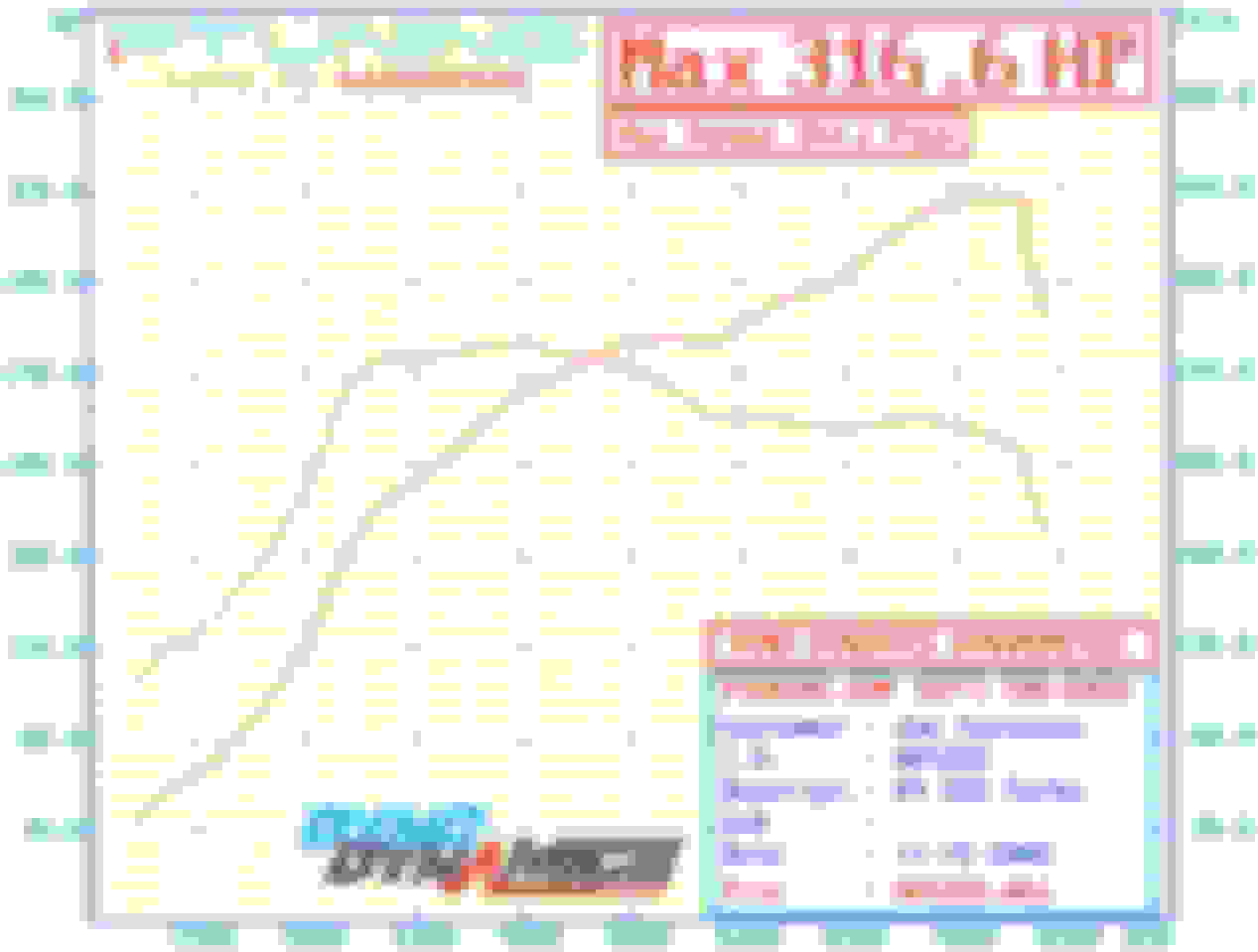

 Very impressive. I believe the KW high boost kit puts out 240 wtq. Makes me look into turbos more and more. I just hate the reliability stories.




 Snales for belt drive operation are much larger and run at a much lower speed, plus, they have a built in gear or belt reduction drive. The designs are quite different from a turbocharger compressor. Yea, in theory, you could run a big old slow compressor with a little high speed impellor, but the system would be extremely ineffecient.


