When you click on links to various merchants on this site and make a purchase, this can result in this site earning a commission. Affiliate programs and affiliations include, but are not limited to, the eBay Partner Network.
I've been looking at several wings and know very little of how to use them. I'm curently running a staggered wheel/tire setup with a comptech swaybar to dial-in understeer and have never used a wing at the track(or street).
Does anyone know the rules for high profile vs low profile rear wings?
The J's Racing Time Attack car is a good example of the High Profile type:
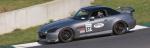
The ASM car uses the low profile type:
Other high profile wing cars include the C-West car and many other teams that use J's Racing. Other Low profile wing cars include those using the Mugen wing.
My thought's on this are that the High Profile wing was used on cars running non-staggered wheel/tire setup requiring additional rear traction to control oversteer. The lower profile Mugen types were just to add stability at high speeds (straight line) and possibly some in turns?
High Wing = Non-Staggered wheel/tire
Low Wing = Staggered wheel/tire
As I mentioned I currently run a staggered wheel/tire set up but plan to switch next season to non-staggered. I picked up a set of CE28's 9" Time Attack wheels that I plan to run 17x255 RA1's. So if my observations are correct I should go with the J's Racing high profile type wing. Is this correct???
Its really a question of how much downforce you are looking to generate. The same wing using tall stands is generally going to generate more downforce than the same wing using shorter stands just because the wing is getting better airflow to it. There are a lot of parameters that go into determining how much downforce you are looking for besides what type of tire setup you have. Spring rates, damping force, ground effect, etc....
As Voodoo_S2k mentioned the difference is the amount of downforce generated. You would typically want more downforce or rear traction on a car setup that favors oversteering (non-staggered wheel/tire setup). I would think adding rear traction to a car set up to understeer would make thing worse. So a car like that could still benefit from a low wing for high speed stability.
Car set up also includes many different factors like spring rates, tire pressures, swaybars, camber adjustments and so on that could effect this also. I'm just looking for (if it exists) some general rules that apply to the different types of wings.
High wing will have way more down force than the low wing. I used to have the Mugen wing dialed to most angle to down force but the J's (Voltex) wing still make way bigger difference to bring ther rear down comparing to it.



 Which Wing is better for Racing?