


InlinePRO Intake Manifold




Joined: Mar 2003
Posts: 6,507
Likes: 51
From: Sellersburg, IN

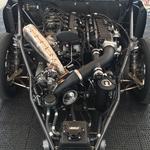
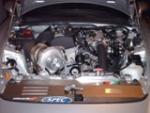
Is this what Hypertune is complaining about?
http://www.twinsturbo.com/index.php?page=s...uemart&Itemid=8
How would IP have gotten their design and know what the inside looks like. Just because the IP manifold looks similar to Hypertune's doesnt mean they coppied it. It's just a basic designed shape that looks similar to eachother. I mean, seriously, how many different ways can you really make an intake manifold look? If you look close, the IP manifold does look quite a bit different than the Hypertune in its shape but that basic shape is just that, a basic shape that most manifolds would fall under.
http://www.twinsturbo.com/index.php?page=s...uemart&Itemid=8
How would IP have gotten their design and know what the inside looks like. Just because the IP manifold looks similar to Hypertune's doesnt mean they coppied it. It's just a basic designed shape that looks similar to eachother. I mean, seriously, how many different ways can you really make an intake manifold look? If you look close, the IP manifold does look quite a bit different than the Hypertune in its shape but that basic shape is just that, a basic shape that most manifolds would fall under.

Registered User
Joined: Jul 2004
Posts: 1,665
Likes: 0
Originally Posted by Spoolin,Feb 9 2010, 04:09 PM
How would IP have gotten their design and know what the inside looks like. Just because the IP manifold looks similar to Hypertune's doesnt mean they coppied it. It's just a basic designed shape that looks similar to eachother.
S2kHabitat Hypertune came out with their manifold years ago. Search this forum, I am sure you will see some information on it. Full-Race use to carry it.



Registered User
Joined: Apr 2006
Posts: 825
Likes: 0
From: Reno Nevada
Originally Posted by Momentum,Feb 9 2010, 07:15 AM
The scale isn't significantly different but look at the colors, and my drawing was a quick 5 minute example. A true velocity stack with proper taper and variable radius would be even better.
Either way it's certainly a lot better than putting up irrelevant diagrams and claiming the one with a "velocity stack" is the worst.
Either way it's certainly a lot better than putting up irrelevant diagrams and claiming the one with a "velocity stack" is the worst.
As for your CFD diagrams, yes they are correct, but only marginally and only for NA car. Your flow geometry is incorrect, and I noticed that you conveniently left out the pressure differential. And maybe you should go read my post again, I never said that a velocity stack was less efficient on a NA car. Your diagrams prove this, they also show how small of an improvement you get by using them. However, I did say that they can hurt mass flow on forced induction cars. And since you seem to have trouble understanding things, I made a picture so you could understand.
I did some CFD myself, using 10 psi (relative pressure) or 24.7 psi (absolute pressure) , both configurations have the same velocity stack profile. The only difference is that one is elevated and one is bottom mount. You will notice that the bottom mount out performs the elevated version, just like the loss factor diagram predicted. Maybe you should go try this one yourself so I don’t have to keep trying to set you straight.
This config is a elevated velocity stack, manifold pressure is 10 psi,
and max velocity is 298.7 m/s.

This config is a bottom mount, manifold pressure is also 10 psi,
and max velocity is 304.5 m/s.



Joined: Jun 2004
Posts: 8,702
Likes: 1
From: houston
Originally Posted by Spoolin,Feb 9 2010, 04:20 PM
Oh, I didnt know this.
Thanks
Well, that changes everything then. This doesnt look good if its true.
I believe IP should comment on this.
Thanks
Well, that changes everything then. This doesnt look good if its true.
I believe IP should comment on this.
Maybe they dont wanna get dragged into a pissing match with hypertune and I can understand that , but we are pretty much getting one side of a story and then people who like inlinepro giving the thoughts they have.
I wanna hear it straight from inline or I will just start assuming like everyone else in the world that he is telling the truth. In that case getting my buisness