


Cusco 6pt on ap2?

Joined: May 2012
Posts: 540
Likes: 3
From: Everywhere



Joined: Aug 2011
Posts: 4,220
Likes: 81
From: Florida

Looks like they work just fine. Cusco is FIA approved in Japan[1]. Some people here just hate on them because they don't bother to do their own research instead they just parrot what some ignorant person says on the Internet.
Posted here:
https://www.s2ki.com/s2000/topic/484...t__p__10395943
Reference:
1. http://blog.cuscousainc.com/?p=294
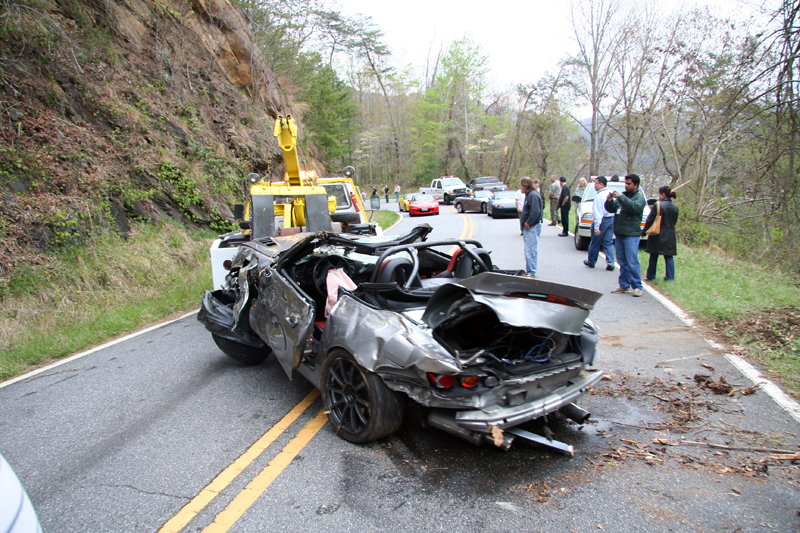
Heres you "dead weight" safty 21 bar after a 70+ foot fall off the road. It looks like the only part of the car that held up. Notice how none of the bars broke off and hit him in the head, I would say that that works pretty darn good for a "show purpose" roll bar. I know welded bars are better, but you guys really underestimate the cusco/safty21 bars.



https://www.s2ki.com/s2000/topic/484...t__p__10395943
Reference:
1. http://blog.cuscousainc.com/?p=294


Joined: May 2011
Posts: 695
Likes: 0
[/quote]
i wouldn't want a roll cage known as a crushco, get a harddog




Joined: May 2003
Posts: 3,045
Likes: 45
From: Las Vegas
Looks like they work just fine. Cusco is FIA approved in Japan[1]. Some people here just hate on them because they don't bother to do their own research instead they just parrot what some ignorant person says on the Internet.
Posted here:
https://www.s2ki.com/s2000/topic/484...t__p__10395943
Reference:
1. http://blog.cuscousainc.com/?p=294
Posted here:
https://www.s2ki.com/s2000/topic/484...t__p__10395943
Reference:
1. http://blog.cuscousainc.com/?p=294

Also, being FIA certified doesn't mean well designed or safe. Read up on how the FIA certification process is handled, and you'll see thaw whole argument of "it's FIA certified (in Japan)" doesn't really hold much water. Look specifically at how harnesses are tested.
Joined: Aug 2011
Posts: 4,220
Likes: 81
From: Florida
The reverse could easily be said... One example of it holding up a street incident doesn't make it a good or safe design. Some people don't bother to do their own research on good cage designs and instead just parrot what some ignorant person says on the Internet />/>
Also, being FIA certified doesn't mean well designed or safe. Read up on how the FIA certification process is handled, and you'll see thaw whole argument of "it's FIA certified (in Japan)" doesn't really hold much water. Look specifically at how harnesses are tested./>/>
/>/>Also, being FIA certified doesn't mean well designed or safe. Read up on how the FIA certification process is handled, and you'll see thaw whole argument of "it's FIA certified (in Japan)" doesn't really hold much water. Look specifically at how harnesses are tested.
/>/>The FIA covers a lot of clubs (Grand-Am, IndyCar, NASCAR, NHRA, IMSA, SCCA, USAC, and affiliate WKA) I assume these guys know more about it than I do. And the harness tests looks sane to me.
7. TEST CONDITIONS
7.1 Tests for the straps
7.1.1 Conditioning
The strap is conditioned before testing, for 24
hours in an atmosphere of 65+/-5% relative
humidity, at a temperature of 20+/-5°C. If the
test is not to be carried out immediately after
conditioning, the test pieces shall be placed in
a tightly closed container until the start of the
test. The breaking load The measurements
shall be measured taken within 5 minutes of
the removal of each test piece from the
conditioning atmosphere or from the container.
7.1.2 Running of the test
7.1.2.1
The breaking tests shall be made on two
specimen straps, of sufficient length, each
strap being gripped between the clamps of a
tensile-testing machine. The clamps shall be so
designed as to avoid breakage of the strap at
or near them.
The speed of traverse shall be about 100
mm/min.
The free length of the specimen between the
clamps of the machine at the start of the test
shall be 200+/-40 mm.
7.1.2.2
When the load reaches 980 daN, the width of
the strap shall be measured without stopping
the machine.
7.1.2.3
The tension shall then be increased until the
strap breaks.
7.1.2.4
If the strap slips or breaks at or within 10 mm of
either of the clamps, the test shall be invalid
and a new test shall be carried out on another
specimen.
7.1 Tests for the straps
7.1.1 Conditioning
The strap is conditioned before testing, for 24
hours in an atmosphere of 65+/-5% relative
humidity, at a temperature of 20+/-5°C. If the
test is not to be carried out immediately after
conditioning, the test pieces shall be placed in
a tightly closed container until the start of the
test. The breaking load The measurements
shall be measured taken within 5 minutes of
the removal of each test piece from the
conditioning atmosphere or from the container.
7.1.2 Running of the test
7.1.2.1
The breaking tests shall be made on two
specimen straps, of sufficient length, each
strap being gripped between the clamps of a
tensile-testing machine. The clamps shall be so
designed as to avoid breakage of the strap at
or near them.
The speed of traverse shall be about 100
mm/min.
The free length of the specimen between the
clamps of the machine at the start of the test
shall be 200+/-40 mm.
7.1.2.2
When the load reaches 980 daN, the width of
the strap shall be measured without stopping
the machine.
7.1.2.3
The tension shall then be increased until the
strap breaks.
7.1.2.4
If the strap slips or breaks at or within 10 mm of
either of the clamps, the test shall be invalid
and a new test shall be carried out on another
specimen.
/>

Thread
Thread Starter
Forum
Replies
Last Post
wowwitsgau
S2000 Under The Hood
4
Oct 19, 2018 09:09 AM