


High speed/load turning problem


Registered User


Joined: Oct 2000
Posts: 1,664
Likes: 0
From: Santa Cruz, CA

SuperKool,
Two things came to mind when i first read the posting, left rear wheel bearing or left rear inboard CV joint. But, your insistance that it came from the front kept me from suggesting it.
At this point i think you should consider it.
The left rear wheel bearing is easy to check, lift the wheel and grab the tire at the top and bottom and then try to rock it back and forth by pushing and pulling your hands.
I'm pretty sure its not the bearing tho.
My money is on the left inboard CV joint. The only hiccup in that diagnosis is that you say you feel it at corner entry. Typically you only feel a bad CV under engine acceleration load in a turn. As the CV gets worse it takes less of a turn and less load to bring on the shudder it produces.
You say "The shutter is ONLY felt under heavy load", do you mean tire load or engine load. If engine load than i say 100% CV joint.
Edit: I should have asked "lateral tire load"
Two things came to mind when i first read the posting, left rear wheel bearing or left rear inboard CV joint. But, your insistance that it came from the front kept me from suggesting it.
At this point i think you should consider it.
The left rear wheel bearing is easy to check, lift the wheel and grab the tire at the top and bottom and then try to rock it back and forth by pushing and pulling your hands.
I'm pretty sure its not the bearing tho.
My money is on the left inboard CV joint. The only hiccup in that diagnosis is that you say you feel it at corner entry. Typically you only feel a bad CV under engine acceleration load in a turn. As the CV gets worse it takes less of a turn and less load to bring on the shudder it produces.
You say "The shutter is ONLY felt under heavy load", do you mean tire load or engine load. If engine load than i say 100% CV joint.
Edit: I should have asked "lateral tire load"

Thread Starter
Registered User
Joined: May 2002
Posts: 410
Likes: 0
From: Pasadena
Thanks Dave,
When I say load, I do mean engine as well as weight transfer. And I do feel the shutter most at the apex and turn exit as I'm on the gas and the engine is winding up towards redline.
How do I examine the CV joint? Will it be loose or in there something I should look for in particular.
When I say load, I do mean engine as well as weight transfer. And I do feel the shutter most at the apex and turn exit as I'm on the gas and the engine is winding up towards redline.
How do I examine the CV joint? Will it be loose or in there something I should look for in particular.
Registered User
Joined: Oct 2000
Posts: 1,664
Likes: 0
From: Santa Cruz, CA
I think the primary means of diagnosis is recognising the shudder and when it occurs.
You could also get under the car and grab the half shaft with one hand and the diff output flange with the other and give them a twist back and forth to get and idea of how much backlash there is. Then compare that to the other inboard CV joint. The problem is even with a bad CV you not likely to notice much difference.
I suppose another means of diagnosis that just occured to me could be the following. Remove the big CV boot band and retrieve a small sample of the CV grease. If i remember correctly the OEM grease should be green in color and not dark. Compare that to the CV grease from the other inboard CV joint. All the bad CV joints i've examined have all had significatly discolored/darkened grease.
My suggestion to you is to perform a CV swap as described in at least one thread around here somewhere. All you'll need to buy is some RedLine CV grease.
I hope that helps.
You could also get under the car and grab the half shaft with one hand and the diff output flange with the other and give them a twist back and forth to get and idea of how much backlash there is. Then compare that to the other inboard CV joint. The problem is even with a bad CV you not likely to notice much difference.
I suppose another means of diagnosis that just occured to me could be the following. Remove the big CV boot band and retrieve a small sample of the CV grease. If i remember correctly the OEM grease should be green in color and not dark. Compare that to the CV grease from the other inboard CV joint. All the bad CV joints i've examined have all had significatly discolored/darkened grease.
My suggestion to you is to perform a CV swap as described in at least one thread around here somewhere. All you'll need to buy is some RedLine CV grease.
I hope that helps.


Joined: Feb 2001
Posts: 4,061
Likes: 363
From: Redondo Beach
Pics of davepk swapping my CV joints.  (Note the colors of the grease.)
https://www.s2ki.com/forums/index.php?showtopic=241367
(Note the colors of the grease.)https://www.s2ki.com/forums/index.php?showtopic=241367
Thread Starter
Registered User
Joined: May 2002
Posts: 410
Likes: 0
From: Pasadena
I've inspected my CV joints. This does appear to be my problem.
Thanks to all for helping me narrow down the problem and getting my car back on track. It's great we have this forum so we can share our experiences with the car.
It would have taken me forever to figure out what was wrong.
Hope to see you guys out there at the track.
Thanks again,
Chris.
Thanks to all for helping me narrow down the problem and getting my car back on track. It's great we have this forum so we can share our experiences with the car.
It would have taken me forever to figure out what was wrong.
Hope to see you guys out there at the track.
Thanks again,
Chris.

Registered User
Joined: Oct 2000
Posts: 4,467
Likes: 3
From: Davie, FL
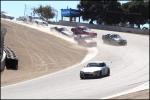
I know this may be coming out of left field, but I think it's normal for the S2000 to shudder in tight, highly loaded right-hand turns. I bet you were using R-compound tires too. I say this because my MY 2000 car would do this consistently in turn 7 (the hairpin) at Sebring and under high-load right handers when autocrossing on high-grip surfaces. I assume that it is the normal reaction of the car to lifting the inside rear wheel. When the inside rear wheel lifts, the torsen differential acts like an open diff, leading to shudder as the left rear tire intermittently loses and gains power.
What do you all think?
What do you all think?

Joined: Nov 2003
Posts: 2,246
Likes: 1
From: Atlanta
Yeah, left field.
I just blew my inner left CV joint and I think the biggest clue it gave of it's impending demise was a click or popping sound on tight turns while coasting. It had been doing that for about a month prior to it's destruction.
Listen for it if your car gets the shakes. 9 out of 9.5 times, it will be the left inner joint.
I just blew my inner left CV joint and I think the biggest clue it gave of it's impending demise was a click or popping sound on tight turns while coasting. It had been doing that for about a month prior to it's destruction.
Listen for it if your car gets the shakes. 9 out of 9.5 times, it will be the left inner joint.

Thread
Thread Starter
Forum
Replies
Last Post