


Best way to check for odometer roll back?


Registered User
Joined: Mar 2004
Posts: 1,729
Likes: 2
From: atlanta

Computerized Odometers
If you make a trip to the bike shop, you most likely won't find any cable-driven odometers or speedometers. Instead, you will find bicycle computers. Bicycles with computers like these have a magnet attached to one of the wheels and a pickup attached to the frame. Once per revolution of the wheel, the magnet passes by the pickup, generating a voltage in the pickup. The computer counts these voltage spikes, or pulses, and uses them to calculate the distance traveled.
If you have ever installed one of these bike computers, you know that you have to program them with the circumference of the wheel. The circumference is the distance traveled when the wheel makes one full revolution. Each time the computer senses a pulse, it adds another wheel circumference to the total distance and updates the digital display.
Many modern cars use a system like this, too. Instead of a magnetic pickup on a wheel, they use a toothed wheel mounted to the output of the transmission and a magnetic sensor that counts the pulses as each tooth of the wheel goes by. Some cars use a slotted wheel and an optical pickup, like a computer mouse does. Just like on the bicycle, the computer in the car knows how much distance the car travels with each pulse, and uses this to update the odometer reading.
One of the most interesting things about car odometers is how the information is transmitted to the dashboard. Instead of a spinning cable transmitting the distance signal, the distance (along with a lot of other data) is transmitted over a single wire communications bus from the engine control unit (ECU) to the dashboard. The car is like a local area network with many different devices connected to it. Here are some of the devices that may be connected to the computer network in a car:
* Engine control unit (ECU)
* Climate control system
* Dashboard
* Power window controls
* Radio
* Anti-lock braking system
* Air bag control module
* Body control module (operates the interior lights, etc.)
* Transmission control module
Many vehicles use a standardized communication protocol, called SAE J1850, to enable all of the different electronics modules to communicate with each other.
The engine control unit counts all of the pulses and keeps track of the overall distance traveled by the car. This means that if someone tries to "roll back" the odometer, the value stored in the ECU will disagree. This value can be read using a diagnostic computer, which all car-dealership service departments have.
Several times per second, the ECU sends out a packet of information consisting of a header and the data. The header is just a number that identifies the packet as a distance reading, and the data is a number corresponding to the distance traveled. The instrument panel contains another computer that knows to look for this particular packet, and whenever it sees one it updates the odometer with the new value. In cars with digital odometers, the dashboard simply displays the new value. Cars with analog odometers have a small stepper motor that turns the dials on the odometer.
Like I said, it's not just one wire, but what you do with that wire.
of course, I can't tell you, this could be used to cheat odometer readings and that would be wrong.
If you make a trip to the bike shop, you most likely won't find any cable-driven odometers or speedometers. Instead, you will find bicycle computers. Bicycles with computers like these have a magnet attached to one of the wheels and a pickup attached to the frame. Once per revolution of the wheel, the magnet passes by the pickup, generating a voltage in the pickup. The computer counts these voltage spikes, or pulses, and uses them to calculate the distance traveled.
If you have ever installed one of these bike computers, you know that you have to program them with the circumference of the wheel. The circumference is the distance traveled when the wheel makes one full revolution. Each time the computer senses a pulse, it adds another wheel circumference to the total distance and updates the digital display.
Many modern cars use a system like this, too. Instead of a magnetic pickup on a wheel, they use a toothed wheel mounted to the output of the transmission and a magnetic sensor that counts the pulses as each tooth of the wheel goes by. Some cars use a slotted wheel and an optical pickup, like a computer mouse does. Just like on the bicycle, the computer in the car knows how much distance the car travels with each pulse, and uses this to update the odometer reading.
One of the most interesting things about car odometers is how the information is transmitted to the dashboard. Instead of a spinning cable transmitting the distance signal, the distance (along with a lot of other data) is transmitted over a single wire communications bus from the engine control unit (ECU) to the dashboard. The car is like a local area network with many different devices connected to it. Here are some of the devices that may be connected to the computer network in a car:
* Engine control unit (ECU)
* Climate control system
* Dashboard
* Power window controls
* Radio
* Anti-lock braking system
* Air bag control module
* Body control module (operates the interior lights, etc.)
* Transmission control module
Many vehicles use a standardized communication protocol, called SAE J1850, to enable all of the different electronics modules to communicate with each other.
The engine control unit counts all of the pulses and keeps track of the overall distance traveled by the car. This means that if someone tries to "roll back" the odometer, the value stored in the ECU will disagree. This value can be read using a diagnostic computer, which all car-dealership service departments have.
Several times per second, the ECU sends out a packet of information consisting of a header and the data. The header is just a number that identifies the packet as a distance reading, and the data is a number corresponding to the distance traveled. The instrument panel contains another computer that knows to look for this particular packet, and whenever it sees one it updates the odometer with the new value. In cars with digital odometers, the dashboard simply displays the new value. Cars with analog odometers have a small stepper motor that turns the dials on the odometer.
Like I said, it's not just one wire, but what you do with that wire.
of course, I can't tell you, this could be used to cheat odometer readings and that would be wrong.
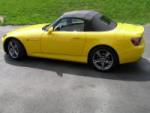
Joined: May 2002
Posts: 2,548
Likes: 0
From: North Carolina
I was thinking the same thing on flood damage. Check the car for excessive rust. Look at the bolts inside the car around the seat, if they are rusty that would worry me. Also look in the engine bay at the bolts, and other components for rust. Check the trunk, etc. Up north rust is common because of the salt, i would not think rust is common in the south though. Some southern type people Can help on that one.


Thread Starter
Registered User
Joined: Mar 2007
Posts: 773
Likes: 0
From: Tx
Yes, I will definitely check for signs of flood damage. I asked him where the vehicle was during katrina. He actually had to work through the disaster or something and had it parked on the 4th floor of a cover garage at his hospital is what he said.

Registered User
Joined: May 2005
Posts: 168
Likes: 0
From: Buford, GA
Originally Posted by C8V6C,Apr 12 2007, 07:04 PM
When I run a carfax at work, they print out a certificate that that company guarantees the car against it ever being in an accident, odo rollback, clean title, etc etc.
I have never heard anyone making a claim, but go to carfax website and look into it.
Good luck
I have never heard anyone making a claim, but go to carfax website and look into it.
Good luck
Thread Starter
Registered User
Joined: Mar 2007
Posts: 773
Likes: 0
From: Tx
just found out that the tires on there are bridgestone s02s. he was mistaken. the car also just passed hondas 40 point expection with flying colors. looks like i'll be picking this car up, unless i find something wrong with it.

Registered User
Joined: Feb 2001
Posts: 1,291
Likes: 1
From: Brussels, Belgium
One thing more about the tires that wasn't mentioned here before. In your case they would have been almost 8 years old by now. On one of my former cars (a 2000 model year) I had to replace the tires in 2005 for the plain and simple fact that I didn't drive it enough and they totally dried out (cracks in side wall) which is a safety hazard.
Interior, pedals and steering wheel wear will tell you a good story. Check for flooding I agree!
Siepel
Interior, pedals and steering wheel wear will tell you a good story. Check for flooding I agree!
Siepel
Registered User
Joined: Feb 2001
Posts: 1,291
Likes: 1
From: Brussels, Belgium
Originally Posted by yungjoc,Apr 13 2007, 12:45 PM
just found out that the tires on there are bridgestone s02s. he was mistaken. the car also just passed hondas 40 point expection with flying colors. looks like i'll be picking this car up, unless i find something wrong with it.

Good luck and congrats with your buy!


Thread Starter
Registered User
Joined: Mar 2007
Posts: 773
Likes: 0
From: Tx
looks like this is one of those cars that aren't driven very much. He put on a little over 5k miles in about 14 months going back the carfax report.
Too bad its the end of the week, so we can't do much. Hopefully, I'll have this bad boy by early next week. Thanks for the all the advice
06/09/2003 5,288 Honda Certified Dealer Offered for sale as a Honda Certified Used Car
06/10/2003 5,290 Dealer Inventory
Houma, LA Vehicle offered for sale
08/20/2004 10,995 Service Facility Vehicle serviced
Too bad its the end of the week, so we can't do much. Hopefully, I'll have this bad boy by early next week. Thanks for the all the advice
06/09/2003 5,288 Honda Certified Dealer Offered for sale as a Honda Certified Used Car
06/10/2003 5,290 Dealer Inventory
Houma, LA Vehicle offered for sale
08/20/2004 10,995 Service Facility Vehicle serviced